
American Utopia Lyrics: Song List
- Here
- I Know Sometimes a Man Is Wrong
- Don't Worry About the Government
- Lazy
- This Must Be the Place
- I Zimbra
- Slippery People
- I Should Watch TV
- Everybody's Coming to My House
- Once in a Lifetime
- Glass, Concrete & Stone
- Toe Jam
- Born Under Punches
- I Dance Like This
- Bullet
- Every Day Is a Miracle
- Blind
- Burning Down the House
- Hell You Talmbout
- One Fine Day
- Road to Nowhere
- The Great Curve
About the "American Utopia" Stage Show
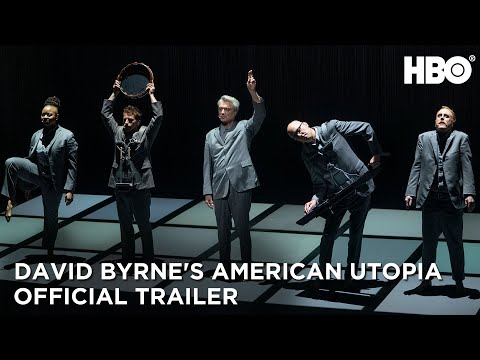
The film is a live recording of a Broadway performance of the show adapted from the touring show that supported the album of the same name, featuring selections from that album, as well as songs from throughout Byrne's career. Byrne performs alongside eleven musicians, all performing with wireless or portable equipment. Frequent collaborator Annie-B Parson serves as choreographer.
Release date of the musical: 2020
"American Utopia" – The Musical Guide & Song Meanings
Review
“American Utopia” opens with a blunt question disguised as choreography: what if joy is not escape, but responsibility? David Byrne’s lyrics have always been good at sounding like they’re about nothing, until you realize they’re about the whole room. Spike Lee films that trick with suspicion and affection. He keeps moving the camera because the show is about movement, not just dancing, but the movement of attention. Who do you look at. Who do you ignore. And what happens to a community when the looking stops.
The writing is a collision of Byrne’s newer, plainspoken hope and his older, anxious precision. “Don’t Worry About the Government” lands like a joke from a younger man, but the film frames it as a warning that aged badly. “Once in a Lifetime” still sounds like a spiritual crisis performed with a grin. “Here” uses the human brain as a literal lyric topic, then the staging turns brains into bodies, bodies into patterns, patterns into collective behavior. The throughline is connection, but not the greeting-card version. Byrne’s best lines insist that connection is work. The show makes that work physical: instruments strapped on, cables gone, everyone barefoot, everyone forced into the same space with the same rules.
Musically, the arrangements are percussive and communal, built for layers rather than solos. The sound is still rock, but it behaves like a drum circle with a nervous system. That matters for character, because the “character” here is a group. Byrne is the lead voice, yet the production keeps undermining hierarchy. The lyrics keep pointing outward, and the staging agrees. Even the set, a shimmering cube-like enclosure, reads like a social experiment: here is the boundary, now find a way to belong inside it.
How It Was Made
The film version of “American Utopia” is a document of a very specific stage invention. The live show grew out of Byrne’s 2018 album and subsequent tour, then became a Broadway run at the Hudson Theatre. HBO announced the Spike Lee-directed film in 2020, capturing the Broadway performance with a cinema crew while keeping the core stage language intact: eleven musicians who are also dancers, portable and wireless gear, and choreography that treats bodies like moving percussion.
Craft credits are not trivia here, they are the machinery of meaning. Annie-B Parson’s choreography makes the lyrics legible in space, especially in the show’s pivots from delight to protest. Rob Sinclair’s lighting and the reflective curtain-like architecture give Lee permission to shoot from above, from the wings, and from inside the formation, without losing clarity. This is why the film feels more cinematic than “filmed theater.” Lee is not simply recording a setlist. He’s adapting a staging system built to argue for togetherness, then testing it against an American moment that was not built for togetherness at all.
Key Tracks & Scenes
"Here" (David Byrne)
- The Scene:
- A bare stage that gradually populates. Byrne steps into a cool, silvery environment and starts naming the brain. Two performers appear mid-song, as if connection has physically walked into frame. Lighting stays clean and clinical at first, then softens as bodies collect into a group.
- Lyrical Meaning:
- The lyric turns anatomy into destiny. It’s Byrne admitting the theme out loud: we are wired for connection, then we spend our lives unlearning it. Starting with “Here” is a structural statement. The show begins in the head, then tries to move the audience back into the body and the crowd.
"Don’t Worry About the Government" (David Byrne)
- The Scene:
- A bright, buoyant run across the stage with the band in matching gray suits. The mood is almost jaunty, with the choreography keeping everyone in tidy lines. The set glints behind them like chainmail, pretty and slightly menacing.
- Lyrical Meaning:
- The lyric’s cheerfulness is the sting. It’s a song about choosing comfort over awareness, and in 2020 that choice reads as moral failure. The staging leans into the irony: disciplined movement under a lyric about not paying attention.
"This Must Be the Place (Naive Melody)" (David Byrne and company)
- The Scene:
- The lighting warms. The formation loosens. Byrne’s delivery turns intimate without slowing the physical vocabulary. You watch musicians breathe together, not just play together, as if the groove is a shared home they are building in real time.
- Lyrical Meaning:
- The lyric is love spoken by someone suspicious of love. That tension is the point. In “American Utopia,” the song stops being only romantic. It becomes a thesis about belonging, and how hard it is to say “home” without feeling foolish.
"Once in a Lifetime" (David Byrne)
- The Scene:
- The show tightens into ritual. Lee’s camera begins to hunt angles, including overhead views that make the choreography read like circuitry. Bodies move in pulses, the lighting flickering between concert brightness and something more interrogative.
- Lyrical Meaning:
- Byrne’s lyric is a panic attack written as philosophy. “How did I get here” is personal, then it becomes political. The song lands as an audit of a life and, by extension, a country that keeps waking up surprised by its own choices.
"I Dance Like This" (David Byrne)
- The Scene:
- A rupture. The choreography turns confrontational, almost grotesque on purpose. Movement becomes angular and exposed, with harsh lighting that makes the stage feel less like a party and more like a confession booth.
- Lyrical Meaning:
- The lyric uses dance as a mask that slips. It’s Byrne refusing cool. The show’s surface is precision and charm, but this number admits the engine underneath: fear, compulsion, awkwardness, and the desire to be accepted anyway.
"Hell You Talmbout" (Janelle Monáe cover; company)
- The Scene:
- Before the song, Byrne speaks directly about change. The lights drop into a stark, reverent mode. Lee overlays images connected to the names being sung, turning the stage into a memorial wall. The choreography becomes collective insistence rather than display.
- Lyrical Meaning:
- This is the show’s moral center. The lyric is a demand for attention, and the staging agrees. In a project obsessed with human connection, the song names the cost of disconnection with brutal clarity.
"Road to Nowhere" (company)
- The Scene:
- The tempo kicks up and the stage turns sweaty, outward-facing, communal. The performers surge like a moving crowd, the camera slipping between them to catch grins, exhaustion, and the sensation of shared momentum.
- Lyrical Meaning:
- The lyric is a smile that contains dread. “We’re on a road” can be celebration or resignation. “American Utopia” makes it both. The song becomes a danceable argument: even if the destination is unclear, the togetherness is real.
"One Fine Day" (company)
- The Scene:
- The instruments fall away. Voices remain. The stage looks simpler, more human, as if the production is stripping itself down to one claim. Lighting turns gentle and direct, no tricks left.
- Lyrical Meaning:
- The lyric points to hope without pretending hope is easy. Ending with voices unaccompanied is the show’s final bit of staging logic: the clearest version of connection is not volume, it’s harmony.
Live Updates
As a live Broadway event, “David Byrne’s American Utopia” is closed, with its final Broadway performance listed as April 3, 2022. As a filmed musical, it remains very much alive. Current streaming trackers list it as available on Max in the U.S., and Max itself maintains a dedicated title page. There is also an active Netflix title page in some territories, which suggests regional licensing differences rather than a single global home.
In 2025, the film’s physical-media profile gets a second life: The Criterion Collection has announced a producer- and director-approved release dated December 16, 2025, including a 4K UHD edition. That kind of release matters for a stage-film hybrid, because it signals canon status, not just availability.
In parallel, Byrne’s broader touring machine has continued to borrow the “American Utopia” language. News coverage in 2025 points to a new 2025-2026 world tour with a large onstage ensemble and returning “American Utopia” collaborators, extending the show’s choreographed-concert DNA into a fresh context. So even without a revival, the project’s aesthetic still travels.
Notes & Trivia
- The film is a live capture of Byrne’s Broadway staging, directed by Spike Lee, and premiered at TIFF in September 2020 before its HBO debut in October 2020.
- The onstage ensemble is eleven performers, with portable or wireless instruments that allow constant movement.
- Performers wear matching gray suits and are barefoot, emphasizing uniformity while keeping bodies expressive.
- The stage design is framed by a shimmering curtain-like structure on multiple sides, which critics described as a chainmail cube effect.
- Byrne includes civic-engagement interludes, including an onstage explanation about voting turnout, woven between songs.
- The setlist spans Byrne’s 2018 “American Utopia” material, Talking Heads classics, and a cover of Janelle Monáe’s protest song “Hell You Talmbout.”
- The Criterion Collection lists a 4K UHD release date of December 16, 2025.
Reception
Critics responded to the film as more than a concert document. Some praised Lee’s camera for making choreography readable as geometry, not just energy. Others zeroed in on the political interludes, especially the shift into “Hell You Talmbout,” as the moment the show stops being a party and becomes a public reckoning. What’s changed since 2020 is the context, not the craft. The film now plays like a time capsule of collective proximity, but also a reminder that proximity alone is not solidarity. Byrne’s lyrics keep insisting that solidarity is something you build, step by step, in front of other people.
“A filmed version of the musician’s hit Broadway show plays like a vibrant greatest hits extravaganza that could win converts.”
“A work of great joy and expressiveness, a tower of song with room for everybody.”
Technical Info
- Title: American Utopia (Spike Lee concert film of David Byrne’s Broadway show)
- Year: 2020
- Type: Concert film / filmed stage musical event
- Director: Spike Lee
- Writer: David Byrne
- Director of photography: Ellen Kuras
- Choreography: Annie-B Parson
- Broadway context: Recorded during the Hudson Theatre run (2019-2020), later returning on Broadway through 2022
- Selected notable placements: “Here” opener; “Once in a Lifetime” as communal ritual; “Hell You Talmbout” as protest centerpiece; “One Fine Day” in stripped-down closing form
- Album/recording status: “American Utopia on Broadway: Original Cast Recording” released via Nonesuch (digital storefronts and Bandcamp listings)
- Availability: Listed on Max in the U.S.; Netflix title page exists in some regions; purchase/rental options vary by storefront
- Collector release: Criterion Collection 4K UHD/Blu-ray/DVD dated Dec 16, 2025
FAQ
- Is “American Utopia” a Broadway musical or a concert?
- It’s a theatrical concert built with musical-theater craft: choreography, lighting, and staging that tell a thematic story without a conventional book plot. The 2020 film captures that Broadway production with Spike Lee’s direction.
- What songs are featured?
- The film combines songs from Byrne’s “American Utopia” era with Talking Heads classics and a cover of Janelle Monáe’s “Hell You Talmbout.” Different live runs kept a similar core sequence, documented by setlists and film credits.
- Why does Byrne talk about the brain and voting between songs?
- Those monologues are part of the show’s argument: connection is biological, but community is a choice. The civic material is there to push the audience from feeling good to doing something.
- Where can I watch it right now?
- Streaming availability changes by region. U.S. listings commonly place it on Max, while other territories may surface it on different services, including Netflix.
- Is there a cast album or official recording?
- Yes. There is an “American Utopia on Broadway: Original Cast Recording,” and the film’s song list is also documented through major film databases and the film’s credits.
Key Contributors
| Name | Role | Contribution |
|---|---|---|
| David Byrne | Creator / Performer / Writer | Builds the show’s lyrical thesis about community, then performs it inside a rigorously choreographed concert structure. |
| Spike Lee | Director | Adapts stage clarity into cinema language: overhead geometry, intimate performer proximity, and visual emphasis during “Hell You Talmbout.” |
| Annie-B Parson | Choreographer | Turns the band into a moving ensemble, making connection visible as pattern and proximity. |
| Ellen Kuras | Cinematography | Captures choreography and facial detail without flattening the stage’s spatial logic. |
| Rob Sinclair | Lighting design (stage) | Creates the show’s clean, reactive lighting language that supports both joy and solemnity. |
| Pete Keppler | Sound design (stage) | Supports the portable-instrument concept with concert-level clarity and theatrical balance. |
| Karl Mansfield | Musical director | Helps shape arrangements that emphasize layered rhythm and ensemble cohesion. |
| Mauro Refosco | Musical director / Percussion | Anchors the percussion-forward sound world that makes the show feel communal rather than soloist-driven. |
| The eleven-member ensemble | Musicians / Dancers | Carry the show’s central idea: every performer is part of the argument, not background decoration. |
Sources: HBO/Max, The Criterion Collection, The Guardian, TIME, Vanity Fair, The A.V. Club, Setlist.fm, Nonesuch Records, Wikipedia, JustWatch, Netflix title page.