
American in Paris, An Lyrics: Song List
About the "American in Paris, An" Stage Show
This musical won a Tony Award, and this is a continuation of and rethinking of the movie of 1957, which also won the award from Academy. It was opened on Broadway just recently, in April 2015 (after preliminary running in Theatre du Chatelet in France). Christopher Wheeldon, who works here at the same time as the director and choreographer, took the responsible task of coordinating over 25 different singers, dancers and actors, among whom the leaders are R. Fairchild, L. Cope, V. Cox, J. Paice, B. Uranowitz & M. Essen.
Positive and open, like the film itself, it charges by sunny energy, again settling a simple truth in our hearts – that you should always try to stay positive and think the same way, despite what is happening around you and then the positive attitude should enter your life.
G. & I. Gershwin wrote five songs, and the orchestra played four more. Craig Lucas wrote the book for the musical (he is a winner of the Pulitzer Prize). Bob Crowley (possessor of Tony Award) was responsible for the costumes, N. Katz – for lighting and J. Weston – for sound. Rob Fisher & Christopher Austin are responsible for the performance of music and conducting, under the coordination of Todd Ellison, and Brad Haak was music director.
Release date of the musical: 1951
"An American in Paris" – The Musical Guide & Song Meanings
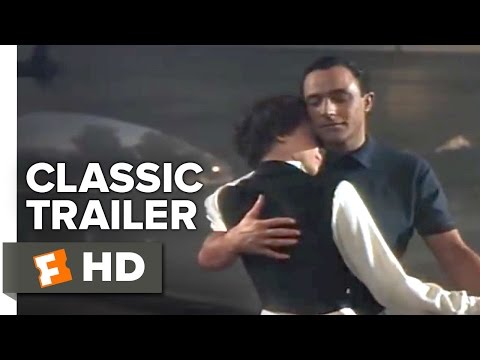
Review
What makes “An American in Paris” strange is also what makes it last. The movie spends two thirds of its runtime flirting with light comedy, then suddenly insists on dance as confession. It is a musical built from songs that were never written for these characters, yet it still lands emotional punches, because Ira Gershwin’s lyrics are engineered for people who talk around their feelings. Jerry Mulligan does that constantly. So do the people orbiting him, especially when the stakes finally become visible: love, gratitude, and the ugly pressure to “do the right thing” in a city still wearing postwar scars.
Lyrically, the film runs on contrast. “I Got Rhythm” is pure forward motion, a walking joke that becomes a street-level manifesto. “Love Is Here to Stay” is the opposite: a promise sung like a dare, because the characters know permanence is a fantasy. Even the witty “By Strauss” has a bite, turning taste into a proxy war between seriousness and pleasure. In musical language, the score keeps translating between jazz-adjacent swagger and symphonic ambition, culminating in the “An American in Paris” ballet, where the film stops explaining itself and simply moves. That formal gamble is the point. Scholars still treat the picture as a key moment in how the Hollywood musical learned to let dance carry narrative weight, not just decoration.
How It Was Made
The origin story is business first, art second, and it matters. MGM producer Arthur Freed secured rights connected to the Gershwin material and treated “An American in Paris” as a title worth building a whole prestige musical around. The studio then assembled the film as an MGM “Freed Unit” project: Vincente Minnelli directing, Gene Kelly designing and choreographing, and Gershwin songs repurposed into story propulsion. Behind the velvet, there was real anxiety. The studio debated the expense and even the existence of the final ballet, because a long ballet sequence was considered box-office poison. Freed fought for it anyway, and the production ultimately put serious money into a sequence that functions like the film’s subconscious made visible.
There is also the small, telling censorship footnote that reveals how the film’s sensuality sneaks in through choreography. Leslie Caron later described how a censor found part of her “chair” moment in the “Embraceable You” section “sexually provocative.” It is funny on paper. On screen, it is the movie admitting that desire is physical, even when the dialogue pretends it is polite.
Key Tracks & Scenes
"Embraceable You" (Lise)
- The Scene:
- Jerry tries to describe Lise to Adam, and the film slips into a danced fantasy. The space feels like an idea more than a room. Caron’s Lise fractures into versions of herself, as if Jerry is auditioning who she might be in his head. Lighting turns soft and theatrical, with the choreography doing the close-ups.
- Lyrical Meaning:
- The lyric is a wish dressed as certainty. “Embraceable” is not just romantic, it is possessive. In this story, that matters. The song frames Lise as a refuge, before the plot reveals she is also a moral problem for everyone involved.
"I Got Rhythm" (Jerry)
- The Scene:
- On the walk home after meeting Milo, Jerry bursts into song with neighborhood kids. It plays like a spontaneous sidewalk carnival, the camera letting Kelly’s taps and the children’s call-and-response do the work. The street becomes a stage without changing its texture.
- Lyrical Meaning:
- This is Jerry’s self-mythology. The lyric claims he needs nothing else, and the film lets him believe it for a moment. It is also a public mask: joy as armor, performed loudly enough that nobody notices how broke he is.
"By Strauss" (Jerry, Henri, Adam)
- The Scene:
- Three men in a café-like interior, killing time and arguing taste. The number is playful, but the blocking is precise: bodies leaning in, backs turning, a rotating triangle of friendship. It’s bright, social lighting. A room you could live in.
- Lyrical Meaning:
- Ira Gershwin’s lyric is comedy built on snobbery. “Away with” becomes a joke that still reveals character. The film uses it to define the men by what they claim to like, right before taste stops being cute and becomes rivalry.
"'S Wonderful" (Jerry & Henri)
- The Scene:
- Jerry and Henri talk about “the girl” without realizing it’s the same woman. The staging is casually confident: two men strolling, singing, selling a dream of romance that the audience already knows is booby-trapped. The tone is sunny, almost careless.
- Lyrical Meaning:
- The lyric is all exclamation, no specifics. That vagueness is the trick. It makes love feel universal, while the plot makes it painfully particular.
"Love Is Here to Stay" (Jerry & Lise)
- The Scene:
- Night by the Seine. The city turns into a dark mirror, with the lovers framed against water and stone. The choreography softens into closeness, more sway than spectacle. This is a confession staged as a lullaby.
- Lyrical Meaning:
- The lyric insists on permanence, which is exactly why it hurts. Lise is already promised elsewhere, and the song becomes a kind of rebellion: two people saying “forever” knowing the world may not allow it.
"I'll Build a Stairway to Paradise" (Henri)
- The Scene:
- Henri performs on a theater stage with show-business polish and a chorus of glamour around him. The lighting turns fully performative: spotlit, presentational, built for applause. It’s a reminder that Henri lives most comfortably inside an audience’s gaze.
- Lyrical Meaning:
- It’s optimism as product. The lyric sells upward motion, the promise of a better world, one step at a time. In the story, that’s Henri’s strength and his blind spot: he believes effort can solve emotional geometry.
"Concerto in F" (Adam)
- The Scene:
- Adam’s concert is filmed as a character reveal. The movie stops treating him as comic relief and lets him be a serious musician for a stretch. The visuals get cleaner and more formal, the kind of respectful framing usually reserved for “real art” inside a studio musical.
- Lyrical Meaning:
- No lyric here, and that is the point. Adam’s honesty is instrumental. He says what he means at the piano, because words fail him.
"An American in Paris" Ballet (Jerry, Lise, Ensemble)
- The Scene:
- Jerry spirals into fantasy and the film builds a painted Paris around him. Sets shift through references to French artists, the colors turning bold and unreal, like memory redesigned. It’s dialogue-free. Dance becomes plot.
- Lyrical Meaning:
- The “meaning” is structural: the film argues that emotion can be resolved through movement, even when the story cannot talk its way out. That is the wager, and it is why the sequence still reads as a thesis statement for the genre.
Live Updates
Although the 1951 film is the core text, “An American in Paris” has a parallel life on stage, and that matters for how audiences now read the lyrics. Christopher Wheeldon’s stage version premiered at Théâtre du Châtelet in 2014 and later reached Broadway, with a book that leans harder into the postwar context than the movie ever fully does. That revisionist pressure changes how the Gershwin standards land: lines that sound like carefree romance in 1951 can feel like denial when staged against occupation memories.
For 2025, the Wheeldon musical is scheduled at the Grand Théâtre de Genève in December (English vocals with surtitles), with Wheeldon credited as stage director/choreographer and Wayne Marshall as musical director. The listing also notes the show is presented by arrangement with Concord Theatricals, signaling its continuing international booking ecosystem. Separately, regional theaters continue to program the musical in repertory slots, keeping the Gershwin catalog in circulation as live storytelling rather than nostalgia playback.
Notes & Trivia
- The climactic ballet is a long, dialogue-free sequence built on Gershwin’s tone poem “An American in Paris,” and production accounts describe it as a major expense and creative risk.
- Turner Classic Movies notes studio pressure to remove the ballet, and frames Freed’s behind-the-scenes fight as central to the film that audiences now remember.
- The film’s musical numbers include Gershwin standards originally written for earlier stage works, then repurposed into a 1951 Paris narrative (a classic “catalog musical” strategy, years before the term got trendy).
- Leslie Caron recalled censorship scrutiny over choreography involving a chair during the “Embraceable You” sequence.
- The original soundtrack album was issued by MGM Records in multiple physical formats (including 78-rpm and EP sets) and hit #1 on Billboard’s pop album chart format listing for the period.
- The Grand Théâtre de Genève’s 2025 program copy explicitly traces the work’s chain of reincarnations: tone poem (1928), film (1951), stage musical (2014 onward).
Reception
In 1951, critics largely treated the film as a technical flex, with the ballet as the clincher. Over time, that praise has held, but modern reading adds friction: the movie’s gender politics and the way Jerry’s pursuit is framed can feel dated, even when the craft is pristine. That split is part of the film’s current reputation. It is both a museum piece and a live wire, depending on what you bring to it.
“One of the most imaginative musical confections turned out by Hollywood in years.”
“One of the finest ever put upon the screen.”
Technical Info
- Title: An American in Paris
- Year: 1951
- Type: MGM film musical (romantic comedy with extended ballet finale)
- Director: Vincente Minnelli
- Producer: Arthur Freed
- Screenplay: Alan Jay Lerner
- Music: George Gershwin; lyrics by Ira Gershwin; musical direction credited to Johnny Green and Saul Chaplin
- Key musical moments (selected): “I Got Rhythm” street sequence; “Love Is Here to Stay” Seine duet; “Concerto in F” concert showcase; “An American in Paris” ballet finale
- Soundtrack album: MGM Records original soundtrack released in 1951; later expanded “deluxe/expanded” editions circulated via modern platforms
- Stage afterlife: Wheeldon/Lucas stage musical created in 2014 (Théâtre du Châtelet) and continues international programming and licensing
FAQ
- Is “An American in Paris” a stage musical, or only a movie?
- Both. The 1951 MGM film is the source, and a Christopher Wheeldon-directed stage adaptation premiered in 2014, later reaching Broadway and continuing in international and regional productions.
- Who wrote the lyrics to the songs in the film?
- The featured standards use lyrics by Ira Gershwin with music by George Gershwin, written for earlier stage projects and recontextualized inside the 1951 film narrative.
- What is the long ballet at the end, and why does it matter?
- It’s a sustained, dialogue-free “An American in Paris” ballet sequence set to Gershwin’s orchestral tone poem. It functions as Jerry’s inner life made visible, and it became the film’s signature formal risk.
- Is there an official soundtrack album?
- Yes. MGM Records issued the original soundtrack in 1951 in several physical formats, and later releases have expanded the program for collectors and streaming-era listening.
- Where can I watch or hear it today?
- The film is regularly programmed by repertory venues and classic-film outlets, and the soundtrack catalog appears across major music services in multiple editions.
Key Contributors
| Name | Role | Contribution |
|---|---|---|
| Vincente Minnelli | Director | Shapes the film’s color, pacing, and the pivot from rom-com to ballet-driven resolution. |
| Arthur Freed | Producer | Freed Unit architect; fought to keep the expensive final ballet and built the project around Gershwin material. |
| Gene Kelly | Star / Choreographer | Designs the film’s dance language, from street tap to the finale’s dream logic. |
| George Gershwin | Composer | Provides the songbook and the tone poem foundation for the finale. |
| Ira Gershwin | Lyricist | Supplies the lyrical architecture that turns standards into character psychology. |
| Alan Jay Lerner | Screenwriter | Builds a story frame that can carry a catalog score toward a ballet climax. |
| Johnny Green | Musical direction | Leads the studio’s musical realization credited in film documentation and soundtrack releases. |
| Saul Chaplin | Music director | Credited music leadership alongside Green; linked to soundtrack arrangements and presentation. |
| Leslie Caron | Lead performer | Anchors the film’s romantic gravity and ballet credibility, especially in “Embraceable You” and the finale. |
| Christopher Wheeldon | Stage adaptation director/choreographer | Reframes the Gershwin catalog for modern stage storytelling (2014 onward), emphasizing postwar context. |
Sources: Turner Classic Movies, American Film Institute (AFI) Catalog, BFI, Wikipedia, Smithsonian (NMAH), Grand Théâtre de Genève, Operabase, JSTOR Daily, RogerEbert.com, Filmsite.org, YouTube (trailers/clips).