70, Girls, 70 Lyrics – All Songs from the Musical
70, Girls, 70 Lyrics: Song List
About the "70, Girls, 70" Stage Show
The libretto was developed by N L. Martin & F. Ebb. Adaptation did J. Masteroff. Music composed by J. Kander. Lyrics were written by F. Ebb. In March 1971, Forrest Theatre Philadelphia held a regional premiere of a show. Trial performances on Broadway began in April 1971, in the Musical Broadhurst Theatre from mid-April to May 1971. There were shown only 9 preliminaries and 35 regular performances. Production was carried out by director P. Aaron and choreographer O. White, with these actors: H. Conried, M. Natwick, L. Roth, J. Faye, D. Freitag, L. Hayman, H. Jacobson & G. Lamb. In July 1971, the Starlight Theatre, located in Kansas City, hosted the exhibition of the new production. The main role was performed by N. Andrews.From June to August 1990, during the Chichester Festival, Minerva Theatre hosted the British version of the theatrical. The production was undertaken by director Paul Kerryson. The cast was following: P. Hinton, B. Greene, S. Powell, B. Skeggs, J. Savage, F. Carby & J. Stewart. A year later was made the West End version of the theatrical. The performance was in the Vaudeville Theatre from July to September 1991, with 112 appearances. The director was P. Kerryson. The cast consisted of: D. Bryan, B. Greene, J. Savage, B. Skeggs, S. Powell, S. Voss & L. Howe. In January 2000, the Theatre at St. Peter's Church hosted five appearances of the play, developed by director M. Leeds with the following cast: J. Powell, J. Connell, H. Gallagher, G. S. Irving & C. Rae. From March to early April 2006, New York City Center shown it within the ‘Encores!’ program. It was directed by K. Marshall. The cast involved G. S. Irving, O. Dukakis, C. Cook, B. Dishy & M. Price. In 1972, the musical was nominated for 1 Tony Award.
Release date: 1971
“70, Girls, 70” – The Musical Guide & Song Meanings
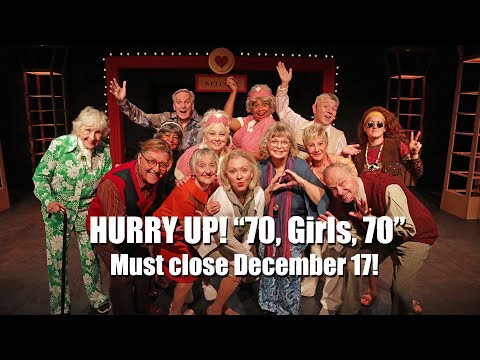
Review
What is “70, Girls, 70” trying to sell you: crime, or dignity? Both. And that is why it is so easy to underestimate. The premise sounds like a sitcom pitch, senior citizens shoplift furs to save their retirement hotel. The lyrics keep insisting the real story is agency, not gimmick. When the score lands, it lands because Fred Ebb writes older characters like adults, not mascots, and John Kander gives them music that moves forward instead of wobbling politely in place.
The lyric themes are blunt in the best way. “Old Folks” treats age as a roll call, not a punchline. “Home” makes returning to a shabby hotel feel like choosing your people over your pride. “Coffee in a Cardboard Cup” is the show’s sneaky mission statement: modern life is cheaper, faster, and a little less human, and the characters are going to fight that erosion with whatever tools they still have. Even the romance song, “Do We?,” frames intimacy as something the world watches and judges, which is a very Kander and Ebb kind of tenderness.
Musically it sits in that Kander and Ebb sweet spot: brassy comedy that can pivot to something existential without changing costumes. The trick is that the “big” number in this show is not a kick line. It is a moral decision, and the lyrics are the mechanism that makes that decision audible.
How It Was Made
On paper, the creative team screams reliability: music by John Kander, lyrics by Fred Ebb, with a book by Ebb and Norman L. Martin and adaptation credited to Joe Masteroff. The source material was the play “Breath of Spring,” already proven as a heist farce. The Broadway problem was scale and timing. In 1971, nostalgia was already flooding Broadway, and this show arrived in the slipstream of bigger, flashier events. It opened at the Broadhurst and closed a month later, despite a cast stacked with beloved veterans.
The show’s later history explains what the first production struggled to articulate: it plays best when it is treated as intimate, not oversized. The licensing page emphasizes older actors and comic roles, which is not just marketing, it is dramaturgy. A later West End revival explicitly reduced orchestrations and reset the piece toward a smaller footprint, and concert versions have kept resurfacing because the score carries even when you strip away the scenery.
If there is a “napkin story” here, it is not a single quirky anecdote. It is the larger, messier fact that “70, Girls, 70” survives by changing its container. It keeps getting rescued from its original production values and reintroduced as what it always was: a character musical with a caper plot attached.
Key Tracks & Scenes
“Old Folks” (Company)
- The Scene:
- The residents of the Sussex Arms announce birthdays like badges. Bright lobby light, a little worn around the edges. The mood is showbiz bravado meeting real-world fragility.
- Lyrical Meaning:
- Ebb uses the word “old” as a dare. The lyric reframes age as presence, not decline. It is also a contract with the audience: laugh with them, not at them.
“Home” (Ida)
- The Scene:
- Ida returns “dressed to the nines,” a small act of rebellion in a rundown hotel. Warm light, soft focus on faces that know her history.
- Lyrical Meaning:
- The lyric makes “home” a choice, not a location. Ida is not sentimental. She is strategic. She is deciding where her life still counts.
“The Caper” (Harry)
- The Scene:
- A fur store problem becomes a planning session. The staging turns practical: doors, counters, lookout positions, timing.
- Lyrical Meaning:
- It is a heist number written like a pep talk. The lyric treats competence as dignity. The joke is the audacity. The feeling is the teamwork.
“Coffee in a Cardboard Cup” (Melba, Fritzi)
- The Scene:
- Mid-heist and mid-complaint, the world pauses for a two-woman riff on cheapness. Cool retail lighting, the kind that makes everything look disposable.
- Lyrical Meaning:
- This is social critique in a show tune suit. The metaphor is simple: the world has traded texture for convenience. The characters refuse to accept that trade quietly.
“You and I, Love” (Mr. and Mrs. McIllehenny, Ensemble)
- The Scene:
- Residents stare at a television with no picture and pretend they can see it. The stage picture is funny until it becomes bleak.
- Lyrical Meaning:
- The lyric is about companionship as imagination. It is also about neglect: when society stops investing in you, you start inventing your own entertainment.
“Do We?” (Walter, Eunice)
- The Scene:
- A couple tries to have a private moment and realizes the room is watching. A small pool of light, the sense of being observed even when no one speaks.
- Lyrical Meaning:
- It is a love duet that jokes about sex and then quietly defends it. The lyric insists older people still have a full life, including desire, whether the audience is comfortable or not.
“Go Visit Your Grandmother” (Eddie, Grandmother)
- The Scene:
- A comic set piece with movement baked into it, often staged like a brisk errand that keeps getting complicated. The rhythm is propulsion.
- Lyrical Meaning:
- The lyric weaponizes a wholesome phrase. It is advice and misdirection at once, a reminder that innocence can be used as cover.
“70, Girls, 70” (Company)
- The Scene:
- The group agrees to one more job. The mood is jubilant, and a little scared. You can feel the room negotiating its own conscience.
- Lyrical Meaning:
- The title becomes a rallying cry. The lyric is about solidarity, but it is also about self-justification. They are making a moral argument fast because the plot will not give them time later.
“The Elephant Song” (Ida)
- The Scene:
- Ida steps out and addresses death directly, breaking the show’s genial surface. The lighting often isolates her, because the subject does.
- Lyrical Meaning:
- Kander and Ebb do not soften the truth. The lyric treats mortality as the one topic everyone dodges until it is too late. The song is the show’s emotional spine.
“Yes” (Ida, Company)
- The Scene:
- After loss, the show insists on one last number. The staging leans surreal, Ida watching from above while the living keep moving.
- Lyrical Meaning:
- “Yes” is not naive optimism. It is defiance. The lyric refuses to let the story end as a cautionary tale about aging or crime.
Live Updates
Information current as of February 2, 2026. “70, Girls, 70” is active primarily through licensing, and the current rights home is Concord Theatricals. Their listing emphasizes the original 1971 version and pitches it, correctly, as a musical comedy with substantial roles for older performers.
On the ground, that licensing life shows up as regional bookings. One clear example: a January 21-31, 2026 run is publicly listed at the Fringe Theater in Key West, with ticketing already live. This is the show’s modern habitat: smart venues that can cast it well and stage it without trying to turn it into a mega-musical.
If you are listening in 2025-2026, the original Broadway cast recording remains the easiest way in. It is available on major platforms, and Masterworks Broadway maintains an official catalogue page for the recording. The score is also a frequent candidate for concerts and one-night events, which keeps individual numbers circulating even when there is no national tour to track.
Notes & Trivia
- The original Broadway production opened April 15, 1971 at the Broadhurst Theatre, after nine previews, and closed May 15, 1971, after 35 performances.
- Mildred Natwick received a Tony nomination for Best Actress in a Musical for creating Ida.
- Actor David Burns was part of the pre-Broadway period and died after collapsing during a preview performance in Philadelphia, reportedly just after a dance step in “Go Visit Your Grandmother.”
- New York City Center’s Encores! mounted the show March 30 to April 2, 2006, with a veteran-heavy cast and Kathleen Marshall directing.
- Concord’s current licensing page name-checks “Coffee in a Cardboard Cup,” “Go Visit Your Grandmother,” and “Yes” as signature numbers, which is a good short list for first-time listeners.
- The York Theatre Company’s Musicals in Mufti series made “70, Girls, 70” a hot ticket in early 2000, an early sign the piece worked best as an intimate revival.
- Overture-style production databases document a “Philadelphia song list,” a reminder that the show’s tryout history is part of its DNA, not just trivia.
Reception
In 1971, the show struggled in a season that was already gorging on nostalgia. The reception has mellowed over time, especially in concert and revival settings, where reviewers often praise the score while admitting the book can feel like a polite engine for better songs. That is not a fatal flaw. It is a casting and pacing challenge.
“a weak show with a few strong numbers and a touching message about America’s indifferent treatment of its elders.”
“The modestly pleasant City Center Encores! revival of 70, Girls, 70 makes it quite clear why this show was the least commercially successful…”
“A bright, jaunty score… a brassy valentine to showbiz troupers.”
Quick Facts
- Title: 70, Girls, 70
- Year: 1971
- Type: Musical comedy with caper plot
- Music: John Kander
- Lyrics: Fred Ebb
- Book: Fred Ebb and Norman L. Martin
- Adaptation credit: Joe Masteroff
- Based on: “Breath of Spring” by Peter Coke
- Original Broadway theatre: Broadhurst Theatre
- Selected notable placements: “Old Folks” (opening roll call); “The Caper” (plan in motion); “Coffee in a Cardboard Cup” (values critique); “70, Girls, 70” (one-more-job decision); “The Elephant Song” (death addressed directly); “Yes” (final insistence on life)
- Cast album status: Original Broadway cast recording released and widely available on streaming; Masterworks Broadway maintains an official catalogue page
- Licensing: Concord Theatricals (original 1971 version emphasized)
Frequently Asked Questions
- Who wrote the lyrics for “70, Girls, 70”?
- Fred Ebb wrote the lyrics, with music by John Kander. The book is credited to Ebb and Norman L. Martin, with adaptation credit to Joe Masteroff.
- What is the show actually about?
- A group of residents in an Upper West Side retirement hotel turn to fur-store thefts to raise money and save their building from being sold to developers.
- Is it a good fit for contemporary theatres?
- Yes, if you can cast strong older performers and keep the staging nimble. The piece tends to thrive in intimate revivals and concert settings.
- What songs should I start with?
- Try “Coffee in a Cardboard Cup” for the show’s bite, “Old Folks” for its tone, and “The Elephant Song” for its emotional center.
- Is it being produced in 2026?
- At least one public run is listed for January 2026 in Key West, and the title remains active through licensing, which drives most current productions.
Key Contributors
| Name | Role | Contribution |
|---|---|---|
| John Kander | Composer | Built a score that can play brassy comedy and then turn sharply inward. |
| Fred Ebb | Lyricist; book writer | Wrote lyrics that treat older characters as adults with appetite, pride, and grit. |
| Norman L. Martin | Book writer | Co-shaped the narrative frame that carries the caper and the community story. |
| Joe Masteroff | Adaptation | Credited with adaptation work from the source play into a musical structure. |
| Peter Coke | Source author | Wrote “Breath of Spring,” the play that supplies the heist premise. |
| Paul Aaron | Original Broadway director | Directed the 1971 staging at the Broadhurst. |
| Onna White | Choreographer | Created movement for a show that needs comic momentum more than ballet gloss. |
| Jane Greenwood | Costume designer | Helped define character through clothes that balance realism and theatricality. |
| Don Walker | Orchestrations | Shaped the sound world of the original production and recording. |
| Kathleen Marshall | Director (Encores! 2006) | Led a concert revival that helped cement the piece’s modern reputation. |
| Paul Gemignani | Music director (Encores! 2006) | Conducted the Encores orchestra, a key reason the score landed in concert form. |
| Concord Theatricals | Licensing | Current licensing home, maintaining the original 1971 version for producers. |
Sources: IBDB; Concord Theatricals; Playbill; Masterworks Broadway; TheaterMania; Theaterscene.net; York Theatre Company; Overture; Etix (Fringe Theater, Key West); Wikipedia.