25th Annual Putnam County Spelling Bee Lyrics – All Songs from the Musical
25th Annual Putnam County Spelling Bee Lyrics: Song List
- 25th Annual Putnam County Spelling Bee
- Spelling Rules/My Favorite Moment of the Bee 1
- My Friend, The Dictionary
- First Goodbye
- Pandemonium
- I'm Not That Smart
- THe Second Goodbye
- Magic Foot
- Pandemonium (Reprise)/My Favorite Moment of the Bee 2
- Why We Like Spelling
- Prayer of the Comfort Counselor
- My Unfortunate Erection
- Woe Is Me
- I'm Not That Smart (Reprise)
- I Speak Six Languages
- I Love You Song
- Woe Is Me (Reprise)
- My Favorite Moment of the Bee 3/Second
- Finale
- Last Goodbye
About the "25th Annual Putnam County Spelling Bee" Stage Show
The concept belongs to Rebecca Feldman. The songs wrote William Finn. The libretto created Rachel Sheinkin. From mid-July to early August 2004, it was the first show production in Sheffield Consolati Performing Arts Center. Production realized by directors Michael Unger and Rebecca Feldman, and choreographer Dan Knechtges. In the musical participated D. S. Craig, C. Keenan-Bolger, J. T. Ferguson, D. Fogler, D. Baskin, L. Howard & R. Sapp. Off-Broadway tryouts of the spectacle began in January 2005. Production took place in the Second Stage Theatre in February and March 2005. Then the show moved to Broadway, where the tests began in April. The musical took place in the Circle in the Square Theatre from May 2005 to January 2008 with 21 preliminaries and 1136 regular appearances. This production belongs to director James Lapine and choreographer Dan Knechtges. The cast involved D. Baskin, J. T. Ferguson, L. Howard, D. Fogler, C. Keenan-Bolger, J. Llana & J. Reiss.From September 2006 to May 2007, it was a North American tour. In June 2009, the play was in St. Louis New Line Theatre, directed by Scott Miller. The cast consisted of A. Allen, E. Berry, B. Claussen, M. Dowdy, N. Kelly, A. Kinney, K. Nestor, J. Rhine & D. Sharn. From February to April 2011, Warehouse Donmar hosted London’s production, developed by director Jamie Lloyd and choreographer Ann Yee with this cast: D. Fynn, H. Gallivan, S. Pemberton, K. Kingsley, M. Lawson, C. Carswell, I. Little-Roberts & A. Mitchell. In 2013, the British tour of the musical began. The performance was shown in Australia, South Korea, China, New Zealand, the Philippines, Norway, Mexico, and Israel. Staging was nominated for several awards.
Release date: 2005
"The 25th Annual Putnam County Spelling Bee" – The Musical Guide & Song Meanings
Review: the nicest show about panic
A spelling bee is already theater: bright lights, small bodies, adult rules, public judgment. This musical leans into that pressure and treats it like a songwriting engine. The score keeps switching gears, from cartoon pep to bruised confession, because adolescence does that too. William Finn’s lyric voice loves a punchline, but it loves an interruption even more: a kid gets a laugh, then the laugh curdles into a need. The text drives the plot in a blunt, procedural way (word, definition, spelling, consequence), and then cheats, on purpose, by letting songs become private hallucinations inside a public contest. That split is the whole show.
Musically, it behaves like a pop sketchbook with a Broadway brain. A patter burst arrives with gym-class breath, then Finn drops in harmonic side-steps that make the comedy feel smarter than its own setup. The kids’ songs tend to be structured as arguments with themselves: they claim they are fine, then the rhyme scheme betrays them. Even the adult hosts, who look like comic relief, use language like armor. This is why the piece still works in 2025: the jokes are specific, but the lyric problem is evergreen. How do you sound confident while your voice is changing?
Viewer tip: if you can, sit close enough to clock the micro-reactions when a volunteer speller is pulled onstage. The show’s funniest punctuation often lives in a half-second glance from the adults, the kind that says “we’ve seen this exact kid before” and means “we were this exact kid.”
How it was made
The origin story is unusually literal: it started as an improvisational piece, built to “discover a play” inside the structure of a spelling bee. That early version, titled “C-R-E-P-U-S-C-U-L-E,” was created by Rebecca Feldman and performed by the improv troupe The Farm, then transformed into a scripted musical with Finn and book writer Rachel Sheinkin, plus additional material by Jay Reiss. Development ran through Barrington Stage Company workshops in 2004 before the Off-Broadway run and the 2005 Broadway transfer. You can still feel the improv DNA in the finished product: the show keeps leaving strategic blank space for audience volunteers, ad-libs, and sudden detours, but the emotional turns are tightly composed.
In practical terms, that hybrid identity is the writing challenge: the lyric has to land cleanly even when the scene rhythm changes night to night. Finn solves it by making many songs “closed systems.” The premise is simple, the hook repeats, the rhyme does the heavy lifting. When the scene shifts, the song can survive it. When the show wants to break your heart, it stops improvising and starts aiming.
Key tracks & scenes
"My Friend, the Dictionary" (Olive, Company)
- The Scene:
- In a school gym setup, Olive tries to reserve a chair for her dad in the audience while the bee keeps moving. The moment sits on the edge of a rule: public contest versus private need.
- Lyrical Meaning:
- Olive’s lyric is a love letter to order. Alphabetical certainty becomes a substitute parent, neat borders replacing unreliable arrival times. The comedy (hyper-specific references) is also a defense mechanism: if she can keep talking, she can keep waiting.
"Pandemonium" (Chip, Company)
- The Scene:
- The bee is mid-flight and the kids whip themselves into competitive fever. The script notes that everyone snaps back into place on the bleachers at the end, like nothing happened.
- Lyrical Meaning:
- This is Finn’s thesis in pep-rally clothing: chaos feels like purpose when you are young. The repeated phrase works like a spell the kids cast on themselves, turning anxiety into “team spirit” so it looks socially acceptable.
"Magic Foot" (Barfée, Company)
- The Scene:
- After a word and a beat of tension, Barfée goes “for the foot” and the company joins the bit, turning a strange physical habit into a full dance break.
- Lyrical Meaning:
- On paper, it’s a novelty number. Underneath, it is a manifesto about coping. Barfée’s quirk becomes technique, then identity, then leverage. The lyric is funny because it is irrationally proud, and it is moving because pride is how he survives the room.
"My Unfortunate Erection" (Chip)
- The Scene:
- Chip’s body betrays him in front of authority. The contest doesn’t pause for puberty, so the song becomes the pause.
- Lyrical Meaning:
- Finn writes embarrassment like a legal brief. Chip argues his case, over-explains, spirals, and tries to reclaim control through precision. The joke is that he is too articulate for the situation. The ache is that he has no other tool.
"Woe Is Me" (Logainne, Dads, Company)
- The Scene:
- Logainne’s two fathers hover in the gym atmosphere while she pushes herself toward victory. Even the stage direction reminds you the “dads” are present, framing her as both protected and pressured.
- Lyrical Meaning:
- The lyric is a complaint that keeps correcting itself. “Woe” is a joke word for a kid to use, which is the point: Logainne borrows adult rhetoric to negotiate adult expectations. The repeated hook makes her sound dramatic, but the subtext is small and real: please stop watching me like that.
"I Speak Six Languages" (Marcy, Girls)
- The Scene:
- Marcy turns achievement into performance, rattling off talents as if listing credentials will protect her from failure.
- Lyrical Meaning:
- This number treats accomplishment as compulsion. The lyric stacks facts like bricks, building a wall between Marcy and anyone who might ask how she is doing. Finn’s trick is that the wall is impressive, then obviously exhausting.
"The I Love You Song" (Olive, Rona as Mom, Mitch as Dad)
- The Scene:
- The gym falls away into Olive’s fantasy of family attention. Adult figures become parental stand-ins and the music shifts into a warmer, slower emotional temperature.
- Lyrical Meaning:
- The lyric is structured like a child’s negotiation: I will be good, I will be perfect, just say it back. It’s one of Finn’s cleanest examples of writing “need” without sentimentality. The words are plain because the request is plain.
"The Champion" (Rona, Company)
- The Scene:
- Near the end, the bee resolves and the adults take control of the room again, narrating what the victory means in public terms.
- Lyrical Meaning:
- Rona’s lyric sells triumph, but it also exposes how adults package kids’ lives into “lessons.” The show lets that framing exist, then quietly refuses to let it be the last word.
Live updates (2025–2026)
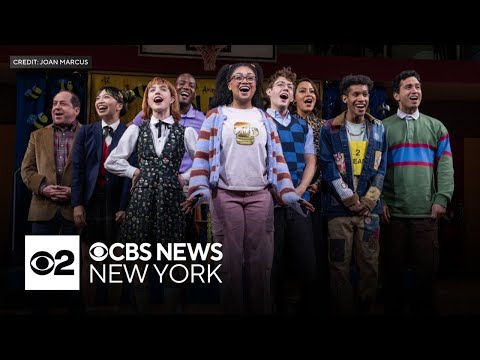
The show is currently in its first New York City revival, Off-Broadway at New World Stages (Stage 3). Previews began November 7, 2025, with opening night on November 17, 2025, and the run is now scheduled through April 12, 2026. Direction and choreography are by Danny Mefford, and the production keeps the classic school-gym framing while refreshing the joke surface for a 2025 audience. The cast includes Philippe Arroyo (Chip), Autumn Best (Logainne), Leana Rae Concepcion (Marcy), Justin Cooley (Leaf), Lilli Cooper (Rona), Jason Kravits (Panch), Matt Manuel (Mitch), Kevin McHale (Barfée), and Jasmine Amy Rogers (Olive).
Practical viewer tip: this revival is still built around audience volunteers. If you hate being perceived, pick a seat that does not scream “friendly teacher who will play along.” If you love chaos, sit where the ushers can see you and keep your posture optimistic. Either way, the best seats for the show’s comedy are the ones close enough to hear the adult hosts’ sotto-voce corrections and watch the kids clock them.
Bigger context: Finn’s death in 2025 has sharpened how the show is discussed, especially the way his lyrics balance sarcasm and mercy. The revival’s timing makes the score feel less like a cute relic and more like a craft lesson in how to write comedy that can still take a punch.
Notes & trivia
- The original Broadway cast album was released May 31, 2005 by Ghostlight Records, recorded April 5, and produced by Kurt Deutsch and Joel Moss.
- The album track list includes “Why We Like Spelling,” a bonus track not performed in the Broadway production.
- The show’s format regularly uses four audience members as spellers, which is why the scene writing is built to flex without breaking.
- The current New York revival lists a runtime of about 1 hour and 45 minutes with no intermission, and includes a content advisory for younger audiences.
- Rebecca Feldman’s earliest version was an improv-based show, which helps explain why so many songs are built around a single obsessive idea that can survive an ad-lib.
- “Pandemonium” literally ends with the company returning to their places, a tiny stage-direction joke about how public chaos gets erased for the next “proper” moment.
Reception
Critics tended to agree on the same paradox: the show is silly in format and surprisingly serious in effect. Early regional reactions often praised the craft of turning a small premise into a full evening, while later commentary has focused more on Finn’s lyric empathy and the show’s clear-eyed view of childhood performance culture.
“A Barrington Stage Co. production” that found strong comic footing in a deceptively simple competition setup.
“A joyful and inclusive celebration” that still knows exactly when to turn the laughter into something tender.
A “little musical that could” journey: workshop to Off-Broadway to Broadway, powered by buzz and precision craft.
Quick facts
- Title: The 25th Annual Putnam County Spelling Bee
- Year: 2005 (Broadway opening); developed 2004 (Barrington Stage)
- Type: One-act musical comedy
- Music & Lyrics: William Finn
- Book: Rachel Sheinkin
- Conceived by: Rebecca Feldman
- Additional material: Jay Reiss
- Original Broadway director: James Lapine
- Original Broadway choreography: Dan Knechtges
- 2025–2026 NYC revival director/choreographer: Danny Mefford
- 2025–2026 NYC revival music supervisor: Carmel Dean
- Notable placements: “My Friend, the Dictionary” (Olive’s chair and waiting); “Magic Foot” (Barfée’s technique becomes dance); “The I Love You Song” (fantasy family inside the gym)
- Original Broadway cast recording: Released May 31, 2005 (Ghostlight Records); includes bonus track “Why We Like Spelling”
- Awards notes: Tony wins for Best Book of a Musical (Sheinkin) and Featured Actor in a Musical (Dan Fogler)
- Current NYC run: New World Stages, Off-Broadway, scheduled through April 12, 2026
Frequently asked questions
- Is the current New York production a Broadway revival?
- No. The current engagement is Off-Broadway at New World Stages (Stage 3).
- Who wrote the lyrics?
- William Finn wrote both the music and lyrics, with Rachel Sheinkin writing the book.
- Why do audience members end up onstage?
- The show’s concept bakes in four “guest spellers” to preserve its improv roots and keep the gymnasium contest feeling unpredictable.
- What song best explains Olive’s story?
- “The I Love You Song.” It puts her loneliness into direct language and shows how badly she wants a simple sentence returned to her.
- Is the cast album different from the stage show?
- Yes. The original Broadway cast album includes a bonus track (“Why We Like Spelling”) that is not performed in the Broadway production.
- Is it appropriate for kids?
- Many productions flag a content advisory due to sexual references and language. The current New York run advises that some material may not be suitable for children 12 and under.
Key contributors
| Name | Role | Contribution |
|---|---|---|
| William Finn | Composer, lyricist | Wrote the score’s comic patter and the show’s emotional hinge songs. |
| Rachel Sheinkin | Book writer | Built the contest mechanics that let songs function as private “breakouts.” |
| Rebecca Feldman | Conceiver | Created the original improv framework that became the musical’s format. |
| Jay Reiss | Additional material | Helped shape the comic scene texture and audience-volunteer scaffolding. |
| James Lapine | Original director | Staged the Broadway version’s blend of game-show pace and empathy. |
| Dan Knechtges | Original choreographer | Defined the show’s “gym movement” language, including the dance eruptions. |
| Danny Mefford | 2025–2026 NYC revival director/choreographer | Leads the New World Stages staging that updates timing while keeping the format intact. |
| Carmel Dean | 2025–2026 NYC revival music supervisor | Oversees the musical polish and balance in the current Off-Broadway run. |
| Kurt Deutsch | Cast album producer | Produced the 2005 original Broadway cast recording. |
| Joel Moss | Cast album producer | Co-produced the 2005 original Broadway cast recording. |
Sources: SpellingBeeNYC Official Site, Playbill, Music Theatre International, Ghostlight Records, Variety, The Daily Beast, Kenyon College archive, Telecharge.