
1776 Lyrics: Song List
About the "1776" Stage Show
Release date of the musical: 1969
"1776" – The Musical Guide & Song Meanings
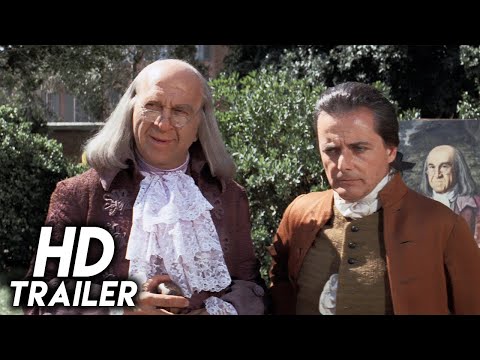
Review
“1776” has one audacious idea and it commits to it: turn parliamentary procedure into character comedy without turning history into wallpaper. The lyrics succeed because they treat rhetoric as action. A vote is not an outcome, it is a fight scene. And Sherman Edwards writes fight scenes with punchy, modern cadence that still sounds plausible in a colonial room that smells like sweat and compromise.
The show’s lyric engine is the collision between public speech and private motive. In this score, a man does not sing because he feels. He sings because he cannot win the room any other way. When the writing wants to be affectionate, it gets wry. When it wants to be brutal, it goes plain. That tonal discipline is why “1776” keeps resurfacing whenever America nears an anniversary and tries to decide whether to clap or argue.
Listener tip: if you are here for lyric craft, track how many songs are actually about persuasion. Even the love material is framed as stamina management. “Till Then” and “Yours, Yours, Yours” are not detours. They are the show quietly admitting that ideals require a body to carry them.
How It Was Made
Edwards came to “1776” with pop-song credentials and a very specific mission: he wanted to push the Founding Fathers to their “outermost limits,” showing them as talented, stubborn, and human enough to be aggravating. That framing matters because it explains the lyric voice. The show is not reverent. It is intimate. The men are not marble. They are colleagues with egos and deadlines.
Peter Stone’s recollection of the project’s “click” moment is a masterclass in musical theatre diagnostics: once Edwards played “Sit Down, John,” Stone said everyone suddenly understood the level of the whole show. One opening number, and the creative team had its operating system.
Then came the afterlife politics. The material became famous for how it survived official discomfort, including pressure around “Cool, Cool, Considerate Men” in the film era. That subplot is not just gossip. It proves the show’s core claim: power hates being lyricized, especially when the rhyme is catchy.
Key Tracks & Scenes
"Sit Down, John" (Adams, Congress)
- The Scene:
- Philadelphia. The chamber. Heat and impatience. Papers everywhere. The room treats Adams like a recurring headache, which is exactly his brand.
- Lyrical Meaning:
- The lyric is social discipline as music: the group tries to hush the one person insisting on a real debate. It defines Adams’ role instantly. He is not the hero because he is likable. He is the hero because he is unignorable.
"Piddle, Twiddle and Resolve" (Adams)
- The Scene:
- Same room, same stalemate. The light feels flatter now, as if the day has decided to punish them for wasting it.
- Lyrical Meaning:
- This is Edwards turning procedural gridlock into a comic aria. The lyric’s power is its contempt. Adams is not describing a problem. He is naming a habit.
"Till Then" (Adams, Abigail)
- The Scene:
- Adams reads and imagines. The chamber blurs at the edges. The staging often softens, as if thought itself changes the weather.
- Lyrical Meaning:
- The lyric shows what public leaders rarely admit onstage: loneliness. It also frames Abigail as more than a spouse. She is a moral witness Adams trusts more than the room.
"But, Mr. Adams" (Adams, Franklin, Jefferson, Sherman, Livingston)
- The Scene:
- A tactical meeting inside the chamber’s machinery. The work is not inspirational yet. It is logistical. Who writes, who signs, who gets blamed.
- Lyrical Meaning:
- The lyric is the show explaining its own politics: progress needs coalition, and coalition requires somebody to swallow pride. The comedy comes from competence arguing with ego.
"He Plays the Violin" (Martha, Franklin, Adams)
- The Scene:
- Jefferson’s room. A change of air. Domestic detail. War and legislation briefly become background noise.
- Lyrical Meaning:
- The lyric romanticizes Jefferson in a way that is strategic. The show needs him not as a statue, but as a working artist. It frames writing the Declaration as a creative act with sweat, not lightning.
"Cool, Cool, Considerate Men" (Dickinson, Conservatives)
- The Scene:
- Back in the chamber. The “yes” votes leave. The “no” votes get the room to themselves. The lighting can sharpen here, turning political self-interest into a spotlight.
- Lyrical Meaning:
- The lyric is conservatism as choreography: controlled, polite, and designed to protect property. It is one of the score’s clearest examples of Edwards using a catchy hook to make an argument stick in your teeth.
"Momma Look Sharp" (Courier)
- The Scene:
- The chamber empties into silence. A young courier speaks of battlefield loss. The room stops being witty because grief does not negotiate.
- Lyrical Meaning:
- The lyric weapon is simplicity. No rhetoric. No flourish. The song forces the delegates to feel the human cost they keep abstracting.
"Molasses to Rum" (Rutledge)
- The Scene:
- Act II. The slavery debate. Rutledge takes the room like a prosecutor. The atmosphere tightens, and the audience realizes the show is willing to ruin the party.
- Lyrical Meaning:
- This lyric is indictment, not confession. It exposes hypocrisy by naming the trade network and implicating the North as well as the South. Dramatically, it is the score’s harshest turn because it is not interested in comfort.
"Is Anybody There?" (Adams, Thomson)
- The Scene:
- Near the end. Exhaustion. Paperwork becomes destiny. The chamber looks smaller than it did in Act I, as if time has compressed the walls.
- Lyrical Meaning:
- The lyric questions legacy in real time. Not “will we win,” but “will anyone care what we risked.” It is the show’s final nervous system check.
Live Updates
Information current as of February 2, 2026. “1776” is having an unusually visible 2026 regional season, driven by the U.S. semiquincentennial mood. Ford’s Theatre in Washington, D.C., is running the show March 13 to May 16, 2026, and the company has already announced cast and ticket range details publicly. Walnut Street Theatre in Philadelphia is also mounting a spring 2026 run, with listings spanning mid-April through late May.
If you want the most recent big commercial footprint, look backward a bit: the Roundabout revival ran on Broadway October 6, 2022 through January 8, 2023, then launched a national tour in 2023 that played through August 2023. That tour matters for lyric discourse because it kept the 2022 production’s interpretive frame in circulation, including its reframing of who gets to speak these lines.
Practical listening guidance for 2026: many theatres still market the 1972 film runtime (2h 45m) as a shorthand comparison point. Stage productions vary, but the score’s architecture is stable. If you are attending live, read the song list once beforehand. The lyrics land harder when you know which “comic” number is about to turn serious.
Notes & Trivia
- The original Broadway production opened March 16, 1969 and ran 1,217 performances, closing February 13, 1972 (with multiple theatre transfers).
- The show won the 1969 Tony Award for Best Musical, and Peter Hunt won for direction.
- Edwards and Stone’s origin story is unusually well documented, including Peter Stone’s account of hearing “Sit Down, John” and immediately understanding the show’s tone.
- “Cool, Cool, Considerate Men” became famous for being cut from the 1972 film under political pressure, later restored in subsequent versions.
- The 2022 Broadway revival cast performers who identify as female, trans, or non-binary as the Founding Fathers, explicitly reframing the text through present-day identity and power.
- The original Broadway cast recording (1969) remains the baseline lyric reference for many listeners and is still widely available on major services.
- In 2026, multiple major U.S. cities are programming “1776” as part of anniversary-focused seasons.
Reception
In 1969, critics largely marveled that a committee meeting could feel theatrical. The approval was not just patriotic. It was craft-based: the show had real stakes, real jokes, and a lead role built on stubborn stamina.
“a most striking, most gripping musical.”
By 2022, the reviews shifted toward concept and framing. Many critics acknowledged the bold casting and wrestled with whether the production clarified or clouded the piece’s political argument.
“struggles to justify its existence.”
“a hybrid of the spirits of 1776 and 1619.”
Quick Facts
- Title: 1776
- Year: 1969 (original Broadway production)
- Type: Book musical (history, comedy-drama)
- Book: Peter Stone
- Music & Lyrics: Sherman Edwards
- Original Broadway opening / closing: March 16, 1969 / February 13, 1972
- Original Broadway run: 1,217 performances
- Setting (production listing): Philadelphia; Chamber and Anteroom of Congress plus nearby locations, May to July 1776
- Selected notable placements: Chamber opener (“Sit Down, John”); letter fantasy (“Till Then”); Jefferson’s room (“He Plays the Violin”); conservative bloc showcase (“Cool, Cool, Considerate Men”); war cost pivot (“Momma Look Sharp”); slavery debate (“Molasses to Rum”)
- Album/recording status: Original Broadway Cast Recording (1969) widely available; track listing includes “Cool, Cool, Considerate Men” on the album sequence
Frequently Asked Questions
- Who wrote the lyrics for “1776”?
- Sherman Edwards wrote both the music and lyrics, with Peter Stone writing the book.
- Is “1776” mostly comedy or mostly history lesson?
- It is a political workplace comedy that occasionally turns into a gut punch. The show uses humor to keep the arguments playable, then drops the temperature when the cost of war and slavery enters the room.
- Why is “Molasses to Rum” such a big deal?
- Because it refuses patriotic soft-focus. The lyric names the economic system behind slavery and accuses multiple regions, not just one villain. It changes the moral lighting of Act II.
- Was “Cool, Cool, Considerate Men” really cut from the film?
- Yes. Reporting and historical accounts describe political pressure around the number during the 1972 film process, and later versions restored it.
- Is “1776” being produced in 2026?
- Yes, with prominent spring 2026 runs announced at Ford’s Theatre (Washington, D.C.) and Walnut Street Theatre (Philadelphia), among other regional seasons.
- Which recording should I start with if I care about lyrics?
- Start with the 1969 Original Broadway Cast Recording to learn the score’s baseline pacing and wordplay, then compare to the 1972 film version to hear how performance style changes the bite.
Key Contributors
| Name | Role | Contribution |
|---|---|---|
| Sherman Edwards | Composer-Lyricist | Wrote a score that turns persuasion into melody, balancing satire with moral pressure. |
| Peter Stone | Book Writer | Built a playable political chamber piece, then shaped the show’s tone around Edwards’ opening number. |
| Peter Hunt | Director (original) | Staged the original Broadway production with tight committee-room momentum. |
| Roundabout Theatre Company | Producer (2022 revival) | Mounted the Broadway revival that reframed the casting lens and toured in 2023. |
| Ford’s Theatre | Producer (2026) | Programming “1776” as a semiquincentennial-season anchor in Washington, D.C. |
| Walnut Street Theatre | Producer (2026) | Mounting a spring 2026 Philadelphia run tied to the city’s historical location in the story. |
Sources: IBDB; Playbill; PBS American Masters; Los Angeles Times; Smithsonian Magazine; TIME; The Guardian; Ford’s Theatre; Walnut Street Theatre; TheatrePhiladelphia; Legacy Recordings; Entertainment Weekly.