
Tina Lyrics: Song List
- Act 1
- Nutbush City Limits
- Don't Turn Around
- Shake a Tail Feather
- The Hunter
- Matchbox
- It's Gonna Work Out Fine
- A Fool in Love
- Let's Stay Together
- Better Be Good to Me
- I Want To Take You Higher
- River Deep Mountain High
- Be Tender with Me Baby
- Proud Mary
- I Don't Wanna Fight
- Act 2
- Private Dancer
- Disco Inferno
- Open Arms
- I Can't Stand the Rain
- Tonight
- What's Love Got to Do With It?
- We Don't Need Another Hero
- The Best
-
Nutbush City Limits (Reprise)

About the "Tina" Stage Show

Tina follows Tina Turner from her humble beginnings in Nutbush, Tennessee, to her transformation into the global queen of rock 'n' roll. Born Anna Mae Bullock in 1939, Turner rose to fame in the 1960s alongside her husband, Ike. She later revealed in her autobiography that she had suffered domestic abuse at his hands—they separated in 1976 and divorced two years later. Turner later made a massive comeback in the 1980s. The Queen of Rock ‘n’ Roll has sold 180 million records worldwide and been honored with 11 Grammy Awards.
Release date of the musical: 2019
"TINA: The Tina Turner Musical" – The Musical Guide & Song Meanings
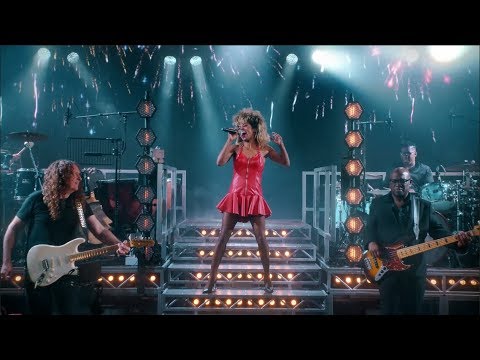
Review: a jukebox score that uses hit songs as plot pressure
Most jukebox musicals treat songs like rewards: you sit through the biopic beats, then the show hands you a familiar chorus as dessert. TINA mostly refuses that bargain. The book builds a frame where each number is a negotiation with power: parents, husbands, producers, record labels, and the audience’s appetite for a “comeback.” The lyrics are not new, but the meaning is. Context becomes the arranger.
Here is the central lyrical theme the show keeps returning to: control disguised as love. “A Fool in Love” is not just a hit, it is the moment the world learns to monetize her voice. “River Deep - Mountain High” is not just spectacle, it is ambition colliding with somebody else’s idea of genius. Then the act break lands on refusal, not triumph. LondonTheatre notes “I Don’t Wanna Fight” closes Act I, which is a blunt structural choice: the biggest victory in the first half is deciding to stop bargaining with violence.
Musically, the show’s sound is a career timeline, but the staging uses repetition like a motif. The Buddhist chant scene is not a one-off. The National Theatre Foundation study guide points out a repeated chant across three moments, almost identical in shape, different in meaning. That is the show’s best lyric-adjacent trick: the same words, new stakes, and a body that has learned what the mind already knows.
How it was made: a bio-musical built with the subject in the room
The credits tell you how this machine was built. The book is by Katori Hall with Frank Ketelaar and Kees Prins, and the show is presented in association with Tina Turner herself. That “association” is not a branding flourish. A British Theatre Guide review of a 2025 touring stop notes Turner was involved throughout the creation, from concept to opening night. That matters for lyric readers because it explains the show’s perspective: it is less interested in gossip than in the mechanics of endurance.
The best behind-the-scenes material for understanding song choices is Playbill’s track-by-track essay by Hall, written around the cast recording. It is not just promo. It is a writer explaining why this song goes here, what the scene needs, and how a famous chorus can act like dialogue when you stage it against the wrong person.
Another useful piece of “making” is performer craft. In a Stage interview, Adrienne Warren described Turner encouraging her to move beyond impersonation and to find something personal inside the role. That directive shapes how lyrics land onstage. The show does not need a perfect mimic. It needs an actor who can let a familiar lyric sound like a decision being made in real time.
Key tracks & scenes: where the words change meaning
"Etherland / Sound of Mystic Law" (Tina / Company)
- The Scene:
- Top of show. Tina prepares to go onstage, chanting. Many productions keep this nearly still: a tight pool of light, breath-forward sound, the feeling of a ritual before combat. The National Theatre Foundation guide flags this chant as a repeated motif across three moments in the show.
- Lyrical Meaning:
- This is the show’s quietest “I want” statement. The text is not about fame. It is about steadiness. The lyric function is permission: a woman claiming her own mind before the world takes another bite.
"Nutbush City Limits" (Young Anna Mae / Company)
- The Scene:
- 1949, Nutbush, Tennessee. The synopsis describes a young Anna Mae singing exuberantly at a church gathering. One touring review even pins the church context directly to this number, emphasizing how quickly joy becomes something to punish.
- Lyrical Meaning:
- On record, it can read like local pride. In the show, it becomes a personality reveal: volume as identity, and identity as threat to people who want her smaller.
"A Fool in Love" (Tina / Ikettes)
- The Scene:
- The breakthrough. Tina steps into the spotlight as the engine of the act, not the accessory. Staging often shifts from club realism to performance geometry: band upstage, bodies in formation, the first taste of a brand being constructed.
- Lyrical Meaning:
- The lyric is devotion, but the show plays it as vulnerability being sold. It is the moment love becomes labor, and the audience is asked to notice the price tag under the beat.
"River Deep - Mountain High" (Tina / Company)
- The Scene:
- Studio ambition turned theatrical. The song sits in the “make the record, make the myth” part of the narrative, with Phil Spector in the room as a controlling presence. The show treats the number as both triumph and extraction.
- Lyrical Meaning:
- The lyric promises scale, and the staging interrogates it. Who benefits from “bigger”? Tina’s voice does. The men around her do, too. The number becomes a parable about genius as ownership.
"Proud Mary" (Tina / Ike / Company)
- The Scene:
- A signature concert moment staged as a public peak. Often lit like a live gig: hot color, strong backlight, the band driving like a train. It is the show’s reminder that the performance can be flawless while the life is not.
- Lyrical Meaning:
- “Rolling” becomes double-edged. It is freedom in the groove, and it is also the sensation of being carried somewhere you did not choose. The lyric’s physicality is the point. The body is the story.
"I Don’t Wanna Fight" (Tina / Company)
- The Scene:
- Act I closer, per LondonTheatre’s song guide. The emotional temperature is not “big finale,” it is “last straw.” Many productions stage it with an isolating spotlight and a sense of space opening up, as if the room is finally letting her leave.
- Lyrical Meaning:
- The lyric is refusal as self-definition. In a show packed with hit choruses, the act break lands on a boundary, not a hook.
"Private Dancer" (Tina)
- The Scene:
- Act II opener, per LondonTheatre and StageDoor’s scene note. Tina is post-divorce, in debt, and back in rooms that do not respect her. StageDoor describes her center-stage, surrounded by seated men, a stark image of being watched for purchase.
- Lyrical Meaning:
- On album, it can feel sleek. In the show, it is survival math. The lyric is about transaction, and the staging makes the transaction literal. Reinvention starts in the least glamorous place.
"(Simply) The Best" (Tina / Company)
- The Scene:
- Late Act II release valve. Often staged as an arena-style celebration, with bright full-stage light and company formation that reads like a victory lap earned the hard way.
- Lyrical Meaning:
- The lyric is self-mythology, and the show treats it as self-rescue. The “best” is not a brag. It is a rebuttal to everyone who tried to define her as less.
Live updates (2025/2026): where TINA is now
Information current as of February 2026. The West End production closed in September 2025 after more than 2,400 performances, and the center of gravity shifted to touring. A UK and Ireland tour is officially on sale with dates listed into April 2026 on the production’s tour site, with a published tour cast list. Tour schedule pages show stops such as Milton Keynes, Cardiff, Newcastle, and Leeds early in 2026.
North America is operating in touring mode as well. BroadwayWorld’s tour listing continues to post engagements into late 2025, and presenters’ season pages (and their trailer promos) point to 2026 stops in regional Broadway subscription series. Translation: if you are watching “where is the show,” do not look for a single flagship run. Look for rolling bookings.
Album listeners should also clock a subtle but important detail: the Original London Cast Recording is the primary reference recording for the stage score, but later physical releases list Ghostlight Records and different release dates depending on format and storefront. That is not scandal. It is metadata reality. Cite the version you mean when you write about it.
Notes & trivia
- The show premiered at the Aldwych Theatre in London on 17 April 2018 and opened on Broadway at the Lunt-Fontanne Theatre on 7 November 2019.
- The musical begins with Tina chanting Nam Myoho Renge Kyo, and the National Theatre Foundation study guide highlights the chant recurring across three similar moments.
- LondonTheatre’s song guide notes “I Don’t Wanna Fight” is the final song in Act I, and “Private Dancer” begins Act II.
- Wikipedia’s musical numbers list notes a Broadway-specific swap where “Rocket 88” replaced “The Hunter,” and the same change later carried into the West End version.
- The Original London Cast Recording is listed on Apple Music as 24 tracks and 1 hour 10 minutes, with a 29 March 2019 release date and Sh-K-Boom Records, LLC listed in the copyright line.
- Playbill published a track-by-track essay by Katori Hall tied to the cast recording, a rare “book writer explains the album” artifact for a jukebox title.
- Billboard’s Broadway review calls out song placement choices, a reminder that even famous hits can feel narratively blunt if the scene leading into them is mis-aimed.
Reception: then vs. now
Critics have generally agreed on the headline: this is a star vehicle that delivers on the vehicle part. The debate sits one level deeper. How much biography can a show hold without turning into bullet points? Some reviews praise the velocity as necessary. Others argue it can flatten complexity, especially when the story moves from trauma to triumph at concert speed.
The most useful criticism, for lyric analysis, is about placement. When a hit song arrives, is it because the character needs it, or because the audience expects it? Billboard openly questioned at least one late-show placement, and that kind of critique is healthy. The score is familiar. The storytelling is not automatic. It has to be earned scene by scene.
“A heady celebration of triumph over adversity, with an astonishing turn by Adrienne Warren.”
“The most perplexing song placement is ‘We Don’t Need Another Hero’.”
“Powerful musical biography led by nuanced performances amid the rock’n’roll soundtrack.”
Quick facts (album + production)
- Title: TINA: The Tina Turner Musical
- Broadway opening year: 2019 (opened November 7 at the Lunt-Fontanne Theatre)
- Type: Jukebox bio-musical
- Book: Katori Hall, Frank Ketelaar, Kees Prins
- Director: Phyllida Lloyd
- Music and lyrics: Songs from Tina Turner’s catalog (various writers credited song-by-song)
- Running time (Broadway listing): Commonly listed as 2 hours 45 minutes including an intermission
- Primary cast album: Tina: The Tina Turner Musical (Original London Cast Recording)
- Album release context: Listed on Apple Music as released March 29, 2019; storefront metadata varies by format and reissue
- Label metadata notes: Apple Music lists Sh-K-Boom Records, LLC; vinyl storefronts also list Ghostlight Records depending on edition
- Selected notable placements: Chant motif at the top of show; “I Don’t Wanna Fight” as Act I closer; “Private Dancer” as Act II opener
Frequently asked questions
- Is TINA a jukebox musical?
- Yes. The score is built from Tina Turner’s songbook, with individual songs credited to their original writers. The new writing is the book, which supplies the context that changes how the familiar lyrics land.
- Who wrote the book for TINA?
- Katori Hall wrote the book with Frank Ketelaar and Kees Prins.
- What recording should I start with if I want the stage version?
- Start with the Original London Cast Recording. It functions as the show’s musical blueprint and includes the chant cue that frames the story.
- What are the best “story songs” to understand the show quickly?
- Try “Etherland / Sound of Mystic Law,” “A Fool in Love,” “River Deep - Mountain High,” “I Don’t Wanna Fight,” “Private Dancer,” and “(Simply) The Best.” That sequence tracks control, exploitation, refusal, and reinvention.
- Is the show currently touring in 2025/2026?
- Yes. The official UK and Ireland tour site lists dates on sale into April 2026, and North American tour listings continue to post engagements for 2025 and presenter seasons in 2026.
Key contributors
| Name | Role | Contribution |
|---|---|---|
| Katori Hall | Book writer | Shapes the biography into theatrical argument, and explains song function in a published track-by-track essay. |
| Frank Ketelaar | Book writer | Co-authors the narrative structure that frames songs as turning points rather than medleys. |
| Kees Prins | Book writer | Co-authors the book, helping balance career chronology with a stageable emotional arc. |
| Phyllida Lloyd | Director | Builds a concert-forward visual language while keeping the story readable scene to scene. |
| Tina Turner | Presented in association with | Involved in the show’s creation and perspective, with the production positioned as her story on her terms. |
| Adrienne Warren | Originator of the title role (West End/Broadway) | Defines the role’s acting and vocal demands; cited by critics as the production’s essential force. |
| Sh-K-Boom Records | Label (recording metadata) | Listed as the rights holder in Apple Music metadata for the Original London Cast Recording. |
| Ghostlight Records | Label (physical editions) | Listed on official storefront vinyl editions, reflecting how cast album rights can travel by format. |
Sources: Official TINA UK Tour site, Playbill, The Guardian, Billboard, The Stage, National Theatre Foundation study guide PDFs, Apple Music, Discogs, Wikipedia, BroadwayWorld.