
The Hunchback of Notre Dame Lyrics: Song List
- Olim
- The Bells of Notre Dame
- Out There
- Topsy Turvy, Pt. 1
- Rest and Recreation
- Rhythm of the Tambourine
- Topsy Turvy, Pt. 2
- Into Notre Dame
- God Help the Outcasts
- Top of the World
- Tavern Song
- Heaven's Light
- Hellfire
- Esmeralda
- Entr'acte
- Flight into Egypt
- The Court of Miracles
- In a Place of Miracles
- Justice in Paris
- Someday
- While the City Slumbered
- Made of Stone
- Finale/Finale Ultimo
About the "The Hunchback of Notre Dame" Stage Show
Release date of the musical: 2016
"The Hunchback of Notre Dame" – The Musical Guide & Song Meanings
Review
Most Disney stage adaptations soften the edges and brighten the paint. This one does the opposite. The stage musical of “The Hunchback of Notre Dame” is built like sacred theatre that has wandered into a public square, and it keeps daring the audience to hold two truths at once: beauty can be a weapon, and faith can be a cover story. The lyrics keep returning to a single obsession, the word “out.” Out there, outcast, outlawed, out of God’s grace, out of the city’s approval. It is a score about exclusion with a choir big enough to make exclusion sound like an entire civic policy.
Stephen Schwartz’s writing is at its sharpest when it sounds like certainty. Frollo’s language is not messy; it is tidy, moral, and terrifying. That matters because the show’s emotional engine is not romance. It is the collision between private desire and public righteousness. Meanwhile, Quasimodo’s lyric writing leans toward plain yearning, because he is the only person in this world who has not learned to disguise his hunger as principle.
Musically, Alan Menken treats Notre Dame as an instrument. Bells and chant motifs are not decoration; they are architecture. The onstage choir, which many productions place in view as a constant witness, changes the entire temperature of the piece. Viewer tip: if your local production uses a visible choir, choose a seat that keeps the full stage picture readable rather than one that parks you too close to the apron. This show communicates in layers, with foreground action and a moral chorus watching from above.
How it was made
This musical has two origin points that explain its unusual personality. First: Berlin, 1999. Disney Theatrical premiered a German-language version, “Der Glöckner von Notre Dame,” as a large-scale European spectacle. Later: the English-language rework, developed for North America with a revised book by Peter Parnell. That rework premiered at La Jolla Playhouse in 2014 and transferred to Paper Mill Playhouse in 2015, keeping the idea that a choir should be part of the world, not a hidden studio trick.
The key creative decision in the American version is literary. Parnell’s book leans into Victor Hugo’s novel and uses story-theatre framing, including passages that feel like narration carved into stone. That choice gives Schwartz a playground: lyrics can switch from character confession to civic commentary quickly, because the show’s form tells you, up front, that Paris is a character too.
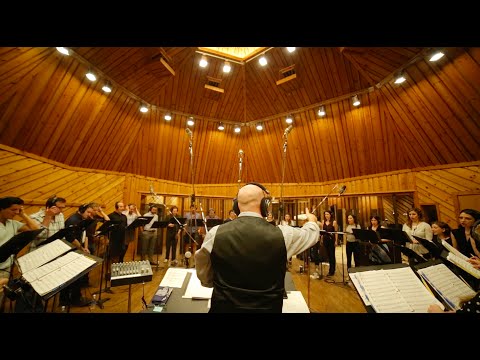
Then comes the 2016 milestone that likely brought you here: the Studio Cast Recording release. It captured the reworked U.S. score with a large orchestra and a substantial choir, letting the music behave like the cathedral it is trying to evoke. The album did not just document the show; it marketed the show’s core selling point, which is sound.
Key tracks & scenes
"The Bells of Notre Dame" (Company)
- The Scene:
- Opening. The city gathers under the cathedral as bells dominate the air. Lighting wants height and shadow, like stone warmed by candles. The choir functions as narrator and jury.
- Lyrical Meaning:
- The show’s thesis arrives immediately: the question of “monster” versus “man” is not a riddle, it is an accusation. The lyrics frame Paris as a place that manufactures villains, then congratulates itself for spotting them.
"Out There" (Quasimodo)
- The Scene:
- High in the bell tower. Quasimodo watches the Feast of Fools below. Staging usually puts him above the crowd, separated by railings, ropes, or sheer vertical distance. A bright shaft of daylight does most of the acting.
- Lyrical Meaning:
- Yearning without irony. The lyric is a travel brochure for a life he has never touched, and the simplicity is the point. It is the first time the show lets innocence speak at full volume.
"Topsy Turvy" (Clopin and Company)
- The Scene:
- The public square erupts into carnival logic. Masks, drums, bodies moving in patterns that look like celebration until they look like menace. Lighting gets gaudier, then snaps colder when the crowd turns.
- Lyrical Meaning:
- The lyrics sell disorder as entertainment. That matters because the number doubles as a warning: the same crowd that cheers a freak show will happily become a mob when the music changes.
"God Help the Outcasts" (Esmeralda)
- The Scene:
- Inside the cathedral. Everything slows. Esmeralda prays while the wealthy pray for more. Many stagings isolate her in a pool of soft light as the choir becomes a halo of sound.
- Lyrical Meaning:
- The lyric is not polite about hypocrisy. It asks for mercy for people who do not expect it, including herself, and it exposes how religion can be used as a shopping list when you already feel safe.
"Heaven's Light" (Quasimodo) and "Hellfire" (Frollo)
- The Scene:
- Back-to-back mirror numbers. Quasimodo sings in gentle illumination, often with literal candlelight or warm amber tones. Frollo’s sequence typically shifts to harsh reds and deep shadow, like a confession in a furnace.
- Lyrical Meaning:
- Two kinds of desire. Quasimodo’s lyric treats love as a blessing he does not deserve but cannot deny. Frollo’s lyric treats desire as evidence that someone else is guilty. The pairing is the show’s moral x-ray.
"The Court of Miracles" (Clopin and Company)
- The Scene:
- The Roma refuge reveals itself as both sanctuary and trap. The scene plays well with sudden spatial compression: corridors of bodies, lantern light, and the sense that the city’s forgotten people have their own laws.
- Lyrical Meaning:
- The lyric interrogates who gets to call a community “criminal.” It is a number about survival systems, and it refuses to let the audience pretend the underworld is a fantasy invention.
"Made of Stone" (Quasimodo)
- The Scene:
- After loss, when the cathedral feels less like home and more like a tomb. Many productions strip the stage down here: colder light, fewer bodies, the choir watching without consolation.
- Lyrical Meaning:
- This is grief expressed as architecture. The lyric argues that a lifetime of isolation trains you to feel nothing, until one act of love cracks you open. It is the show’s emotional cornerstone.
"Someday" (Esmeralda and Company)
- The Scene:
- Late Act II, as the story reaches for grace in a city that has earned none. The staging often turns tableau-like, with the choir creating a stillness that reads as prayer and protest at once.
- Lyrical Meaning:
- Hope without naivete. The lyric is a demand for a better world, not a prediction. It lands because the show has already demonstrated what the current world does to the vulnerable.
Live updates
Information current as of February 2026.
There is no standing Broadway or West End company to “check the cast” for, and that is a clue to how the piece lives now. “The Hunchback of Notre Dame” is active as a licensed title through Music Theatre International, with Disney Theatrical Licensing pointing directors to MTI for materials and noting flexible casting plus an onstage choir as a core production feature. Recent listings in MTI’s production database show the musical continuing to appear in 2025 runs across schools and community organizations.
Practical 2025 to 2026 reality: if your local theatre is considering it, the gating item is not scenic design. It is music staffing. The show’s identity leans heavily on choral presence and Latin liturgical textures, and you feel the difference immediately when the choir is treated as a character rather than wallpaper.
Cultural footnote, not marketing: Notre-Dame Cathedral in Paris reopened in December 2024 after restoration following the 2019 fire. That reopening has refreshed public fascination with the building itself, which can indirectly boost interest in any Notre-Dame storytelling, including this musical.
Notes & trivia
- The 2014 U.S. premiere at La Jolla Playhouse used an onstage choir (32 voices have been reported for that production format), a choice many later productions copy because it fits the piece’s “cathedral as narrator” vibe.
- The Disney Theatrical Licensing page lists casting as 17+ plus a flexible onstage choir, essentially treating choral resources as part of the cast, not the pit.
- The MTI show page publishes a full musical-number list that includes the “Topsy Turvy” split, multiple “Sanctuary” moments, and a dense Act II run of choral sections like “Judex Crederis” and “Kyrie Eleison.”
- The 2016 Studio Cast Recording was scheduled for release on January 22, 2016, and it later hit No. 1 on Billboard’s Cast Albums chart.
- The score blends English narrative songs with Latin textures to keep faith present as a public institution, not just a private feeling.
- Unlike the 1996 film, the stage version spends more time in Hugo’s darker moral framework, including how power uses “purity” language to justify violence.
Reception
Critics have tended to agree on the big swing: the music is the reason to show up. The more complicated question has always been tone. Some reviews praise the operatic scale and emotional force. Others note the friction between Disney familiarity and Hugo’s severity, as if the piece is arguing with itself in real time. That tension is not a flaw so much as the adaptation’s permanent condition.
“Impressive songs but isn’t a kids show or an adult show.”
“Intensely emotional.”
“A sweeping musical.”
Quick facts
- Title: The Hunchback of Notre Dame
- Year (album milestone): 2016 (Studio Cast Recording release)
- Stage development timeline: 1999 Berlin version; English-language version premiered in San Diego (2014) and ran at Paper Mill Playhouse (2015)
- Book: Peter Parnell (English-language version)
- Music: Alan Menken
- Lyrics: Stephen Schwartz
- Setting: Paris, 1482, centered on Notre-Dame
- Signature production feature: Onstage choir (commonly used; officially supported in licensing notes)
- Selected notable placements: “The Bells of Notre Dame” opens; “Out There” in the bell tower; “God Help the Outcasts” inside the cathedral; “Heaven’s Light” and “Hellfire” paired as moral opposites; “Made of Stone” as the late-act grief anchor
- Studio Cast Recording: Released January 22, 2016; 23 tracks on major streaming platforms
- Label (recording): Ghostlight Records
Frequently asked questions
- Is this the same story as the Disney animated film?
- It uses the film’s songs and characters, but the stage version leans closer to Victor Hugo’s darker moral universe, with a more overt role for faith, law, and public violence.
- Why does this musical need a choir?
- The choir functions as atmosphere and conscience. It makes the cathedral feel like a living institution that watches, blesses, and condemns. Licensing notes explicitly allow a flexible onstage choir, and many productions treat it as a character.
- Is there a Broadway production?
- Not as of February 2026. The musical’s main life is through licensed productions, plus the 2016 Studio Cast Recording that preserves the sound-world.
- What should I listen to first if I only try two tracks?
- Start with “Out There” to understand Quasimodo’s emotional vocabulary, then “Hellfire” to understand the show’s central villain logic. The contrast tells you what kind of story this is.
- What is the “tone” of the stage version?
- Heavier than most Disney stage titles. It plays like Gothic drama with lyrical pop-theatre clarity, and it uses choral sound to keep the stakes spiritual and civic, not just personal.
Key contributors
| Name | Role | Contribution |
|---|---|---|
| Alan Menken | Composer | Wrote the score for the film and expanded it for the stage, with a sound built around cathedral-scale drama. |
| Stephen Schwartz | Lyricist | Created lyrics that pivot between character confession and civic indictment, including Frollo’s rhetoric-driven numbers. |
| Peter Parnell | Book writer (English-language version) | Reframed the story with story-theatre structure and Hugo-adjacent language that supports the show’s darker tone. |
| Disney Theatrical Licensing | Licensing (brand portal) | Publishes official show overview and casting notes, and routes productions through MTI. |
| Music Theatre International (MTI) | Licensor | Holds licensing and publishes synopsis, musical numbers, and production listings for current productions. |
| Ghostlight Records | Label | Released the 2016 Studio Cast Recording that helped define the musical’s identity as a choral-forward work. |
Sources: Music Theatre International (MTI); Disney Theatrical Licensing; Playbill; Billboard; Los Angeles Times; Variety; The Hollywood Reporter; Spotify; Wikipedia (production timeline and version history); France.fr (Notre-Dame reopening travel guidance).