Pirate Queen, The Lyrics – All Songs from the Musical
Pirate Queen, The Lyrics: Song List
- Act 1
- Prologue
- The Pirate Queen
- Woman
- My Grace
- Here On This Night
- The Waking Of the Queen
- Rah-Rah, Tip-Top
- The Choice Is Mine
- Boys'll Be Boys
- The Wedding
- I'll Be There
- A Day Beyond Belclare
- Sail To the Stars
- Act 2
- Entr'Acte
- Enemy At Port Side
- I Dismiss You
- If I Said I Loved You
- The Role Of the Queen
- The Christening
- Let a Father Stand By His Son
- Surrender
- She Who Has All
- The Sea Of Life
- Woman To Woman
- Finale
About the "Pirate Queen, The" Stage Show
The debut of the musical took place in Chicago in October 2006. Previews on Broadway started in the Hilton Theatre in March 2007. After 85 performances & 32 previews, show was closed. Director was F. Galati. Choreographers – G. Daniele, C. L. Joyce & M. Dendy. Composer & kapellmeister was J. Kelly. L. Balgord, who played the role of the Queen of England, was nominated for Drama Desk.In July 2007, a recording studio, following the order from Masterworks Broadway, released a CD containing the major music parties. In 2015, the musical was staged in London. The initiator was the Hounslow company. The London production was directed by B. Compton. Music direction was performed by J. Hall. The main roles played in the production by: C. G. Misa, S. J. Block, S. Barath, L. Balgord, B. Elliott, H. Fraser, Á. U. Cheallaigh, M. Chait, W. Youmans & J. McCarthy.
Despite the catchy plot, critics greeted musical coldly. In The New York Times was published an article, where was noted that the music part of the show in many ways was similar to the Les Misérables’ accompaniment, which at that time was a relic of history. Other critics noted that the plot was unusually exciting & the actors managed to do the main thing – to establish a connection with the audience & involve them in the action.
Release date: 2007
"The Pirate Queen" – The Musical Guide & Song Meanings
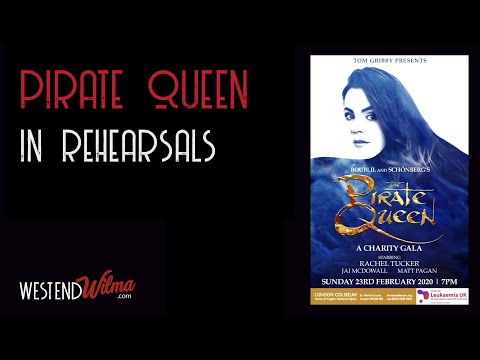
Review: why the lyrics fight the plot
“The Pirate Queen” wants to be three things at once: a history romance, a battle musical, and a two-women-in-power drama between Grace O’Malley and Elizabeth I. The score has the muscle for that. The lyric writing, especially in English, often tries to shortcut the hard parts with slogans. You feel the show negotiating with itself: it wants mythic scale, yet it keeps grabbing for direct, declarative lines that land like bumper stickers on a ship’s hull.
That tension is also the show’s best feature. When the lyrics stop announcing themes and start staging arguments, the piece gets sharper. Grace’s language circles around ownership and agency. Elizabeth’s material circles around optics, succession, and loneliness. Their duet logic matters because the musical’s most credible conflict is not Ireland versus England. It is womanhood as a political problem that each queen solves differently.
Musically, the DNA is unmistakable: Claude-Michel Schönberg’s pop-operatic pulse, big vowel-forward phrases, and rhythmic insistence built for a cast that can sing through walls. Riverdance-era producers put Irish dance and pageantry in the foreground, so the lyric job becomes even harder. It has to cut through spectacle without turning into captioning.
How it was made: pop opera meets Irish legend, then gets rewritten at sea
This musical is a Boublil and Schönberg project with a built-in complication: the writing began in French and then shifted into English through adaptation, with Richard Maltby Jr. and John Dempsey brought in for English lyric and book work. Translation is not only about meaning. It is about stress patterns and where emotion sits inside a line. “The Pirate Queen” sometimes sounds like it is still negotiating that final placement of feeling.
The production timeline is blunt. Chicago first, Broadway second, then the shutdown. Playbill reported the team made late-stage changes after the Chicago run, and that licensing later moved to MTI, which is how the show has continued to live. In other words: “The Pirate Queen” did not vanish. It changed habitat, from expensive Broadway machine to a title that thrives when performers and directors can personalize the text.
One practical way to hear the “how it was made” story is to compare versions. The 2007 Broadway run leaned on grand nautical staging and heavy movement; later concert-style presentations put the argument of the lyrics up front. If you want to evaluate the writing, concerts can be kinder. They do not let the rigging distract you from a line that is doing too little work.
Key tracks & scenes: 8 lyrical moments that explain the whole show
"Prologue" (Orchestra, then Grace & Tiernan)
- The Scene:
- Act One begins with a silhouette of a woman at the wheel of a ship. The image sells legend first, then the curtain reveals the “queen” is a young Grace, play-acting. Tiernan enters. They swordfight, and the swordfight turns intimate.
- Lyrical Meaning:
- The show’s first move is to confess it is constructing a myth. Grace is introduced as both icon and teenager. That split drives everything: public symbol versus private person, and the lyrics keep choosing which one is speaking.
"Woman" (Grace)
- The Scene:
- On the launch of the new ship, Grace begs her father for passage and is refused because a woman aboard is “bad luck.” The staging is typically crowded and ceremonial, which makes her isolation feel sharper. She is surrounded and still blocked.
- Lyrical Meaning:
- This is the engine song. Grace’s lyric stance is not “I want adventure.” It is “I refuse your premise.” The key theme is permission. The song frames gender as a gate that has to be broken, not negotiated.
"My Grace" (Dubhdara & Grace)
- The Scene:
- A crisis at sea forces Grace to prove herself. Her father’s view of her shifts mid-story, from protected daughter to capable sailor. In many stagings, this is where the set and lighting get their first big “storm” showcase, and the lyric has to ride that wave.
- Lyrical Meaning:
- The song is a paternal reintroduction. Dubhdara realizes he does not fully know the woman in front of him. The lyric is doing identity work: Grace is being named into authority.
"The Waking of the Queen" (Elizabeth & Ladies-in-Waiting)
- The Scene:
- England appears as a counter-image to the Irish coastline: court order, ritual, surveillance. Elizabeth “rises to start a new day,” and the show pivots from wind and salt to protocol and power.
- Lyrical Meaning:
- Elizabeth’s lyric writing is about control. Even her private moments are staged as public posture. The number sets up a crucial idea: queens do not get to be off-duty.
"Rah-Rah, Tip-Top" (Bingham, Elizabeth & Lords)
- The Scene:
- Elizabeth and Lord Bingham size Grace up as a threat. The tone is jaunty, almost mocking, which is part of its menace. The English court turns colonial policy into entertainment.
- Lyrical Meaning:
- The lyric strategy is belittlement. If you can make your enemy sound ridiculous, you can justify any response. This is where the show’s language becomes propaganda with a smile.
"The Choice Is Mine" (Grace & Company)
- The Scene:
- Irish clans unite politically, and Grace is pushed toward a marriage that serves the alliance. Tiernan is the emotional cost. The sea is the existential cost. The scene often plays like a public decision that feels private only for the person losing everything.
- Lyrical Meaning:
- Grace insists on agency even inside coercion. The lyric says “choice,” but the drama shows the limits of that word. It is one of the show’s most honest tensions: the story demands sacrifice, and the lyrics try to keep Grace from sounding defeated.
"I Dismiss You" (Grace, Donal & Company)
- The Scene:
- Grace publicly dissolves her marriage under Brehon Law tradition, turning a domestic break into a political act. The theatre logic here is courtroom plus rally. Everyone watches, because power is being redistributed in real time.
- Lyrical Meaning:
- This is the show’s clearest example of words creating action. The lyric is performative speech: saying it makes it so. It also clarifies Grace’s leadership style, direct and public, even when it costs her safety.
"Surrender" (Tiernan, Bingham, Elizabeth & Company)
- The Scene:
- Grace is jailed. Tiernan offers himself in exchange for her freedom. Elizabeth accepts. The scene is staged as bargaining, but emotionally it plays like a love song that got drafted into statecraft.
- Lyrical Meaning:
- The lyric core is exchange: bodies as currency. It exposes the show’s darker argument. Patriotism and romance are both used as leverage, and the score is honest about that cost.
"Woman to Woman" (Elizabeth & Grace)
- The Scene:
- Grace sails to England and earns a private audience. Courtiers hover outside the door. Inside, the play becomes a chamber drama. The show explicitly frames the conversation as “unheard,” which gives the lyric room to stop performing for the crowd.
- Lyrical Meaning:
- This is the piece’s thesis duet. The women are rivals and mirrors. The lyric stops selling “Ireland” and “England” and starts talking about survival inside systems that reward loneliness. When the show works, it is here.
Live updates: 2025–2026 productions, licensing reality, and what audiences are buying now
Information current as of January 31, 2026.
“The Pirate Queen” is no longer a Broadway commodity. It is a licensing title with occasional high-profile events. MTI has handled licensing availability, which has kept the show in circulation for companies that want a large-scale ensemble musical with a star vehicle at the center.
The most concrete recent activity is in 2025. Sedos staged the show at the Minack Theatre in Cornwall from June 30 to July 3, 2025. In Australia, MLOC Productions announced a July 2025 production billed as the Australian premiere. These are exactly the kind of runs that can rehabilitate a show’s reputation: tight rehearsal culture, closer audience proximity, and less pressure to behave like a tourist flagship.
What about 2026? No new Broadway revival has been announced in the sources above, and that matters for how you approach the material. If you are hunting for “the definitive version,” you will wait a while. If you are hunting for a score that gives a strong singer a sustained narrative arc, the licensing ecosystem is already doing that work.
Ticket-and-expectation reality check (useful before you commit)
- Broadway history: the original Broadway production ran March 6 to June 17, 2007 (previews and performances included). That short life is part of the show’s lore.
- Today’s market: most audiences meet “The Pirate Queen” via regional, community, and concert presentations. That tends to favor lyric clarity over spectacle volume.
- Listener advice: if you want to “get it” quickly, start with “Woman,” “The Choice Is Mine,” “I Dismiss You,” and “Woman to Woman.” Those four numbers explain the moral spine.
Notes & trivia: craft details for lyric-first listeners
- Adaptation layers: the show credits French lyrics to Alain Boublil and English lyric adaptations to Richard Maltby Jr. and John Dempsey, with English book adaptation also involving Maltby.
- Historical hook: MTI explicitly points out “Grace O’Malley” is the English form of Gráinne Ní Mháille, and ties her to Irish locations associated with her life.
- Broadway dates: the Broadway run opened April 5, 2007 and closed June 17, 2007, after 32 previews and 85 performances.
- Prologue stage image: MTI’s synopsis highlights a silhouette-at-the-wheel opening, a quick visual thesis: legend first, reality second.
- Vocal ranges (MTI): Grace is listed E3 to E5; Elizabeth is listed C4 to C6. The writing expects a true high line for the Queen and sustained power for Grace.
- Cast recording reality: Masterworks Broadway released a studio cast recording on July 3, 2007. Reporting at the time noted it was recorded at Legacy Studios in New York City and mixed at Angel Studios in London.
- Album completeness: multiple song lists and releases note the recording does not represent the entire stage score; some numbers are absent depending on edition.
Reception: the critics loved the ship, then asked where the story went
The critical conversation around “The Pirate Queen” is strangely consistent: admiration for effort and scale, skepticism about writing density and emotional access. Even friendly reviews describe it like a well-built vessel that still struggles to choose its destination.
“Even when The Pirate Queen feels hokey, superannuated, and overblown, its stalwart confidence captures the electric and cinematic spirit of musical theatre.”
“Unfortunately the banal lyrics offer her little chance to show any kind of acting depth.”
“Circulation-stimulating exercises occur regularly in this singing costume drama of love and patriotism on the high seas...”
Read together, those lines explain why the show has aged into a cult-ish performer title. If you love the pop-opera machinery and have a Grace who can command a stage, you can make the evening land. If you need book-musical nuance on every page, you will notice the seams.
Quick facts: album, credits, placements, availability
- Title: The Pirate Queen
- Year: 2007 (Broadway opening)
- Type: Epic historical musical with pop-operatic scoring and large ensemble
- Music: Claude-Michel Schönberg
- Lyrics: Alain Boublil (French); English lyric adaptations by Richard Maltby Jr. and John Dempsey
- Book: Alain Boublil and Claude-Michel Schönberg (French); English book adaptation by Richard Maltby Jr.
- Broadway production: Hilton Theatre (now the Lyric), previews from March 6, 2007; opened April 5; closed June 17
- Cast album: Masterworks Broadway studio recording released July 3, 2007; reported recording at Legacy Studios (NYC) with mixing at Angel Studios (London)
- Availability: licensing via MTI; recordings widely available on major streaming platforms and retail editions (regional availability varies)
- Selected notable placements: silhouette opening; launch ceremony in Clew Bay; English court “waking” sequence; public dissolution of marriage (“I Dismiss You”); private audience (“Woman to Woman”)
Frequently asked questions
- Who wrote the lyrics to “The Pirate Queen”?
- Alain Boublil wrote the French lyrics. The English lyric adaptations are credited to Richard Maltby Jr. and John Dempsey.
- Is the cast recording the full score?
- No. Reporting and track documentation indicate the released recording does not capture every number from the stage version, depending on edition.
- Is “The Pirate Queen” being performed now?
- Yes, mainly through licensing and special presentations. In 2025, there were notable productions in the UK (Minack Theatre) and Australia (MLOC).
- What is the show’s main lyrical idea?
- Agency under pressure. Grace’s songs argue for permission, authority, and identity, while Elizabeth’s material argues for control, perception, and survival inside power.
- Where should I start listening if I have limited time?
- “Woman,” “The Choice Is Mine,” “I Dismiss You,” and “Woman to Woman.” That sequence gives you the character engine, the political squeeze, and the central two-women conflict.
- Is there a Broadway revival announced for 2026?
- Not in the sources cited here as of January 31, 2026.
Key contributors
| Name | Role | Contribution |
|---|---|---|
| Claude-Michel Schönberg | Composer; Book (French) | Wrote the score’s pop-operatic architecture and co-developed the narrative framework. |
| Alain Boublil | Lyricist (French); Book (French) | Created the original lyrical and narrative concept; shaped Grace as a mythic protagonist. |
| Richard Maltby Jr. | English lyric adaptations; English book adaptation | Helped retool the show for English-language production, including late-stage revision work. |
| John Dempsey | English lyric adaptations | Co-adapted lyric material into English performance phrasing and rhyme logic. |
| Frank Galati | Director (Broadway) | Led the Broadway staging of a large-scale nautical epic with heavy movement demands. |
| Graciela Daniele | Musical staging | Structured the show’s movement language around vocal performance and narrative flow. |
| Carol Leavy Joyce | Irish dance choreography | Built step-dance identity into the show’s public spectacle and clan culture. |
| Julian Kelly | Musical supervision; Orchestrations | Shaped orchestral color and vocal arrangement presentation for a sung-through style score. |
| Stephanie J. Block | Original Broadway star (Grace) | Originated the central role, anchoring the score’s stamina test and emotional throughline. |
Sources: MTI (full synopsis and character ranges), IBDB, Playbill (licensing and cast album reporting), Talkin’ Broadway, BroadwayWorld, Sedos (Minack Theatre 2025), MLOC Productions (Australian premiere 2025), New York Theatre Guide (review-quote compilation).