Do I Hear A Waltz? Lyrics – All Songs from the Musical
Do I Hear A Waltz? Lyrics: Song List
About the "Do I Hear A Waltz?" Stage Show
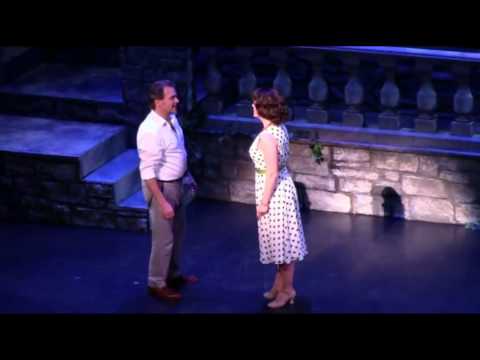
Production on Broadway was closed in 1965 following successful 220 hits. The opening took place in the 46th Street Theatre and shows held there for 7 months. Actors were: J. Manning, E. Allen, F. D'Antonakis, S. Franchi, S. Damon, C. Bruce, J. Marie & M. Sherwood. Herbert Ross served as choreographer and B. Montresor was costumes designer.In 1966, the show was delivered to New Jersey, and in 1999, it was reopened in New Jersey again, after Sondheim listened to the recording of past productions and concluded that Rodgers' orchestrations were not so remarkable. He wondered how it is possible to alter the musical and occurred to some bright ideas that he discussed with Arthur Laurents. Two years later, in Pasadena, during the summer, show played in Pasadena Playhouse, and in 2003 in London, in Landor Theatre. It had not received any awards for the resurrection. As a result of the creation of the Broadway version, once fellows Rodgers and Sondheim quarreled and were avoiding each other for several years.
Release date: 1965
"Do I Hear a Waltz?" – The Musical Guide & Song Meanings
Review
Venice is supposed to do the flirting for you. That is the trap “Do I Hear a Waltz?” sets with a smile. Leona Samish arrives expecting scenery to fix what time has worn down. The score keeps asking a sharper question: what if romance is real, but still not enough?
Stephen Sondheim’s lyric voice here is earlier than the public persona people quote today, but you can hear the instinct already. He writes the awkward truths in the margins. He writes the little negotiations. He writes adults trying to behave as if desire can be scheduled. Richard Rodgers responds with melody that feels classical and clean, sometimes almost too polite for the mess of the story. That tension becomes the show’s personality. When it works, the sweetness is a kind of pressure. The tunes carry you forward while the words keep correcting the fantasy.
The best lyrics in this piece are not punchlines. They are small admissions said quickly, before pride can stop them. The score’s emotional center is the moment Leona realizes that the “waltz” she wanted was never a guarantee of love, only a sound she hoped would prove she was finally chosen.
How It Was Made
Arthur Laurents adapted his own play “The Time of the Cuckoo,” originally imagining a collaboration with Richard Rodgers and Oscar Hammerstein II. Hammerstein died before it could happen, and Sondheim was brought in, partly through personal ties around the Rodgers family and Laurents’s insistence. It became the only Rodgers and Sondheim collaboration, and it carried a peculiar burden: a revered composer moving into late career, a lyricist about to reinvent Broadway, and a book writer who knew exactly what his play did and did not need.
Behind the scenes, the central problem was aesthetic. Contemporary commentary and later criticism describe the team pulling in different directions, not arguing over competence but over purpose. Sondheim has been candid that he felt some of the score’s writing became “mechanical,” the kind of structure that moves bodies through scenes without deepening character. Critics have echoed the same friction in their own language: not failure, more like a stalemate that still produces a handful of gorgeous songs.
The cast album production history is unusually specific and useful for lyric listeners. The original Broadway recording was produced by Goddard Lieberson and recorded at Columbia’s 30th Street Studio, with orchestrations by Ralph Burns. That matters because “Do I Hear a Waltz?” is a show where orchestration often supplies the perfume the characters cannot quite name.
Key Tracks & Scenes
"Someone Woke Up" (Leona)
- The Scene:
- Morning in Venice. Leona wanders canals and piazzas like she has stepped into a postcard that can answer her back. Bright outdoor light, glitter on water, the bustle just out of reach.
- Lyrical Meaning:
- This is an “arrival” song with a double subject: the city and the self. The lyric frames awakening as permission. Leona is not only sightseeing. She is trying to re-enter her own life.
"Bargaining" (Di Rossi with Leona)
- The Scene:
- Inside Di Rossi’s shop. Glass and objects that look permanent, unlike tourists. A warm interior, practical lighting that makes the merchandise sparkle and the people feel exposed.
- Lyrical Meaning:
- Shopping becomes intimacy by stealth. The lyric teaches Leona how to behave in this world, then slips into teaching her how to be desired in it. It is flirtation disguised as instruction.
"Here We Are Again" (Leona, Vito, Ragazzi)
- The Scene:
- A piazza at night. The crowd moves in couples and clusters. Leona is still, or moving against the flow. Lighting narrows to a lonely pool while the city keeps celebrating around her.
- Lyrical Meaning:
- The lyric is the sound of repetition turning into dread. Travel was supposed to change the pattern. The song admits that she carried the pattern with her.
"No Understand" (Fiora, Eddie, Giovanna)
- The Scene:
- At the pensione, the mood turns playful and predatory at once. Eddie uses an English lesson as a delaying tactic. Fiora watches the game like she invented it. Tight interior lighting, comic timing sharpened by proximity.
- Lyrical Meaning:
- Language is an alibi. The lyric treats misunderstanding as strategy, not accident. It is funny, but it also reveals how adults dodge consequence while pretending to be polite.
"Take the Moment" (Di Rossi)
- The Scene:
- A frank proposal after the truth comes out. Di Rossi frames the affair as temporary, almost tourist-like. The staging often pulls focus to him, a spotlight that makes the offer sound like philosophy.
- Lyrical Meaning:
- This lyric sells compromise as wisdom. It is seductive because it offers Leona dignity while asking her to accept less than she imagined. The song is romance, but it is also negotiation.
"Moon in My Window" (Leona, Fiora, Jennifer)
- The Scene:
- Late night at the pensione. Three women, three ages, three versions of longing. Soft light through shutters, a hush that makes even small truths feel dangerous.
- Lyrical Meaning:
- The lyric is shared solitude. The moon becomes a neutral witness, letting each woman speak without being contradicted. It is one of the score’s most humane moments because nobody is performing for men.
"Do I Hear a Waltz?" (Leona and Company)
- The Scene:
- Leona finally hears the sound she has been chasing, triggered by real tenderness and real attention. The staging typically lifts into movement: couples, turns, a brief sense of being carried.
- Lyrical Meaning:
- The lyric is not triumph. It is recognition. The waltz is proof that she can still feel the world change when someone touches her life with care, even if the story cannot keep that promise forever.
"Stay" (Di Rossi)
- The Scene:
- Morning after. The city is calmer. Di Rossi asks Leona not to return to America. Lighting turns natural and plain, the kind that makes decisions feel irreversible.
- Lyrical Meaning:
- This is the show’s most loaded request. The lyric tries to turn a temporary affair into a new life without changing the terms that made it temporary. It is romantic on the surface, and quietly impossible underneath.
Live Updates
As of late 2025, “Do I Hear a Waltz?” briefly looked poised for a rare New York outing in spring 2026, when J2 Spotlight Musical Theater Company announced a limited engagement. Within weeks, that plan collapsed. Playbill reported the production was cancelled due to rights issues, and the slot was replaced with “Carnival!” after what the company described as a licensing glitch tied to Concord. The headline is not scandal. It is a reminder that this title’s modern life is fragile: it appears in bursts, then disappears again.
In practical terms, the show remains licensable through Concord Theatricals, with materials and orchestration rentals listed. That is the path most companies take in 2025 and 2026: not a tour, not a commercial revival, but selective productions that treat the piece as a sophisticated period romance with a famous lyricist attached.
Notes & Trivia
- It is the only Broadway collaboration between Richard Rodgers and Stephen Sondheim.
- The Broadway run opened March 18, 1965 and closed September 25, 1965, playing 220 performances.
- IBDB lists the setting as Venice, centered on Pensione Fiora, Di Rossi’s shop, and Piazza San Marco.
- The show’s original plan involved Oscar Hammerstein II as lyricist before his death.
- The original cast recording was produced by Goddard Lieberson, recorded at Columbia’s 30th Street Studio, and features orchestrations by Ralph Burns.
- The cast album earned a Grammy nomination for Best Score from an Original Cast Show Album.
- In December 2025, a planned Off-Broadway staging for spring 2026 was cancelled after rights were pulled and then replaced with another title.
Reception
In 1965, reviewers were split on what kind of evening this was supposed to be. Some heard dryness where they expected sparkle. Others praised its taste and musical intelligence. That divide has followed the show for sixty years: people either want the lyric edge to cut deeper, or they value the restraint as the point.
Walter Kerr called it “an entirely serious and very dry musical.”
Richard Watts wrote, “the lyrics are deft and intelligent.”
“Approaching … from opposite sides of an aesthetic divide, the best they could achieve was a stalemate.”
Quick Facts
- Title: Do I Hear a Waltz?
- Year: 1965
- Type: Broadway musical romance; adaptation
- Book: Arthur Laurents (based on his play The Time of the Cuckoo)
- Music: Richard Rodgers
- Lyrics: Stephen Sondheim
- Setting: Venice: Pensione Fiora, Di Rossi’s shop, Piazza San Marco
- Broadway run: March 18, 1965 to September 25, 1965 (220 performances)
- Song list highlights: “Someone Woke Up,” “Bargaining,” “No Understand,” “Take the Moment,” “Moon in My Window,” “Do I Hear a Waltz?,” “Stay”
- Original Broadway cast recording: Released March 29, 1965; produced by Goddard Lieberson; recorded at Columbia’s 30th Street Studio; orchestrations by Ralph Burns
- Licensing: Available via Concord Theatricals (materials and orchestra rentals listed)
- Modern performance footprint: Notable New York return via City Center Encores! in May 2016; a planned spring 2026 Off-Broadway staging was later cancelled due to rights issues
Frequently Asked Questions
- Is “Do I Hear a Waltz?” a classic Sondheim show?
- It is a key Sondheim credit, but it is not stylistically typical of his later era. The lyric craft is sharp, while the overall musical language stays closer to Rodgers’s traditional form.
- Why is the title such a big deal inside the story?
- The “waltz” is Leona’s fantasy of certainty. Hearing it becomes a symbol that love has finally arrived in the way she always imagined.
- Where do most of the songs happen?
- Nearly all the major numbers live in three locations: the pensione, Di Rossi’s shop, and Venice’s public spaces like piazzas and canals.
- Was there a major revival recently?
- The most visible modern New York staging was City Center Encores! in May 2016. A proposed Off-Broadway engagement for spring 2026 was later cancelled due to rights issues.
- Is the show available for regional and community theatres?
- Yes. Concord Theatricals lists the title for licensing and provides rental and materials information.
Key Contributors
| Name | Role | Contribution |
|---|---|---|
| Arthur Laurents | Book | Adapted his play “The Time of the Cuckoo” into a Venice-set romance structured around adult compromise. |
| Richard Rodgers | Composer; Producer (Broadway) | Wrote the score and produced the original Broadway production. |
| Stephen Sondheim | Lyricist | Provided lyrics that often sharpen the story’s romantic surface with adult unease. |
| Goddard Lieberson | Cast album producer | Produced the original Broadway cast recording. |
| Ralph Burns | Orchestrator | Orchestrations for the original Broadway cast recording and production materials. |
| Concord Theatricals | Licensing | Handles licensing and rentals for contemporary productions. |
Sources: Rodgers & Hammerstein; IBDB; Concord Theatricals; Masterworks Broadway; Playbill; Vulture; Wikipedia.