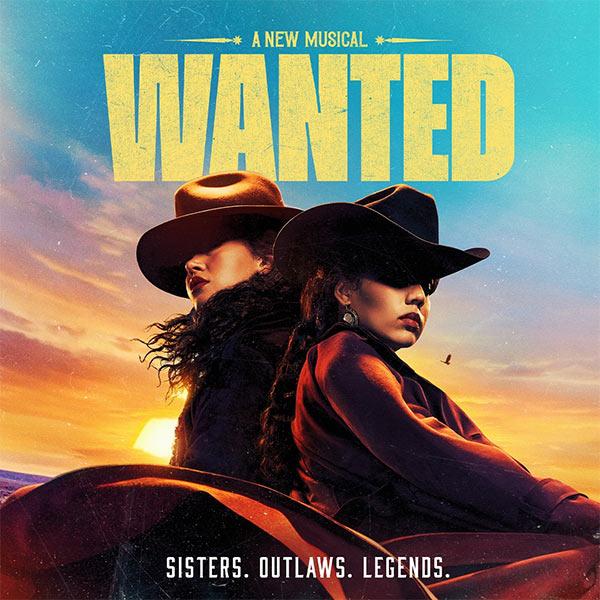
Wanted Lyrics: Song List
- Act I
- Prologue
- Cotton
- Wide-Open Plains
- The Train
- Just Passing Through
- Gun & Powder
- Frenchman Father
- Dirty Shame
- Dangerous
- Invisible
- Destiny
- Exactly His Type
- Real Man
- The Way I Am
- Trigger
- Act II
- The Shot That Shook The Soul
- Dirty Shame (Reprise)
- Under a Different Sun
- Split
- Traitor
- Martha's Curse
- Mary’s Nightmare
- Freedom
- Even Human
- All of Me
About the "Wanted" Stage Show
Release date of the musical: 2026
"Wanted: The Legend of the Sisters Clarke" - The Musical Guide & Song Meanings
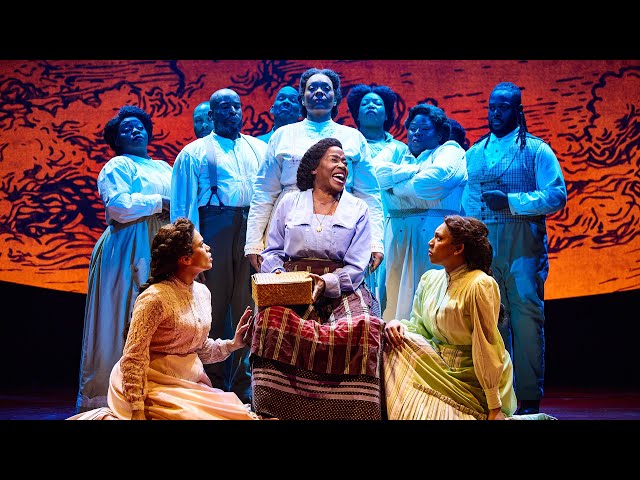
Review: Who Gets to Become an American Legend?
Wanted: The Legend of the Sisters Clarke, previously titled Gun & Powder, asks a pointed question: what happens when two Black women seize the freedoms promised by the American West? Angelica Chéri's book and lyrics treat the outlaw story as family folklore, historical recovery and theatrical invention. Ross Baum's score combines gospel, rhythm and blues, blues harmony and Western musical gestures. The mixture gives Mary and Martha Clarke a sound larger than the surviving evidence about their lives.
The musical is inspired by Chéri's great-great aunts, mixed-race twin sisters remembered in her family as women who passed for white and became outlaws in 1893 Texas. Chéri has been careful about the boundary between history and legend. Mary and Martha existed, while many incidents in the musical are dramatic inventions built around the documented context of sharecropping, racial violence and property theft after emancipation. That distinction improves the show. Wanted does not pretend that a complete archive suddenly appeared. It stages the way families preserve people whom official history neglected.
The plot begins with a concrete debt. Tallulah Clarke, the twins' mother, may lose her home under a sharecropping arrangement designed to keep Black families financially trapped. Mary and Martha decide to pass as white, rob those who profit from racial exploitation and recover enough money to protect their family. Their disguises offer mobility, but each successful deception increases the danger. Passing changes how white strangers treat them, how Black communities read them and how the sisters understand their own power.
Chéri's strongest lyrics connect disguise to visibility. A pale face gives the sisters access to trains, banks and hotel rooms, yet that access depends on hiding their mother, history and community. Songs including "Invisible," "The Way I Am," "Freedom" and "Even Human" examine the cost of being seen incorrectly. The language can be direct, sometimes blunt, because the characters are arguing about survival rather than social etiquette.
Baum's music resists a museum version of 1893. Gospel choral writing places the sisters inside an ancestral community. Rhythm and blues gives private desire a contemporary pulse. Western motifs supply momentum, open space and danger. The score's modern vocabulary tells the audience that Mary and Martha belong inside American mythology, even though popular Western stories usually exclude women like them.
The show works best when sisterhood and political action collide. Mary is drawn toward risk, performance and the power of becoming feared. Martha remains more alert to consequences, particularly the damage their disguise may cause within Black communities. Their conflict prevents the musical from becoming a simple revenge fantasy. Every robbery may repay one debt while creating another.
The weaker passages appear when villains become symbols before they become people. A story involving sharecropping, colorism, passing and racial terror already carries enormous pressure. Some antagonists are written in broad strokes so the sisters' retaliation can land cleanly. That approach gives the production speed, though it can flatten the moral terrain around theft and violence.
How "Wanted" Was Made
Angelica Chéri grew up hearing different versions of Mary and Martha Clarke's story from relatives. A photograph of the light-skinned twins survived within the family, while the details of their alleged outlaw career shifted between tellings. Chéri eventually recognized that the unstable history was part of the subject. The musical could examine who controls a legend instead of pretending to resolve every contradiction.
Chéri met composer Ross Baum in New York University's Graduate Musical Theatre Writing Program. The project began as their graduate thesis during the 2014-2015 academic period. Chéri proposed the family story, wrote the book and lyrics, and Baum composed the music. Their first workshop became the inaugural production of NYU Tisch's Center for New Musicals in 2015.
The writers did not preserve that early version out of sentiment. They rewrote the musical after the workshop, then continued revising it through more than a decade of readings, laboratories and regional productions. In a 2026 profile, Chéri and Baum said they had written over 100 songs for possible use in the show. The current two-act list retains roughly one quarter of that material. That ratio explains why song titles reported during the 2020 and 2024 productions do not always match the proposed 2026 Broadway sequence.
Signature Theatre selected the project for its 2017 SigWorks Musical Theater Lab and continued developing it through the 2018 NEXT Festival. The musical also received support through the National Alliance for Musical Theatre's Festival of New Musicals, Goodspeed Musicals, Two River Theater and the Barnett Residency. In 2018, Chéri and Baum received a Richard Rodgers Award for Musical Theater.
Gun & Powder received its world premiere at Signature Theatre in Arlington, Virginia, in early 2020. Robert O'Hara directed Solea Pfeiffer as Mary, Emmy Raver-Lampman as Martha and Marva Hicks as Tallulah. The production sold strongly and closed shortly before the COVID-19 shutdown interrupted the American theater season.
A major revision reached Paper Mill Playhouse in Millburn, New Jersey, in April and May 2024. Stevie Walker-Webb directed, Tiffany Rea-Fisher choreographed, Ciara Renée played Mary, Liisi LaFontaine played Martha and Jeannette Bayardelle played Tallulah. The production earned a New York Times Critic's Pick and established a clearer route toward Broadway.
Producers announced the new title, Wanted: The Legend of the Sisters Clarke, in 2025. The title change shifts attention away from weapons and toward the women themselves. It also carries a useful double meaning. Mary and Martha are wanted by authorities, wanted by the family that needs them and wanted inside an American history that previously left them unnamed.
Important Songs, Lyrics and Scene Placements
"Cotton" (Tallulah, Mary, Martha and the Kinfolk)
- The Scene:
- The Clarke family works land in 1893 Texas under a sharecropping system that converts labor into permanent debt. Cotton dominates the stage as crop, currency and inherited burden. The Kinfolk surround the family as workers, witnesses and ancestors.
- Lyrical Meaning:
- The song establishes that emancipation did not produce financial independence for Tallulah. Cotton connects slavery's past to the family's present account book. Mary and Martha's later crimes begin here, inside a legal system already stealing from them.
"Wide-Open Plains" (Mary, Martha and Company)
- The Scene:
- The sisters imagine leaving the farm and crossing a Texas that appears physically open but socially restricted. The staging expands around them as the score adopts the forward motion of a Western journey.
- Lyrical Meaning:
- The title contains the show's central contradiction. The plains seem limitless, yet race, sex and debt determine where the sisters may travel safely. Their decision to pass as white turns geographic freedom into a dangerous performance.
"Gun & Powder" (Mary and Martha)
- The Scene:
- Tallulah prepares her daughters for the road with practical warnings, weapons and pale face powder. The sisters test the disguise that will let them enter white spaces without immediate suspicion.
- Lyrical Meaning:
- The gun and the powder are parallel tools. One changes the balance of physical power; the other changes how strangers classify the sisters. Both provide temporary control, and both can expose them to fatal consequences.
"Dirty Shame" (Sissy and Flo)
- The Scene:
- Two comic observers process the sisters' behavior through rumor, rhythm and public judgment. Their commentary turns local gossip into a performance that can entertain and police the community at the same time.
- Lyrical Meaning:
- The phrase "dirty shame" measures the distance between respectable behavior and necessary rebellion. The song also asks who receives the power to define shame when landowners, bankers and law officers commit violence under legal protection.
"Invisible" (Elijah)
- The Scene:
- Elijah considers Martha's ability to move through white society while concealing her Black identity. He remains visible to the same racial system that temporarily overlooks her.
- Lyrical Meaning:
- The song rejects invisibility as a simple privilege. Martha gains access by erasing a part of herself, while Elijah cannot choose when prejudice notices him. Their relationship carries an imbalance that affection alone cannot solve.
"The Way I Am" (Mary)
- The Scene:
- Mary confronts the gap between her original purpose and the person she has become on the road. The disguise, robberies and public fear have given her a form of authority unavailable at home.
- Lyrical Meaning:
- Mary treats identity as action rather than ancestry alone. Her claim sounds liberating, but the song also records her attraction to danger. She may be accepting herself or protecting choices she no longer wishes to question.
"Trigger" (Mary)
- The Scene:
- Act I approaches its violent break as Mary faces a decision that cannot be withdrawn. The staging narrows around the weapon, her target and the split second before action.
- Lyrical Meaning:
- The trigger is mechanical and psychological. Mary must apply a small amount of pressure to produce an irreversible result. The song asks whether agency still counts as freedom when every available option has been shaped by coercion.
"The Shot That Shook the Soul" (Kinfolk and Company)
- The Scene:
- Act II opens after the gunshot, when private violence becomes communal news. The Kinfolk absorb the event into memory as townspeople react with fear, fascination and anger.
- Lyrical Meaning:
- The song enlarges one action into legend. A bullet affects a body immediately, but its story changes families and communities long afterward. The title also describes the musical's method: folklore converts a moment with uncertain details into inherited meaning.
"Freedom" (Mary, Martha and Company)
- The Scene:
- The sisters confront the shrinking space between escape and capture. Their personal conflict has widened, and the consequences of passing can no longer be controlled through costume or confidence.
- Lyrical Meaning:
- The lyric tests several definitions of freedom: land ownership, physical movement, financial independence, racial self-possession and the ability to choose one's name. The characters discover that gaining one form can endanger another.
"All of Me" (Mary, Martha, Tallulah and Company)
- The Scene:
- The final company song gathers the sisters, their mother and the ancestral chorus after the outlaw story has passed into family memory. The production removes the disguises and returns attention to the women behind the legend.
- Lyrical Meaning:
- The title answers the fragmentation created by passing. Mary and Martha have been read as white strangers, Black daughters, criminals and folk heroes. The conclusion insists that no single category can contain their history.
2026 Broadway Updates
Wanted is now officially scheduled for Broadway. Previews begin October 15, 2026, at the James Earl Jones Theatre, and opening night is set for November 8, 2026. The venue is located at 138 West 48th Street in New York. The official production currently lists a running time of approximately 2 hours and 15 minutes, including one 15-minute intermission. That duration may change during previews.
Solea Pfeiffer will play Mary Clarke after originating the role in the 2020 Signature Theatre production. Liisi LaFontaine, who played Martha at Paper Mill Playhouse in 2024, will return to that role. Grammy-winning singer Ledisi has been cast as Tallulah Clarke, the sisters' mother. Luke James will play Elijah. Additional casting may still be announced before rehearsals and previews.
Stevie Walker-Webb will direct the Broadway production after staging the 2024 Paper Mill version. Chelsey Arce is the announced choreographer. Austin Cook is attached as music director, and P3 Productions is leading the commercial production. The Broadway staging is therefore connected to the Paper Mill version, though it should not be treated as an unchanged transfer.
Tickets are on sale through official Broadway outlets. Broadway.com was listing entry prices near $55 in July 2026, but prices vary by date, seat location, fees and demand. The official site previously stated that pricing would be announced, so older cached pages may contain outdated information.
The Broadway song list should remain provisional until performances begin. The supplied two-act sequence includes titles such as "Frenchman Father," "Dangerous," "Exactly His Type," "Real Man," "Split," "Traitor," "Martha's Curse," "Mary's Nightmare," "Freedom" and "Even Human." The 2024 Paper Mill program contained other titles, including "Outlaw's Serenade," "Lord, Have Mercy" and "Mama's Name." Eleven years of revisions and over 100 written songs make further substitutions plausible.
Notes and Trivia
- Angelica Chéri is the great-great niece of Mary and Martha Clarke, the women whose family legend inspired the musical.
- Chéri and Ross Baum began the project as graduate students at NYU's Musical Theatre Writing Program.
- The writers created more than 100 songs during approximately twelve years of development.
- The musical received a 2018 Richard Rodgers Award before its first full regional production.
- The 2020 Signature Theatre premiere was directed by Robert O'Hara, while Stevie Walker-Webb directed the 2024 Paper Mill production and the announced Broadway staging.
- The title changed from Gun & Powder to Wanted: The Legend of the Sisters Clarke during its commercial development.
- The Kinfolk function as an ancestral chorus, placing Mary and Martha's personal choices inside a longer Black American history.
Critical Reception: 2020, 2024 and Broadway Expectations
The 2020 Signature Theatre production received strong attention for its cast, scale and unusual historical subject. Peter Marks of The Washington Post praised the freshness of the family legend while noting that the sisters' outlaw adventures were largely fictionalized. Other Washington-area reviews admired the score and central performances but questioned whether the musical had fully integrated its romance, racial politics and revenge plot.
"So much of 'Gun & Powder' remains fresh and exciting."
Peter Marks, The Washington Post
The 2024 Paper Mill production generated broader national interest. Naveen Kumar made it a New York Times Critic's Pick and called the musical "thrillingly original." His review valued the way Chéri and Baum repositioned Black women inside the Western, a genre that has often treated whiteness and masculinity as default settings.
"A thrillingly original new musical about mixed-race twin sisters."
Naveen Kumar, The New York Times
Theatrely described the work as an American tall tale and praised the demanding roles written for Ciara Renée and Liisi LaFontaine. TheaterMania also responded positively to the Paper Mill production, particularly its score, visual confidence and lead performances. Less enthusiastic notices questioned the second act's density and the ease with which some political conflicts were resolved through broad villains or rapid plot turns.
"An American tall tale and terrific musical Western."
Juan A. Ramírez, Theatrely
The Broadway version arrives with considerable assets. Pfeiffer, LaFontaine, Ledisi and James give the score four distinctive vocal identities. Walker-Webb has already tested the material in a large regional house. The creators have also spent years cutting and replacing songs. The remaining question is structural. Wanted must balance family history, outlaw spectacle, passing, romance, racial violence and sisterly conflict without reducing any strand to exposition.
Awards and Recognition
- 2018 Richard Rodgers Award for Musical Theater: Awarded to Angelica Chéri and Ross Baum for the project then titled Gun & Powder.
- 2018 NAMT Festival of New Musicals: Selected for presentation through the National Alliance for Musical Theatre.
- 2017 SigWorks Musical Theater Lab: Chosen for development at Signature Theatre in Arlington, Virginia.
- 2024 New York Times Critic's Pick: Awarded to the Paper Mill Playhouse production.
- Broadway premiere: Scheduled to open November 8, 2026, at the James Earl Jones Theatre.
Quick Facts
- Current title: Wanted: The Legend of the Sisters Clarke
- Former title: Gun & Powder
- Book and lyrics: Angelica Chéri
- Music: Ross Baum
- Historical basis: Chéri's family stories about her great-great aunts, Mary and Martha Clarke
- Setting: Texas in 1893
- Development origin: NYU Graduate Musical Theatre Writing Program
- First workshop: 2015
- World premiere: Signature Theatre, Arlington, Virginia, 2020
- Major pre-Broadway production: Paper Mill Playhouse, Millburn, New Jersey, 2024
- Broadway previews: October 15, 2026
- Broadway opening: November 8, 2026
- Broadway venue: James Earl Jones Theatre, New York
- Broadway director: Stevie Walker-Webb
- Broadway choreographer: Chelsey Arce
- Announced Broadway cast: Solea Pfeiffer, Liisi LaFontaine, Ledisi and Luke James
- Musical styles: Gospel, rhythm and blues, blues, contemporary musical theater and Western motifs
- Estimated running time: 2 hours and 15 minutes, including intermission
- Album status: No complete Broadway cast album has been released as of July 9, 2026.
- Song-list status: The Broadway sequence remains subject to revision before and during previews.
Key Contributors
| Name | Role | Contribution |
|---|---|---|
| Angelica Chéri | Book writer and lyricist | Adapted her family's story of Mary and Martha Clarke and wrote the libretto and lyrics. |
| Ross Baum | Composer | Created the score's gospel, rhythm-and-blues and Western musical vocabulary. |
| Stevie Walker-Webb | Broadway director | Directed the 2024 Paper Mill production and the announced 2026 Broadway staging. |
| Chelsey Arce | Broadway choreographer | Creates the movement for the Broadway production. |
| Austin Cook | Music director | Leads the musical preparation for the Broadway production. |
| Solea Pfeiffer | Mary Clarke | Returns to the role she originated at Signature Theatre in 2020. |
| Liisi LaFontaine | Martha Clarke | Returns after playing Martha in the 2024 Paper Mill production. |
| Ledisi | Tallulah Clarke | Plays the sisters' mother in the Broadway production. |
| Luke James | Elijah | Plays Martha's romantic interest and a character affected by her racial disguise. |
| Robert O'Hara | World-premiere director | Directed the sold-out 2020 production at Signature Theatre. |
| Tiffany Rea-Fisher | Paper Mill choreographer | Choreographed the 2024 pre-Broadway production. |
| P3 Productions | Lead producer | Developed the commercial Broadway production and title change. |
Sources
References & Verification: Broadway dates, venue, cast and running-time information were checked through the official Wanted website, official production FAQ, Playbill, Broadway.org and Broadway News. Development history was checked through Signature Theatre, the National Alliance for Musical Theatre, Columbia University School of the Arts and a 2026 Washington Post profile of Angelica Chéri and Ross Baum. Reviews were compared through The New York Times, The Washington Post, TheaterMania, Theatrely, BroadwayWorld and Maryland Theatre Guide. Information was current on July 9, 2026.