Sweet Charity Lyrics – All Songs from the Musical
Sweet Charity Lyrics: Song List
- Act 1
- Overture
- Charity's Theme
- You Should See Yourself
- Big Spender
- Charity's Soliloquy
- Rich Man's Frug
- If My Friends Could See Me Now
- Too Many Tomorrows
- There's Gotta Be Something Better Than This
- I'm the Bravest Individual
- Act 2
- Rhythm of Life
- Good Impression
- Baby Dream Your Dream
- Sweet Charity
- Where Am I Going?
- I'm a Brass Band
- I Love to Cry at Weddings
- Finale
About the "Sweet Charity" Stage Show
The music for the show wrote C. Coleman. Lyrics composed by D. Fields. The libretto was developed by N. Simon. The premiere was held in December 1965 in Philadelphian Shubert Theatre. Since the end of December 1965 to January 1966, the show was hosted by the Fisher Theatre. In January 1966, the try-outs were held before the premiere on Broadway. The histrionics was at the Palace Theatre until July 1967, where were shown 10 preliminaries and 608 regular performances. The director and choreographer of the production was B. Fosse. The show had such cast: G. Verdon, T. Oliver & H. Gallagher. In 1967-1968, was first national tour. From October 1967 to November 1968 in the Prince of Wales Theatre of London was another staging, exhibiting 484 times. Production was done by directors L. Carra & R. Linden and choreographer E. Gasper. The cast involved: J. Prowse, G. Wyler, P. Kelly & J. Blake.From April 1986 to March 1987 in the Minskoff Theatre was 2nd Broadway production. There were 15 preliminaries and 369 regular performances, directed by B. Fosse. The performance included these actors: M. Rupert, D. Allen & M. Jacoby. In 1987 and 2006 took place the 2nd and 3rd national tours. From May to August 1998, the Victoria Palace Theatre hosted the revised London version, directed by B. Langford. In April 2005, the try-outs of the next edition began for Broadway. The musical was in the Al Hirschfeld Theatre from May to December 2005 with 25 preliminaries and 279 regular performances. The play was directed W. Bobbie and choreographed by W. Cilento. The theatrical had this cast: C. Applegate, D. O'Hare & P. Schoeffler. From November 2009 to March 2010, at the Menier Chocolate Factory was the 3rd London production, directed by M. White and choreographed by S. Mear with this cast: T. Outhwaite, J. Gabrielle & T. Graves.
Release date: 1966
"Sweet Charity" – The Musical Guide & Song Meanings
Thesis: Sweet Charity is not a love story. It is a survival story that keeps flirting with romance because that is how Charity Hope Valentine stays upright. The lyrics are deceptively bright. Dorothy Fields writes in punchlines and plain talk, then slips a knife in on the next line. Cy Coleman gives her jazz that bounces even when the plot does not. Bob Fosse, meanwhile, puts the cynicism in the knees.
Review: Dorothy Fields writes hope with a cigarette burn around the edges
The premise is famously simple: Charity gets pushed down, then gets back up, then gets pushed again. What makes the show sting is that the lyrics do not pretend she is naive. She is hopeful, which is a tougher choice. Fields gives Charity a voice that sounds like the person in the room who tries to keep the mood buoyant, even as the room keeps charging her rent.
The score’s lyrical themes are money, spectacle, and the cost of being seen. At the Fan-Dango, the women sell attention for dimes and drinks; in the Pompeii Club, the rich turn boredom into a sport; in the Rhythm of Life church, belief is basically a percussion section. The lyrics keep translating romance into transaction and back again. That is why the show works even when it refuses to reward Charity. The language has been warning you all along.
Musically, Coleman’s jazz-pop writing gives characters different speeds. Charity gets melody you can hum and patter you can trip over. Nickie and Helene get harmony that sounds like friendship as a defense mechanism. Oscar gets lines that tighten, because his fear lives in the syntax. When the music goes big, the lyrics often go blunt, because the show’s emotional turns are not complicated. They are painful.
How it was made: Fellini by way of Times Square, built as a Fosse vehicle
Sweet Charity opened on Broadway on January 29, 1966 at the Palace Theatre, with a book by Neil Simon, music by Cy Coleman, and lyrics by Dorothy Fields. It was adapted from Federico Fellini’s film Nights of Cabiria, transplanted from Rome to mid-1960s New York. The conception was tightly tied to Bob Fosse’s desire to create a starring vehicle for Gwen Verdon, his wife and creative partner at the time.
Two craft choices explain why the writing still feels current. First, Fields’ lyrics keep the language colloquial, then let the situation do the moralizing. Second, the show’s big dance sequences are not decorative. They are social commentary with a beat. “Big Spender” is the clearest example. In many productions, it is staged like a sales pitch that has learned to purr.
Later interpretations have tried to adjust the show’s honesty level. In a 2016 Off-Broadway production, director Leigh Silverman described putting Charity into “Big Spender” with an added verse, explicitly refusing to soften what the job is. That is a smart instinct for the material: the lyrics land harder when the show stops winking.
Key tracks & scenes: 8 lyrical moments that explain the show
"You Should See Yourself" (Charity)
- The Scene:
- Central Park by the lake. Early light, a sense of “today will be different” energy. Charity is giddy and a little performative, like she is pitching herself to the universe.
- Lyrical Meaning:
- A self-pep talk that already hints at denial. The lyric sells confidence in bright phrases, but you can hear the worry in how often she has to repeat it.
"Big Spender" (Nickie, Helene, Fandango Girls; sometimes Charity)
- The Scene:
- The Fan-Dango Ballroom front room. The women line up at a rail, almost still, faces pointed out toward the customers. The lighting tends to be smoky and low, like a permanent last call.
- Lyrical Meaning:
- It is flirtation as labor. The lyric is not romance, it is a hook. The repetition is the point: desire becomes a sales script, and the audience hears how exhausting that is.
"Charity’s Soliloquy" (Charity)
- The Scene:
- Backstage at the dance hall, where optimism goes to get patched up. Charity talks through her latest humiliation with her friends circling like tired angels.
- Lyrical Meaning:
- Fields uses conversational rhythm to show Charity bargaining with herself. The humor is a shield, but the lyric keeps letting the sadness leak through the cracks.
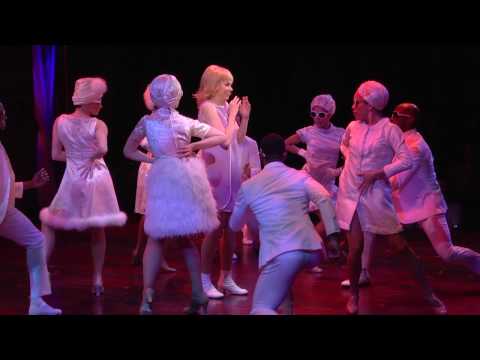
"Rich Man’s Frug" (Ensemble)
- The Scene:
- The Pompeii Club. The rich are posed like mannequins, then move like fashion sketches brought to life. The choreography often breaks into sections, each with its own attitude. The lighting is glossy and indifferent.
- Lyrical Meaning:
- Even without a lyric-heavy structure, the number functions like a thesis: boredom is a luxury, and style can be its own form of cruelty. Charity’s outsider status is the emotional lyric.
"If My Friends Could See Me Now" (Charity)
- The Scene:
- Vittorio Vidal’s apartment. Charity is dressed up in someone else’s world, spinning with that intoxicating belief that her luck has turned. Productions often spotlight her as the room falls away.
- Lyrical Meaning:
- A triumph song built on imagined witnesses. The lyric is bragging, yes, but it is also pleading: if other people confirm this moment, maybe it becomes real.
"There’s Gotta Be Something Better Than This" (Nickie, Helene, Charity)
- The Scene:
- Night on the street after work. The three women stop and allow the exhaustion to speak. The best stagings keep the world moving around them while they hold still.
- Lyrical Meaning:
- Friendship as a brief truce. The lyric is blunt, almost stubborn, because hope is now framed as a demand, not a daydream.
"The Rhythm of Life" (Daddy Brubeck and Ensemble)
- The Scene:
- A church that feels like a nightclub that read one self-help book. The music hits like a pep rally, bodies clapping, hands raised, light flashing. Charity is pulled into the wave.
- Lyrical Meaning:
- A parody that still works as seduction. The lyric sells belonging with slogans and call-and-response, making it easy to forget you are being sold anything at all.
"Where Am I Going?" (Charity)
- The Scene:
- After the latest romantic collapse, Charity is alone with the question she keeps dodging. The lighting is usually stripped down to something honest, as if the stage finally stops entertaining itself.
- Lyrical Meaning:
- This is Fields at her sharpest: the lyric is simple and devastating. No cute metaphors, no hustle. It is the moment Charity stops narrating and starts asking.
"I’m a Brass Band" (Charity and Company)
- The Scene:
- A fantasy surge. A band appears, or the ensemble becomes one, turning embarrassment into parade. Bright lights, big movement, a grin that is almost defiant.
- Lyrical Meaning:
- Charity converts shame into spectacle. The lyric is not about reality. It is about refusing to let reality have the last word.
Live updates (2025/2026 status)
Current as of February 2, 2026. No single “official” commercial revival dominates the moment, but Sweet Charity is clearly circulating in high-profile regional runs and concert presentations.
- Gulfshore Playhouse (Naples, Florida): April 6 to May 4, 2025, with previews and opening night dates publicly listed by the theatre. It is a useful recent reference point for how directors handle the show’s tonal balance in a contemporary room.
- Free-Rain Theatre Company (Queanbeyan, Australia): April 29 to May 18, 2025, a full production run with publicly posted dates.
- QPAC Concert Hall with Prospero Arts (Brisbane, Australia): December 11 to 14, 2025, presented as “in concert,” with runtime and ticket range published by the venue and ticketing.
- Pioneer Theatre (Castle Hill, Australia, via Hornsby Musical Society): May 15 to 24, 2026, with cast alternates and ticket pricing published on the venue’s “What’s On” page.
Translation: the show is not “back” in one definitive place. It is alive everywhere, which is arguably the correct habitat for a musical about a woman who keeps starting over.
Notes & trivia
- The original Broadway production opened January 29, 1966 and played 608 performances (plus 10 previews) at the Palace Theatre.
- The original Broadway cast recording’s first LP release date is listed as February 7, 1966, and it was recorded at Columbia’s 30th Street Studio.
- The 1969 film adaptation added new songs and replaced some stage material, meaning “the soundtrack” and “the show” do not map one-to-one.
- Concord Theatricals licenses the original 1966 Broadway version, a detail that matters if you are hearing different song orders in different recordings.
- “The Rhythm of Life” has lived far outside the show, including a notable 1970 single release by Diana Ross and the Supremes with the Temptations.
- “Rich Man’s Frug” became a recurring visual reference point for later pop choreography and music videos, which keeps the show’s movement language in circulation even when the musical is not on Broadway.
Reception: critics keep praising the sparkle, then arguing about the bite
Sweet Charity has always invited a tug-of-war: do you play it as a comedy with bruises, or a bruised story with jokes? Critics often measure productions by whether they preserve the show’s kinetic electricity while still letting the darker lyric implications register.
“When ‘Sweet Charity’ opened on Broadway, in 1966, it was a sensation.”
“There are at least six things that will interest you in Sweet Charity... Gwen Verdon, Gwen Verdon, Gwen Verdon.”
“We’re not trying to hide what she does for work; we’re making it very clear.”
Quick facts
- Title: Sweet Charity
- Broadway year: 1966
- Type: Musical comedy with a hard underside
- Book: Neil Simon
- Music: Cy Coleman
- Lyrics: Dorothy Fields
- Based on: Nights of Cabiria (Federico Fellini and collaborators)
- Original director-choreographer: Bob Fosse
- Selected notable placements: “Big Spender” (Fan-Dango Ballroom); “Rich Man’s Frug” (Pompeii Club); “The Rhythm of Life” (Rhythm of Life Church)
- Original Broadway cast album: first LP release listed as February 7, 1966
- Film soundtrack note: the 1969 film uses a different song set than the stage show
- Rights: licensed as the original 1966 Broadway version through Concord Theatricals
Frequently asked questions
- Who wrote the lyrics to Sweet Charity?
- Dorothy Fields wrote the lyrics, paired with Cy Coleman’s music and Neil Simon’s book.
- Is Sweet Charity based on a movie?
- Yes. It is adapted from Federico Fellini’s Nights of Cabiria, relocated to 1960s New York.
- Where does “Big Spender” happen in the story?
- At the Fan-Dango Ballroom, where Charity and the other hostesses work, typically staged as a direct address to customers.
- Why do people talk about “Rich Man’s Frug” so much if it is not a lyric song?
- Because it is choreography-as-storytelling: it defines the rich-world satire and puts Charity’s outsider status in motion.
- What is the show’s emotional center?
- “Where Am I Going?” It is Charity dropping the sales pitch and admitting she does not know how to protect her hope.
- Where can I see Sweet Charity in 2026?
- One scheduled example is Hornsby Musical Society’s production at the Pioneer Theatre in Castle Hill (Australia), May 15 to 24, 2026. Other regions have ongoing productions and concert versions.
Key contributors
| Name | Role | Contribution |
|---|---|---|
| Dorothy Fields | Lyricist | Wrote lyrics that balance wisecracks with bruised self-knowledge, especially in Charity’s introspective songs. |
| Cy Coleman | Composer | Built a jazz-driven score that lets the show dance even when the story refuses comfort. |
| Neil Simon | Book writer | Shaped the episodic structure and comic timing that frames Charity’s romantic misadventures. |
| Bob Fosse | Director and choreographer (original Broadway) | Defined the movement language and staging logic that makes the show’s social satire physical. |
| Gwen Verdon | Original Charity | Created the role’s performance blueprint: clown-bright optimism with a visible bruise. |
| Federico Fellini (and collaborators) | Source material | Provided the underlying narrative engine via Nights of Cabiria. |
Sources: IBDB, Masterworks Broadway, Concord Theatricals, StageAgent, Wikipedia, TDF, The New Yorker, TheaterMania, QPAC, Gulfshore Playhouse, Pioneer Theatre (Australia), Prospero Arts, Free-Rain Theatre Company, National Museum of American History.