Rink, The Lyrics – All Songs from the Musical
Rink, The Lyrics: Song List
- Act 1
- Colored Lights
-
Chief Cook and Bottle Washer
-
Don't "Ah Ma" Me
- Blue Crystal
- Under the Roller Coaster
- Not Enough Magic
- We Can Make It
-
After All These Years
-
Angel's Rink and Social Centre
-
What Happened to the Old Days?
- Act 2
-
The Apple Doesn't Fall
- Marry Me
- Mrs. A.
- The Rink
-
Wallflower
- All the Children in a Row
- Coda (Finale)
About the "Rink, The" Stage Show
Musical’s script was written by T. McNally. Music composed by J. Kander. Lyrics created by F. Ebb. Try-outs began on Broadway in January 1984 in Martin Beck Theatre. From February to August 1984, were held 29 preliminaries and 204 regular performances. The director of the show was A. J. Antoon, choreographer – G. Daniele. The performance had such a cast: L. Minnelli, C. Rivera, J. Alexander, K. Hauser, M. Johnson, Jr., S. Holmes, S. Ellis, F. Mastrocola, R. Carroll, R. Marshall & S. Channing. In 1987, the musical was in Manchester’s Forum Theatre. London productions premiered in February 1988 at the Cambridge Theatre. The musical took place in the West End from March 1988 and have been shown 38 performances. The play staged director P. Kerryson. The show had such cast: D. Langton, M. Gyngell, R. Bodkin, G. Snook, J. Gavin, S. Hervieu, J. Blake, L. Compton, S. Murphy & P. Edbrook.In September 1998, P. Kerryson presented the musical in Leicester Haymarket. The main role in the histrionics performed K. Evans & L. Hateley. In August 2009, the play was shown in St. Oswald's Hall. Musical director was S. Dumbreck, choreographer – D. Walker. The production involved: G. Pavone, N. Kinnear & R. Magowan. In March 2010, the show was held in New York's Actors' Equity Audition Center. Director T. Sabella-Mills staged the musical. The cast involved: M. J. Mecca, S. Perlman, D. Gardner, D. Garry, C. Marriner, B. Nacht & D. Shane. From November to December 2012, Australian version was in Hackett Hall theatre. Director of show was A. Chaney. Broadway production won 1 Award out of 6 nominations of Drama Desk. It also received 1 Tony out of 5 nominations.
Release date: 1984
"The Rink" – The Musical Guide & Song Meanings
Review
“The Rink” is a mother-daughter musical that keeps pretending it’s a real-estate story. The plot is simple: Anna Antonelli owns a decaying roller rink on a seaside boardwalk and wants to sell; her estranged daughter Angel shows up with her own plan, and the building becomes a boxing ring with handrails. The show’s success depends on one thing: whether you believe that memory can be staged like a place. On a good night, it can. On a bad night, it looks like trauma set to a demolition schedule.
Fred Ebb’s lyrics are at their best here when they behave like defense mechanisms. Nobody in this show says “I’m scared.” They crack wise, they itemize, they threaten, they bargain. Even nostalgia arrives with fingerprints on it. When Anna sings, she often sounds like a woman insisting she is practical while being ruled by emotion. When Angel sings, she often sounds like a romantic disguising her need as a community project. That tension is the dramatic motor: love expressed as logistics.
Musically, John Kander writes a score that swings between boardwalk brightness and bruised interior monologue. The ensemble numbers can feel like the rink itself talking, a chorus of regulars, wreckers, and ghosts. The mother and daughter numbers are sharper: Kander’s phrases turn into tight corners where Ebb’s consonants bite. If you’re coming for a “hit parade,” this is not that. If you’re coming for character writing that uses rhyme as a knife, you’re in the right building.
One practical listening note, because it changes your experience: treat the cast album like a set of confrontations, not a linear narrative. The show is built from flashbacks and emotional ricochet, and the songs are designed to jump time while staying honest about how people argue. Put the big duets (“Don’t Ah, Ma Me,” “Wallflower”) in your center and the rest clicks into place.
How it was made
The origin story is messier than the rink floor, and that mess explains the show’s strange power. “The Rink” began life as a small Off-Broadway project with a different book writer, Albert Innaurato, and director Arthur Laurents. When it wasn’t working, Terrence McNally was brought in to rewrite, and the piece shifted from intimate to more theatrical, adding a small male chorus and bigger stage architecture. That renovation mirrors the plot: a personal conflict forced into public view.
By the time it reached Broadway in February 1984, it was explicitly a star pairing. Playbill’s archival rehearsal interview captures the producers trying to reset expectations: this is not an evening of glittery skating. The casting was the magnet, but the intention was grit. The irony is that the tension between “vehicle” and “drama” became part of the show’s identity, and critics reacted accordingly.
Then the afterlife did what Broadway could not. Later productions kept rediscovering the score’s quality while still wrestling with the book. That pattern has continued into the 2010s and 2020s: “The Rink” survives best when a production leans into its emotional mechanics and stops apologizing for the darkness.
Key tracks & scenes
"Colored Lights" (Angel)
- The Scene:
- Early in Act I, Angel arrives as the boardwalk glow flickers back on. Lighting tends to feel like amusement-park spill: bright at the edges, shabby at the center, with the rink’s emptiness doing the acting.
- Lyrical Meaning:
- This is nostalgia with a trapdoor. Angel isn’t praising the past. She’s trying to climb into it because the present is failing her. The lyric’s sweetness is the disguise.
"Chief Cook and Bottle Washer" (Anna)
- The Scene:
- Anna, on home turf, running the place like a ship that never asked for passengers. It often plays best under work light: unflattering, honest, practical, the kind that makes an audience feel like they’re trespassing.
- Lyrical Meaning:
- Ebb turns a job description into a personality. The jokes are armor. The point is exhaustion, and the pride inside it.
"Don't Ah, Ma Me" (Anna, Angel)
- The Scene:
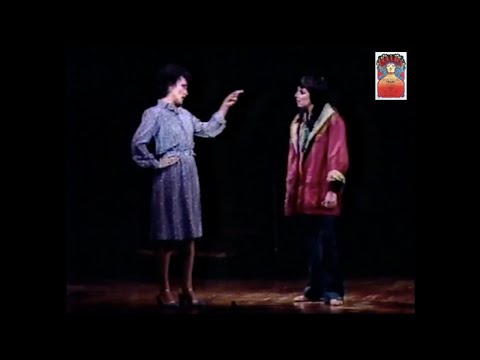
- Mother and daughter collide in public, the rink as witness. Many stagings keep them moving in circles, not for “skating,” but for orbit: they cannot stand still without telling the truth.
- Lyrical Meaning:
- A duet structured like a tug-of-war. Each lyric is an attempt to rename the other person. That is what family fights are: battles over language.
"Under the Roller Coaster" (Angel)
- The Scene:
- A private confession in a public ruin. Lighting tends to narrow, as if the amusement park around her has turned its face away. The location feels like the underside of a promise.
- Lyrical Meaning:
- Angel’s lyric is about being the person who leaves, then discovering you still live in the place you escaped. The song makes “home” sound like a bruise you keep pressing.
"We Can Make It" (Anna)
- The Scene:
- Anna insists on forward motion, sometimes sung over a body in trouble and sometimes sung straight out to the audience. It wants a staging that feels almost too intimate: a promise delivered at close range.
- Lyrical Meaning:
- This is not optimism. It’s stubbornness as love. The lyric is a blueprint drawn while the building is already burning.
"What Happened to the Old Days?" (Anna, boardwalk women)
- The Scene:
- A communal gripe that becomes a lament. It plays as a busy corner of the boardwalk, gossip turning into history. Lighting often returns to that carnival haze, but the mood is colder.
- Lyrical Meaning:
- It’s a nostalgia song that refuses to be pure. The lyric asks for the old days while admitting the old days were a mess. That contradiction is the point.
"Mrs. A" (Anna, Angel, Lenny, suitors)
- The Scene:
- Anna becomes myth in her own neighborhood, pinned to a nickname. The staging usually turns into a swirl of opinions, bodies circling Anna as if the town is writing her biography in real time.
- Lyrical Meaning:
- Ebb shows how a community turns a woman into a story, then punishes her for living outside it. The jokes land, and then they don’t, and that shift stings.
"Wallflower" (Anna, Angel)
- The Scene:
- The show’s emotional hinge. Many productions clear the stage or quiet the motion, letting the duet feel like two people finally speaking without witnesses. If the rink is lit at all, it’s in soft spill, like memory refusing to leave.
- Lyrical Meaning:
- The lyric is reconciliation without sentimental blur. It’s about how people become shy inside their own families, and how that shyness can look like cruelty from the outside.
"All the Children in a Row" (Angel, Danny)
- The Scene:
- A flashback that plays like a bruise blooming. It wants shadow and stillness, because the information in the song is heavy and the score knows it.
- Lyrical Meaning:
- Angel’s past is not just “backstory.” It is the reason her return is urgent. The lyric frames grief as something you line up and face, like punishment and prayer at once.
Live updates
Information current as of February 1, 2026. “The Rink” remains a classic example of a Broadway “problem child” that theatres keep adopting anyway, because the score behaves better than the reviews did. The most visible recent New York activity was a pair of sold-out benefit concert performances at Classic Stage Company on September 15 and 16, 2025, led by Beth Leavel as Anna and Jessie Mueller as Angel.
For anyone tracking staging trends: concert versions are a tell. Producers tend to go concert when the material’s emotional and musical argument is strong, but the book has a reputation for unevenness. “The Rink” is exactly that kind of title. It also stays actively licensable, which is why it pops up regionally more often than it returns as a high-profile commercial revival.
Notes & trivia
- The Broadway production opened February 9, 1984 at the Martin Beck Theatre (now the Al Hirschfeld) and ran through August 4, 1984.
- Chita Rivera won the Tony Award for Best Actress in a Musical for Anna; Liza Minnelli was also nominated in the same category.
- Terrence McNally was brought in to write the book after an earlier version with a different book writer and director was not working.
- Later in the Broadway run, Minnelli was replaced; subsequent principals included Mary Testa and Stockard Channing.
- The show’s structure is heavily flashback-driven, which can make the album feel like emotional highlights rather than a straight plot summary.
- The original Broadway cast recording was recorded on May 6, 1984 and released in 1984; later remastered editions were issued on Jay Records.
- A 2018 London revival drew praise for performances and kinetic staging, but also controversy for script and score changes, including altering song placement and cutting material.
Reception
The critical story is famous: reviewers admired the performers more than the piece. Frank Rich, in particular, helped cement the idea that the show was a sour vehicle with big stars trapped inside it. And yet, the score has kept winning the long game, because it contains what Kander and Ebb do best: characters who sing like they are trying to survive their own sentences. The later critical pattern, especially around major revivals, is more forgiving: less “Why does this exist?” and more “Why wasn’t this treated with more care?”
“Turgid” and “sour,” with “phony, at times mean-spirited content.”
“Peter Larkin’s evocative rink is brilliantly conceived and lit with palpable sensitivity.”
“Cult-favorite” is the tell: the score has always had loyalists, even when Broadway didn’t.
Quick facts
- Title: The Rink
- Year: 1984 (Broadway)
- Type: Original book musical (memory-driven family drama)
- Music: John Kander
- Lyrics: Fred Ebb
- Book: Terrence McNally
- Original Broadway leads: Chita Rivera (Anna), Liza Minnelli (Angel)
- Original Broadway theatre: Martin Beck Theatre (now the Al Hirschfeld Theatre)
- Original Broadway run: Feb 9, 1984 to Aug 4, 1984
- Selected notable placements: “Colored Lights” (arrival and memory), “Chief Cook and Bottle Washer” (Anna’s self-definition), “Wallflower” (core reconciliation), “All the Children in a Row” (Angel’s wound)
- Cast recording: Original Broadway cast recording, recorded May 6, 1984; later remastered releases available
- Licensing: Available for stage production through Concord Theatricals
Frequently asked questions
- Who wrote the lyrics for “The Rink”?
- Fred Ebb wrote the lyrics, with music by John Kander and a book by Terrence McNally.
- Is “The Rink” a jukebox musical?
- No. It is an original score. Its flashback structure can make it feel like a song cycle, but the songs were written for these characters and this story.
- Why is the show remembered as a “flop” if the score is respected?
- Because the Broadway reception focused on structural issues in the storytelling. The score and performances were widely admired, but reviews argued the piece felt heavy and uneven.
- What songs best explain the mother-daughter relationship?
- Start with “Don’t Ah, Ma Me” for conflict, then “Wallflower” for the emotional truth, and “Chief Cook and Bottle Washer” for what Anna thinks she has to be to survive.
- Was there recent New York activity for the show?
- Yes. Classic Stage Company presented benefit concert performances on September 15 and 16, 2025 with Beth Leavel and Jessie Mueller leading the cast.
- Is there a film adaptation?
- No major film version has been produced. The show’s modern visibility comes through revivals, concerts, and cast recordings.
Key contributors
| Name | Role | Contribution |
|---|---|---|
| John Kander | Composer | Wrote the score’s blend of boardwalk sheen and hard-edged character writing. |
| Fred Ebb | Lyricist | Wrote lyrics that weaponize humor and practicality as emotional defense. |
| Terrence McNally | Book writer | Rebuilt the show into a flashback-driven mother-daughter confrontation. |
| Chita Rivera | Original cast | Originated Anna and won the Tony Award for the performance. |
| Liza Minnelli | Original cast | Originated Angel and helped define the show’s high-voltage star pairing. |
| Paul Gemignani | Music director | Music direction for the original Broadway production and credited on the cast recording. |
| Classic Stage Company | Producer (concert) | Hosted the September 2025 benefit concerts that renewed attention on the score. |
| Concord Theatricals | Licensing | Licenses the title for contemporary stage productions. |
Sources: Playbill; IBDB (Internet Broadway Database); Concord Theatricals; UPI Archives; The New York Times; Wikipedia (show and cast recording); The Arts Desk; Musical Theatre Review.