Ring of Fire Lyrics – All Songs from the Musical
Ring of Fire Lyrics: Song List
- Act 1
- Hurt
-
Montage
- Country Boy
- A Thing Called Love
- There You Go
- While I've Got It On My Mind
- My Old Faded Rose
- Daddy Sang Bass
- Straight A's In Love
- Big River
- I Still Miss Someone
- Five Feet High and Rising
- Flesh And Blood
- Look At Them Beans
- Get Rhythm
- Flushed
- Dirty Old Egg Sucking Dog
- Angel Band
- If I Were A Carpenter
- Ring of Fire
- Jackson
- Act 2
- Entr'acte / Big River (Reprise)
- I've Been Everywhere
- Sunday Mornin' Comin' Down
- Temptation
- I Feel Better All Over
- A Boy Named Sue
- Going to Memphis
- Delia's Gone
- Austin Prison
- Orleans Parish Prison
- Folsom Prison Blues
- The Man in Black
- All Over Again
- I Walk the Line
- The Man Comes Around
- Waiting on the Far Side Banks of Jordan
- Why Me
- Hey, Porter
About the "Ring of Fire" Stage Show
The idea of the revue belongs to W. Meade. The author of all songs is Johnny Cash. It was created and staged by R. Maltby, Jr. Try-outs were held in Buffalo's Studio Arena Theatre, where the revue was presented from September to October 2005, directed by R. Maltby, Jr., choreographed by L. Shriver. Famous country singer Lari White participated in the histrionics. The premiere of the revue was held in January 2006 in the San Francisco’s Curran Theatre. Pre-Broadway try-outs began in February 2006 in the Ethel Barrymore Theatre from March to April 2006. 38 preliminaries & 57 regular performances were shown. Direction and choreography was performed by R. Maltby, Jr. & L. Shriver. The show had such cast: J. Brown, J. Edwards, J. Emick, B. Malone, C. Morgan & L. White.In June 2012, the play was shown in the theater festival in Canadian Charlottetown. From March to May 2013, an updated version of the revue was hosted by the Milwaukee Repertory Theater. The director of the show was R. Maltby, Jr. again. Choreography has been performed by his daughter Emily. The spectacle involved: T. Barnes, E. Clendening, J. Edwards, D. M. Keenan & M. W. Winchester. From April to November 2015, revue was in Chicago's Mercury Theater, directed by B. Russell with this cast: K. M. Lewis, C. Goodrich, M. M. Goodman & G. Hirte. From January to February 2016, revue was in California’s Altarena Playhouse, as well as in the Florida Highlands Little Theatre. From April to May 2016, show was presented in Friends of the Opera House, in Oregon’s Elgin city. The theatrical received 6 nominations for Joseph Jefferson Award, but did not manage to win any. In February 2008, the album was released with a record of revue of Broadway production.
Release date: 2008
"Ring of Fire" – The Musical Guide & Song Meanings
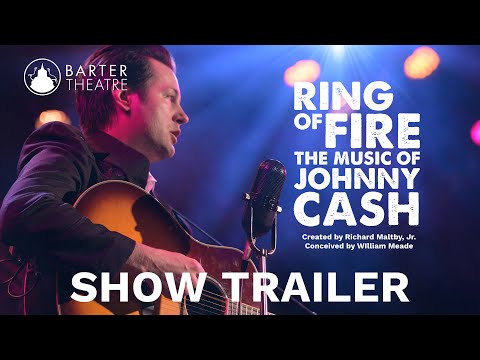
Review
Does a jukebox musical about Johnny Cash work better when it refuses to impersonate him? That is the wager of Ring of Fire, and it is why the evening can feel both bracing and strangely evasive in the same breath. When the production treats Cash’s lyrics as short stories for a rotating community, the writing reveals its real superpower: plain speech that lands like moral argument. When the staging insists on illustrating every line, the material can start to feel like a karaoke video with better hair and a stronger band.
The show’s lyric engine is not a new book, but a curated catalog of American vernacular: vows, confessionals, warnings, jokes, hymns. The theme is choice, sharpened into binaries Cash loved: fidelity versus temptation, pride versus humility, judgment versus mercy. The result is less “plot” than a sequence of life-rooms you walk through: the family table, the bar, the roadside, the prison, the church, the lonely kitchen on a Sunday morning. What makes it theatrical is how the songs argue with each other. A promise song (“I Walk the Line”) is followed, eventually, by a relapse song (“Sunday Mornin’ Comin’ Down”), and the audience does the math.
Musically, Ring of Fire is built on genre as character. Rockabilly and early-country drive read as youthful velocity, gospel harmony as social glue, and the darker late-career material as a cold front moving across the stage. If you want one sentence for what the show is trying to do: it turns Cash’s catalog into a public square, then asks what kind of people we become when the square goes quiet.
How It Was Made
Ring of Fire was conceived by William Meade and created and directed by Richard Maltby, Jr., who framed the piece as a “book musical without a book,” built from 38 numbers rather than a conventional libretto. In early coverage, Maltby stressed that no one plays Cash, and that the point is the life in the lyrics: specific stories that still travel. The concept also created a marketing problem, because an early subtitle (“The Johnny Cash Musical Show”) suggested biography and concert at the same time, then satisfied neither camp cleanly.
The show’s development story is unusually concrete for a catalog musical: a Buffalo test run (Studio Arena Theatre, fall 2005), a Broadway transfer, and then a long afterlife in regional theaters where the format makes more sense. It is also a production puzzle: the band is not hidden; the musicians are visible, moving, and often acting. That choice is not just a gimmick. It’s a thesis. Cash’s songs are about labor, motion, and responsibility, and the show literalizes that by making performance itself part of the narrative texture.
By the time the Original Broadway cast recording arrived in 2008, the show had already become something else: less a Broadway title than a licensable structure. That is the real “origin story” of the album. It is a document of a Broadway attempt, released later, after the market had already voted and the show had already begun its second life elsewhere.
Key Tracks & Scenes
"Country Boy" (Company)
- The Scene:
- Act I, the first burst of motion. The stage reads like a communal platform: instruments visible, performers stepping forward as if answering roll call. Lighting tends warm and open, the kind that makes a room feel like “home” before you know whether home is safe.
- Lyrical Meaning:
- This is a mission statement disguised as a toe-tapper: identity as birthplace, pride as armor. In the revue structure, it functions like a prologue, telling you the show will value specificity (places, jobs, family ties) over psychology.
"Daddy Sang Bass" (Company)
- The Scene:
- Act I, the family-table sequence. Productions often stage it as a generational meal, bodies angled inward, harmonies stacked like plates. The glow is domestic: practical light, not glamour.
- Lyrical Meaning:
- The lyric turns faith into choreography: call-and-response, belonging, the relief of being one voice among many. It is also Cash’s quiet propaganda for community, and the show uses it to earn its sentiment before the darker numbers arrive.
"I Walk the Line" (Man)
- The Scene:
- Act I, early-to-mid arc. Often staged with paired movement: couples crossing, meeting, separating, returning. Some productions lean into literal projections (seasons, landscapes), while others strip it back to a single spotlight and a held gaze.
- Lyrical Meaning:
- It’s a vow written as self-surveillance. The lyric is tight, repetitive, and intentionally plain, which is why it can sound romantic or desperate depending on how the performer colors the consonants.
"Jackson" (Woman and Man)
- The Scene:
- Act I, the barroom flare-up. Bright sidelight, quick footwork, a grin that’s half invitation and half warning. This is where the revue lets flirtation turn into combat sport.
- Lyrical Meaning:
- The song is a marital argument that refuses to be tragic. It’s a lyric about escape fantasies that are really bids for attention. Onstage, it gives the show bite, and it keeps the evening from sanctifying its own Americana.
"Sunday Mornin' Comin' Down" (Man)
- The Scene:
- Act II, after the audience has settled into “hits.” The room narrows. Light cools. The performer is frequently isolated downstage with the band pulled back, as if the music is happening in another room.
- Lyrical Meaning:
- This is the show’s sobriety test. The lyric is hungover, self-aware, and allergic to redemption-by-applause. If a production wants the night to have stakes, it must let this song sit in discomfort.
"I've Been Everywhere" (Company)
- The Scene:
- Act II opener. A kinetic reset. One Broadway-era description highlights a lineup of guitars as a visual gag and a feat of stagecraft, with performers and musicians in the same plane. Lighting pops. The tempo says, “We’re moving again, keep up.”
- Lyrical Meaning:
- The lyric is travel as identity, but also travel as avoidance. The breathless list-making reads like joy until you realize it never stops long enough to become intimacy.
"Man in Black" (Company)
- The Scene:
- Act II, the ethics speech. Many productions darken the stage into a near-monochrome wash, letting the band sit like a jury. The performer often faces front, minimal movement, maximum address.
- Lyrical Meaning:
- Cash’s lyric is brand and protest in the same suit. In a catalog musical, it becomes the closest thing to a thesis on why these songs belong together: empathy as posture, not decoration.
"Hurt" (Company or Man)
- The Scene:
- Frequently used as a framing device. A single figure, slowed tempo, the room emptied of shtick. Light tightens to a small circle, as if the stage is suddenly a private confession booth.
- Lyrical Meaning:
- It is not “Cash’s” lyric originally, and that difference matters: the words feel like a borrowed mirror. In performance, the song becomes a late-career reckoning that throws the earlier bravado into sharper relief.
"Ring of Fire" (Company)
- The Scene:
- Late Act II, often staged as release: fuller light, bodies moving in wider patterns, a sense of collective inevitability rather than individual romance. Some productions nod to the mariachi color in the orchestration with brighter brass-like textures.
- Lyrical Meaning:
- The lyric is love as combustion. It’s also a warning dressed as a hook. The show uses it as both title and metaphor: desire that creates heat, and heat that leaves marks.
Live Updates (2025-2026)
Information current as of February 2026. This title’s modern footprint is less about long commercial tours and more about high-frequency regional programming and licensing. The show exists in multiple authorized forms, including a small-cast edition, which is why you will see very different production sizes and narrative emphasis from city to city.
Confirmed 2025 engagement: Merrimack Repertory Theatre in Lowell, Massachusetts lists Ring of Fire: The Music of Johnny Cash for November 26, 2025 through December 14, 2025, with a published runtime of about two hours including intermission and an explicit content advisory (including a note that “A Boy Named Sue” may read as outdated to some audiences).
Confirmed 2026 engagement: The Repertory Theatre of St. Louis announced a run at the Loretto-Hilton Center from March 18 through April 12, 2026, positioning the piece as a hit-packed vehicle for actor-musicians.
Licensing remains active through Theatrical Rights Worldwide, which is the practical reason the show stays visible: it is scalable, band-forward, and attractive to theaters that want a crowd title with real musical labor onstage.
Notes & Trivia
- The Broadway production opened March 12, 2006 at the Ethel Barrymore Theatre and closed April 30, 2006 after 57 performances and 38 previews (per IBDB).
- In early press, the creators described it as a “book musical without a book,” built from 38 numbers rather than a conventional plot spine.
- One Playbill report describes the Act II opener “I’ve Been Everywhere” staged with “no less than 14 guitars” in a line, emphasizing the show’s love of visible musicianship.
- New York Magazine’s review made a rare compliment for jukebox casting: the actors “really play their instruments,” holding their own alongside the onstage band.
- The title song “Ring of Fire” was written by June Carter Cash and Merle Kilgore, and its famous horn color is tied to Cash’s own story about hearing it that way before recording it.
- The 2008 cast recording was released on Time Life Records, years after the Broadway run, which is unusual for a commercial Broadway title and explains why some fans discover the album before the show.
- Modern producing houses increasingly include a content note about “A Boy Named Sue,” acknowledging how its gender politics can land differently now than in 1969.
Reception
The Broadway reception was loud, divided, and often aimed less at the performances than at the conceptual frame: is this a revue, a biography, or an illustrated playlist? Critics who wanted the dangerous Cash persona felt the evening sanitized him. Critics who wanted a concert sometimes found the staging too busy. And critics who simply wanted a strong night out tended to praise the musicianship even when they questioned the dramaturgy.
“Only country-music diehards are likely to have a good time at this uninspired revue.”
“Maltby’s actors really play their instruments.”
“It’s easy to throw water on Ring of Fire. But that would be unjustly dismissive of the committed performers onstage.”
What has changed since 2006 is the venue logic. In regional theaters and smaller houses, the “incongruousness on Broadway” critique softens. The show stops competing with book-heavy musical theater and starts behaving like what it is: a band-driven evening where lyric, rhythm, and persona do the plotting.
Quick Facts
- Title: Ring of Fire: The Johnny Cash Musical Show
- Broadway opening: 2006
- Recording release referenced here: Original Broadway cast recording (2008)
- Type: Jukebox musical / band-forward revue
- Created by: Richard Maltby, Jr.
- Conceived by: William Meade
- Music & lyrics: Songs associated with Johnny Cash and collaborators across decades (including June Carter Cash, Merle Kilgore, Kris Kristofferson, Shel Silverstein, and others)
- Original Broadway venue: Ethel Barrymore Theatre
- Cast recording label: Time Life Records
- Notable staged placements (documented in early reporting): “Daddy Sang Bass” as a family-meal scene; “While I’ve Got It On My Mind” as a middle-age love scene; “I’ve Been Everywhere” as an Act II opener built around visible guitars
- Licensing: Theatrical Rights Worldwide (full-length and smaller-cast editions)
- Current programming examples: Merrimack Repertory Theatre (Nov-Dec 2025); The Rep St. Louis (Mar-Apr 2026)
Frequently Asked Questions
- Is “Ring of Fire” a Johnny Cash biography?
- Not in the conventional sense. Most versions avoid a single actor playing Cash; instead, the songs are staged as scenes and vignettes that trace an American life-shape that can echo Cash without impersonating him.
- What is the 2008 “Ring of Fire” album?
- It is the Original Broadway cast recording of Ring of Fire: The Johnny Cash Musical Show, released by Time Life Records. It preserves the show’s catalog-curation approach rather than a new narrative score.
- Do all productions use the same song list?
- No. The title is licensed in different editions and theaters often follow the authorized structure for their version. Expect variations in order, emphasis, and even framing songs.
- Where can theatres license the show?
- Licensing and materials are distributed through Theatrical Rights Worldwide, which also indicates available editions and production resources.
- Is the show running in 2025-2026?
- Yes, in regional programming. Merrimack Repertory Theatre lists performances in late 2025, and The Repertory Theatre of St. Louis announced a spring 2026 run.
- Is there a film version of this stage musical?
- There is no widely recognized feature-film adaptation of the stage revue itself. Audience confusion is common because Cash-related screen projects and other Cash-themed stage works exist alongside it.
Key Contributors
| Name | Role | Contribution |
|---|---|---|
| Richard Maltby, Jr. | Creator / Director | Built the revue structure and staged the catalog as character-driven vignettes. |
| William Meade | Conceiver / Producer | Originated the concept framework for the Cash-songbook musical. |
| Johnny Cash | Primary recording artist and songwriter | Repertoire foundation; the show curates songs across his recording life. |
| June Carter Cash | Songwriter | Co-wrote “Ring of Fire,” a key thematic anchor for the musical’s title metaphor. |
| Merle Kilgore | Songwriter | Co-wrote “Ring of Fire,” contributing to the song’s enduring hook and imagery. |
| Jeff Lisenby | Musical director (Broadway production) | Helped define the onstage-band format and instrumental performance demands. |
| Time Life Records | Label | Released the Original Broadway cast recording in 2008. |
Sources: Playbill; IBDB (Internet Broadway Database); Broadway.com; New York Magazine; Merrimack Repertory Theatre; Theatrical Rights Worldwide; BroadwayWorld.