Reefer Madness Lyrics – All Songs from the Musical
Reefer Madness Lyrics: Song List
- Reefer Madness!
- Romeo & Juliet
- The Stuff
- Down at the Ol' Five and Dime
- Jimmy Takes a Hit
- The Orgy
- Lonely Pew
- Listen to Jesus, Jimmy
- Dead Old Man
- Act One Finale
- Jimmy On the Lam
- The Brownie Song
- Five and Dime (Reprise)
- Little Mary Sunshine
- Mary's Death
- Murder
- The Stuff (Reprise)
- Listen to Jesus, Jimmy (Reprise)
- Tell 'Em the Truth
- Reefer Madness (Reprise)
About the "Reefer Madness" Stage Show
This staging, created in 1998, is a kind of musical satire on the propagandistic movie, which has been shot in 1936. K. Murphy and D. Studney wrote songs for this show. Andy Fickman became a director of the spectacle.The premier took place at Hudson Theater in LA. Off-Broadway displays started in 2001 in New York. Soon after this, it was closed. But the play appeared to be quite popular, and there were productions, staged in the other cities by local theatrical bands. A version, created in 2008, managed to win Helen Hayes Awards for direction and outstanding Production.
This musical received international fame. There were performances in Canada, the UK and Australia. Canadian show was in 2006 and had a revival in 2011. British premier in London happened in 2009 at Bridewell Theatre. And the Australian staging was shown in 2008 Cleveland Street Theatre and revived in 2013 at Roundhouse Theatre. As for the original cast for LA production, it included H. S. Murphy, Ch. Campbell, J. Jenkins, L. Alan, R. Torti, J. Kassir, E. Matthews, S. Harris, M. Cunio, R. Strober and A. Cain. S. Sibley replaced J. Jenkins after several displays. The same happened to some other performers. There is also a movie adaptation of this story, which was created in 2005. Andy Fickman, Kevin Murphy and Dan Studney were the authors of the film.
Release date: 2000
"Reefer Madness" – The Musical Guide & Song Meanings
Review
The joke of “Reefer Madness” is that propaganda already sounds like musical theatre. It is loud, confident, repetitive, and allergic to nuance. The 2000-era Los Angeles “Version 2.0” leans into that collision: a mock morality pageant about marijuana that keeps escalating until the only sane response is to sing back at the sermon.
The lyric engine is precision-targeted parody. The Lecturer’s language is inflated certainty. The kids’ language is sweet, simple, and tragically easy to hijack. When the writing works best, it is not “weed is funny.” It is “fear is profitable.” You can hear that in how the lyrics turn ordinary teen romance (“Romeo and Juliet”) into a conveyor belt, and how the show keeps returning to “the stuff” as a phrase that means everything and nothing. That vagueness is the point. Propaganda lives in vagueness.
Musically, the score is a costume rack. Swing, classical Broadway, gospel pastiche, pseudo-Vegas sheen, a dash of cartoon horror when bodies start dropping. That stylistic promiscuity is not randomness. It is the satire’s method. The show mimics whatever genre will best flatter the next lie.
Listener tip for the 2000 recording: play Act One straight through until “Act I Finale,” then skip ahead to “Little Mary Sunshine,” “Murder!,” and “Tell ’Em the Truth.” You will get the arc fast: innocence, contamination, hysteria, then a presidential clean-up that feels suspiciously like a finale button.
How it was made
The project’s origin story is unusually specific, which helps explain why the material feels written with the steering wheel still warm. In the creators’ own development account, :contentReference[oaicite:0]{index=0} and :contentReference[oaicite:1]{index=1} began shaping the idea while driving from Oakland to Los Angeles, sparked by the concept-album structure of Frank Zappa’s “Joe’s Garage.” By the time they arrived, they had already started writing songs. That’s the right energy for this show: restless, fast, slightly reckless.
The next crucial ingredient was a director who understood that the tone cannot wink gently. It has to commit. :contentReference[oaicite:2]{index=2} came aboard early and helped set the production’s operating rules: play the propaganda straight, let the comedy come from the excess, then keep the pacing sharp enough that the audience never has time to argue with the premise.
The 2000 Los Angeles “Version 2.0” matters because it stabilizes the musical-number map that many licensed productions still follow. If you want a clean “where does this song go?” reference point, this is a practical spine: Act One builds Jimmy’s fall; Act Two turns the consequences into a ghost train with choreography.
Key tracks & scenes
"Reefer Madness" (The Lecturer, Company)
- The Scene:
- House lights barely down. The Lecturer steps forward like a principal with a crisis memo. Stark podium light, clean and official, while the ensemble waits in period smiles behind him.
- Lyrical Meaning:
- The lyric is a sales pitch disguised as civic duty. Every “fact” is delivered as rhythm. The show tells you immediately: certainty will be the villain.
"Romeo and Juliet" (Jimmy, Mary)
- The Scene:
- A five-and-dime fantasy. Bright soda-shop lighting, soft-focus innocence. Jimmy and Mary behave like the idea of teenagers, not teenagers.
- Lyrical Meaning:
- The lyric weaponizes naivety. The couple’s sincerity is real, which makes the coming manipulation feel cruel rather than merely silly.
"The Stuff" (Mae)
- The Scene:
- Mae’s world turns the stage warmer, smokier, lower. A spotlight that feels like a lamp in a back room, not a Broadway special. She sings as if she is trying to persuade herself first.
- Lyrical Meaning:
- Mae’s lyric reframes weed as anesthetic, then confession. It is also the score’s first hint that the satire has human collateral.
"Jimmy Takes a Hit" (Jimmy, Sally, Jack, Mae, Ralph)
- The Scene:
- The Reefer Den’s initiation ritual. Lighting flickers between party glow and warning beacon. The ensemble circles Jimmy like a chorus that has smelled fresh blood.
- Lyrical Meaning:
- The lyric is peer pressure turned into harmony. Everyone sings the same justification in different flavors. Jimmy’s “choice” is staged like an inevitability.
"Listen to Jesus, Jimmy" (Jesus, Company)
- The Scene:
- Jimmy’s hallucination becomes a sermon with sequins. A sudden Vegas blast of light, heavenly chorus-line geometry, and Jesus entering as a headline act.
- Lyrical Meaning:
- The lyric mocks moral panic by giving it a refrain. The warning is catchy, which is the entire critique in miniature.
"Act I Finale" (Mary, The Lecturer, Jack, Company)
- The Scene:
- Mary’s panic cuts against the Lecturer’s smug narration. The stage stacks images quickly: school, den, home, all cross-lit as if the set itself is gossiping.
- Lyrical Meaning:
- The lyric closes Act One by framing catastrophe as a foregone conclusion. It is a cliffhanger with a moral attached, like a pulp serial that hates you.
"Little Mary Sunshine" (Mary, Ralph)
- The Scene:
- Act Two’s turning point. Ralph corners Mary at the Reefer Den. The lighting starts coy and polite, then shifts hard as Mary’s transformation flips the power dynamic.
- Lyrical Meaning:
- This lyric is the show’s sharpest character satire. “Innocence” is treated as a costume, and the number proves how fast the story will punish anyone who believes the costumes.
"Murder!" (Ralph, Mae, Sally, Mary, Goat-Man, Jimmy, Zombies)
- The Scene:
- Grand Guignol musical theatre. The stage becomes a cartoon morgue: harsh reds, sudden blackouts, bodies reappearing in grotesque tableaux, the ensemble moving like a chorus of accusations.
- Lyrical Meaning:
- The lyric is hysteria made communal. Everyone sings blame as if blame is oxygen. It is funny, then exhausting, then funny again because the show refuses relief.
"Tell 'Em the Truth" (FDR, Jimmy, Mae, Uncle Sam, George Washington, Lady Liberty)
- The Scene:
- The government enters as a vaudeville panel. Patriotic figures arrive in bright, declarative light, like a campaign poster learned to tap dance.
- Lyrical Meaning:
- The lyric mocks the idea that authority can “fix” a cultural panic by announcing it. The finale’s optimism lands with a wink that still feels accusatory.
Live updates
Information current as of February 1, 2026. The biggest recent pulse for the property was the 25th anniversary Los Angeles revival, which began May 30, 2024 and extended through September 15, 2024 at :contentReference[oaicite:3]{index=3}, rebranded as the “Reefer Den” with post-show hangout programming and food-and-drink upsells baked into the event design. Ticket pricing in local listings floated around the “$79 and up” range during that run.
Recording-wise, the franchise added a new data point in 2025: a “New Los Angeles Cast Recording” released digitally on January 10, 2025, with physical CD editions also sold (some outlets list a later CD street date). The official show site promoted the 2025 album as a major release, and Playbill noted the label as Yellow Sound Label.
For 2026, the safest bet is not a tour announcement. It is licensing. :contentReference[oaicite:4]{index=4} continues to administer performance rights, which is why the title keeps surfacing in regional and campus seasons even when New York is quiet.
Notes & trivia
- The 2000 Los Angeles “Version 2.0” production map lists a two-act song sequence that many later stagings use as a template, including “Jimmy On the Lam,” “The Monkey Song,” and “Tell ’Em the Truth.”
- In the show’s documented development story, the creators began writing after being inspired by Frank Zappa’s “Joe’s Garage” during a drive from Oakland to Los Angeles.
- The Off-Broadway run opened at the Variety Arts Theatre on September 15, 2001.
- The 25th anniversary L.A. revival extended through September 15, 2024, after starting performances May 30.
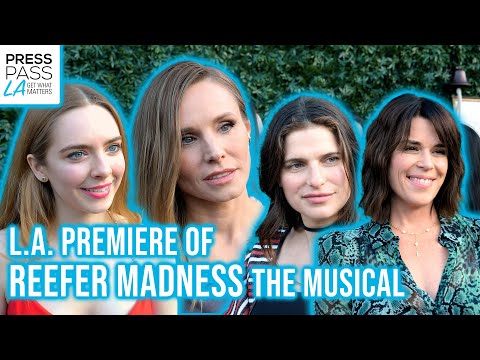
- A July 30, 2024 “legacy concert” celebrated the show’s anniversary run, with press coverage noting returning star power and behind-the-scenes anecdotes.
- A 2025 “New Los Angeles Cast Recording” was released digitally January 10, 2025; Playbill reported the release under Yellow Sound Label, with physical CD editions including bonus tracks.
- The BroadwayWorld album listing for the 2000-era recording describes it as a studio recording with the original cast and a full band, packaged with a booklet and bonus tracks.
Reception
Critical response tends to agree on the craft even when it quarrels with taste. When the satire lands, it lands because the score is written like a real score, not like a sketch that got lucky. The 2024 L.A. revival press leaned into the production’s energy and its giddy commitment to theatrical excess. Earlier commentary, especially around the 2005 film moment, focused on the material’s odd historical timing and why this particular moral panic keeps recycling as entertainment.
“A catchy pastiche of swing and classical Broadway tunes, with a naughty edge.”
“An ironically pro-marijuana piece of pop culture.”
“There is something strangely out-of-time about ‘Reefer Madness: The Movie Musical.’”
Quick facts
- Title: Reefer Madness
- Year focus: 2000 (Los Angeles “Version 2.0” production era and studio album listing)
- Type: Satirical book musical, adapted from the 1936 propaganda film
- Book: Kevin Murphy, Dan Studney
- Music: Dan Studney
- Lyrics: Kevin Murphy
- 2000 L.A. production credits (highlights): Director Andy Fickman; choreography Paula Abdul
- 2000 L.A. musical-number spine: “Reefer Madness,” “The Stuff,” “Listen to Jesus, Jimmy,” “Little Mary Sunshine,” “Murder!,” “Tell ’Em the Truth”
- Album context: BroadwayWorld lists a “Reefer Madness the Musical 2000” studio recording with booklet and bonus tracks; later releases include a 2025 “New Los Angeles Cast Recording”
- Rights/licensing: Concord Theatricals
- Recent live landmark: 25th anniversary Los Angeles revival at The Whitley (extended through Sept 15, 2024)
Frequently asked questions
- Who wrote the lyrics for “Reefer Madness”?
- The lyrics are by Kevin Murphy, with music by Dan Studney; they also share book credit in published licensing materials.
- Is the 2000 recording the same as the Off-Broadway album?
- Not necessarily. The 2000-era listing is described as a studio recording with the original Los Angeles cast, while later releases and reissues map to different productions and formats.
- What songs explain the plot fastest?
- Start with “Reefer Madness,” “Jimmy Takes a Hit,” “Act I Finale,” then jump to “Little Mary Sunshine,” “Murder!,” and “Tell ’Em the Truth.” You will hear the fall, the damage, and the official tidy-up.
- Why does the show keep changing musical styles?
- The score treats genre as satire. Each style is a mask that helps the propaganda feel “respectable,” “sexy,” “holy,” or “patriotic,” depending on what the scene needs to sell.
- What is the most important lyric idea in the show?
- Fear as entertainment. The lyrics are full of authoritative warnings that keep turning into hooks you can hum, which is exactly the critique.
- Is there a current tour or Broadway revival?
- As of early 2026, the most visible recent activity was the 2024 Los Angeles revival and the 2025 Los Angeles cast recording, alongside ongoing licensing for regional productions.
Key contributors
| Name | Role | Contribution |
|---|---|---|
| Kevin Murphy | Book; lyrics | Built the show’s voice: propaganda diction turned into punchlines, then into plot mechanics. |
| Dan Studney | Music; book | Wrote a style-hopping score that treats pastiche as a narrative weapon. |
| Andy Fickman | Director (early productions) | Set the rulebook for tone: play the message straight, let the absurdity indict itself. |
| Paula Abdul | Choreographer (2000 L.A. “Version 2.0”) | Helped define the show’s physical comedy and heightened “instructional film” movement vocabulary. |
| Spencer Liff | Director/choreographer (2024 L.A. revival) | Re-energized the piece for the anniversary revival with high-octane staging and club-night pacing. |
| Kristen Bell | Performer (notable association) | Public-facing visibility boost across stage and screen iterations; returned for anniversary events in 2024. |
| Concord Theatricals | Licensing | Administers performance rights, keeping the title alive in regional and educational ecosystems. |
Sources: Ovrtur; Concord Theatricals; TheaterMania; Time Out Los Angeles; Los Angeles Times; Playbill; BroadwayWorld; ReeferMadness.com; BroadwayWorld (L.A. run extension); Deadline (legacy concert coverage).