Paint Your Wagon Lyrics – All Songs from the Musical
Paint Your Wagon Lyrics: Song List
About the "Paint Your Wagon" Stage Show
The script and the lyrics were composed by A. J. Lerner. Composer is F. Loewe. Broadway premiere was on November 1951 in the Shubert Theatre. The last performance was in July 1952 after 289 of ones were completed. Director – D. Mann. Choreographer – A. de Mille. In the cast were: J. Barton, O. San Juan, T. Bavaar, G. de Lappe, M. Maricle & B. Ives. The London premiere of the spectacular took place in February 1953 in Her Majesty's Theatre. Have been shown 477 performances under the direction of R. Bird and choreography by A. de Mille with M. Ray. In the musical participated: S. A. Howes, B. Howes, K. Cantril, J. Grant, S. O'Neill & M. Burr. Production took place from March to April 2003 in The Eureka Theatre. The cast included: K. Houston, B. Gillespie, M. Henderson, A. L. Cole, M. Cronin, A. Hsu, T. Jordan, A. Kaprielian, J. Lian, A. Ku & R. Taylor.The new version of staging has been shows in LA’s Brentwood Theatre from November 2004 to Jan. 2005, directed by G. Cates & choreographed by K. Cole. Adapting the script was made by D. Rambo. The performance had such cast: T. F. Wilson, J. Rush, S. Lawrence, J. Dote, J. Garcia, S. Hack, R. Kahn & D. Lujan. From September to October 2007, the play was demonstrated in Salt Lake City. Director – C. Morey. Choreographer – P. D'Beck. The show had such actors: E. R. Hall & E. Acevedo. In March 2015, as part of Encores!, it went in NY, directed by M. Bruni & choreographed by D. Jones with such actors: J. Barber, K. Carradine, R. Creighton, N. Hackmann, J. Guarini, R. Hurder, A. Socha, M. van der Schyff, S. Wakefield, W. Youmans, D. Crago & S. Czarnecki. In 1952, the show won the Theatre World Aw.
Release date: 1951
"Paint Your Wagon" – The Musical Guide & Song Meanings
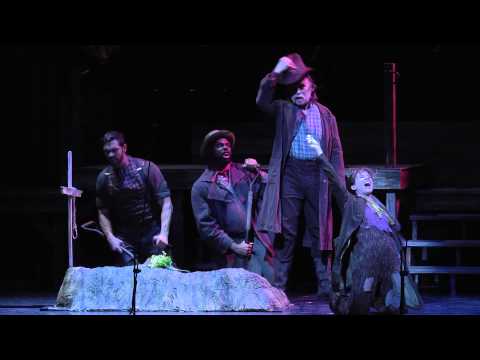
Review: a Gold Rush musical that keeps side-eyeing the cost of “progress”
"Paint Your Wagon" wants two things at once: a rowdy frontier singalong and a clear-eyed look at how a town invents its own morals when the nearest courthouse is a rumor. That ambition is exactly why the lyrics still land even when the book can feel like it’s hauling too much plot in a leaky bucket. Alan Jay Lerner writes as if the camp has a public voice and a private one. In chorus numbers, the language turns communal and myth-making. In the ballads, the words suddenly shrink to confession size.
The score is Loewe in American vernacular mode: broad intervals, open-air rhythms, melodies that seem to ride in on weather. The key lyrical move is personification. Nature gets named, argued with, begged. The men aren’t “tough guys” so much as lonely men trying to turn geology into companionship. Meanwhile Jennifer’s songs keep translating the town back into human terms, which is the show’s stealth engine: the lyrics insist that “civilization” is not a building, it’s a choice made repeatedly, often badly.
For listeners: start with the 2015 Encores! cast recording if you want story clarity and fuller musical coverage, then circle back to the 1951 original cast album for period vocal style and a brash, mid-century Broadway bite. The contrast is the education. It changes what you think the lyrics are aiming for, and what they’re willing to excuse.
How it was made
"Lerner & Loewe after "Brigadoon" was never going to be a quiet follow-up, and "Paint Your Wagon" proves it. They wrote an original Gold Rush tale that lets the ensemble behave like a weather system: pressure builds, the town changes, then the whole place blows out and moves on. On Broadway in 1951, Daniel Mann directed and Agnes de Mille shaped the dances and musical ensembles, leaning into the period flavor without pretending the frontier was polite.
The show’s afterlife is its own subplot. Producers and revisers have kept returning to the same problem: the songs are keepers, the dramatic wiring is messy. That’s why the title keeps reappearing in “fixed” forms. A major example is the 2015 Encores! concert adaptation credited to Marc Acito (with Jack Viertel also credited on some production materials), which gave the score room to make its case with less narrative clutter. Another is The Muny’s 2019 revision with a new book by Jon Marans, part of an explicit effort to reframe the story for a modern audience.
One useful bit of historical clarity: even the franchise confusion is instructive. The 1969 film rewrote heavily and retained only a portion of the stage songs, which helped turn the title into a punchline in some circles. The stage piece, when heard whole, is sharper, stranger, and more emotionally adult than the movie’s reputation suggests.
Key tracks & scenes
"I'm On My Way" (Miners)
- The Scene:
- California wilderness, May 1853. A makeshift funeral has barely ended before the air changes. Lantern light and shovel work become a kind of choreography as the camp realizes a town is being born.
- Lyrical Meaning:
- The lyric isn’t “hopeful” so much as compulsive. Everyone sings like they’re trying to outrun poverty, history, and their own attention spans. The phrase repeats like a creed because that’s how boomtowns work: motion becomes morality.
"I Talk to the Trees" (Julio and Jennifer)
- The Scene:
- Two months later, near the edge of town. Julio is forced to live outside the camp because he’s Mexican. Jennifer meets him over the small domestic business of laundry, which plays like a quiet rebellion under pale morning light.
- Lyrical Meaning:
- Lerner’s lyric turns love into a translation problem. Julio speaks in metaphor because plain speech is dangerous in a place that already decided he doesn’t belong. The “trees” are stand-ins for a town that won’t listen either.
"They Call the Wind Maria" (Steve, Miners, Ensemble)
- The Scene:
- Night in Rumson. Jake’s banjo sets a pulse and the men stare out into the dark like it owes them answers. In performance, this often becomes near-stillness: bodies planted, voices moving like weather.
- Lyrical Meaning:
- One of Lerner’s smartest tricks: naming the wind is an attempt at intimacy by people who can’t admit they’re lonely. The lyric makes masculinity porous. It lets the men confess without “confessing.”
"I Still See Elisa" (Ben Rumson)
- The Scene:
- Later in Act I, after the town pressures Ben to send Jennifer away. Ben is alone with memory. Light narrows, the camp noise drains, and the lyric lands like a private letter he never mailed.
- Lyrical Meaning:
- This is where the show stops romanticizing the frontier. Ben’s grief is not noble, it’s inconvenient. The lyric argues that a man can be “in charge” and still be emotionally stranded.
"In Between" (Ben Rumson)
- The Scene:
- The town’s moral crisis turns transactional when a Mormon arrives with two wives. Ben, who thinks he’s immune to sentiment, finds himself bargaining with it under harsh, public light.
- Lyrical Meaning:
- Lerner writes Ben as a man caught between appetite and responsibility. The lyric’s plainness is the point. He can’t dress this feeling up, so he talks around it, which is still a kind of truth.
"Another Autumn" (Julio, Ensemble)
- The Scene:
- Act II, a year later. The camp parties harder because the gold is thinning. Julio hears about another claim and weighs leaving. The music sits in that late-season color: not tragic, just inevitable.
- Lyrical Meaning:
- “Wand’rin’” isn’t only Ben’s condition. The lyric shows how the town teaches everyone impermanence. Love becomes a plan that keeps getting rescheduled by economics and prejudice.
"All for Him" (Jennifer)
- The Scene:
- Jennifer returns from the East having learned “civilized ways,” which reads onstage as costume and posture before it reads as psychology. Warm light, tighter formations, a person trying to be legible in two worlds at once.
- Lyrical Meaning:
- The lyric is a self-argument. Jennifer’s devotion is real, but it’s also her bid for agency in a town that treats her as a problem to solve. Lerner lets the romance carry critique inside it.
"Wand’rin’ Star" (Ben Rumson)
- The Scene:
- Near the end of Act II. Ben admits he was not built for staying put. Staged simply, it becomes an epitaph for the town itself: a place that exists, then moves on without apology.
- Lyrical Meaning:
- The lyric is both excuse and diagnosis. Ben frames drifting as destiny, which is comforting until you hear how many people it costs. That tension is the adult heartbeat of the show.
Live updates (2025-2026)
As of the most recent licensing listings, "Paint Your Wagon" is active primarily as a regional and amateur title rather than a Broadway fixture. Music Theatre International (MTI), which licenses the show, continues to list upcoming productions, including a September 2025 run in Julian, California. If you’re tracking the musical’s “current life,” that’s the real story: the score survives because communities keep choosing it, especially when they want a classic ensemble sound with a darker edge than the usual Golden Age comfort food.
Listening-side update: the 2015 Encores! cast recording remains the most complete mainstream modern audio document of the stage score in circulation, and it’s broadly available on major streaming platforms. For new listeners, it’s the cleanest on-ramp to the lyrics because the diction is contemporary and the orchestral picture is expansive.
Notes & trivia
- The musical opened on Broadway at the Shubert Theatre on November 12, 1951 and ran 289 performances.
- Original creative credits include director Daniel Mann and dances/musical ensembles by Agnes de Mille.
- IBDB lists Burl Ives and Eddie Dowling among notable replacements for Ben Rumson during the original Broadway run.
- Masterworks Broadway dates the first LP release of the original Broadway cast recording to December 14, 1951.
- In the 2004 Geffen Playhouse adaptation, the show was revised by David Rambo, with new orchestrations/arrangements credited to Steve Orich in that production’s materials.
- The Muny’s 2019 staging used a new book by Jon Marans, evidence of the show’s ongoing “repair culture” around the script.
- The 2015 Encores! cast album was released commercially in May 2016, long after the concert run, and runs about 77 minutes with an expanded track list.
Reception: then vs. now
In 1951, critics could admire the sheer musical craft while still side-eying structural sprawl. Later revivals made the split verdict louder: the score often gets praised as top-tier Loewe, while the book gets treated as the project that hasn’t decided what it wants to be when it grows up.
“The score, and the care taken with it, are exemplary.”
“A rich vein runs through the Gold Rush musical ‘Paint Your Wagon,’ and someday someone will fully mine it.”
“A world premiere adaptation of Lerner and Loewe’s 1951 musical about the California gold rush…”
What’s changed “now” is less the evaluation than the listening habits. The show’s identity has tilted toward its recordings. A single number like “They Call the Wind Maria” travels easily on playlists, while the full plot does not. The 2015 Encores! project helped rebalance that by treating the score like a living organism rather than a museum label, and by restoring context around Jennifer and Julio that later versions often muddied or removed.
Quick facts
- Title: Paint Your Wagon
- Year: 1951
- Type: Broadway musical (book musical, Gold Rush setting)
- Book & Lyrics: Alan Jay Lerner
- Music: Frederick Loewe
- Original Broadway venue: Shubert Theatre, New York
- Original run: 289 performances
- Music/dance leadership (original): Daniel Mann (director), Agnes de Mille (dances & musical ensembles)
- Selected notable placements (stage score): “I Talk to the Trees” (Jennifer/Julio meeting), “They Call the Wind Maria” (miners’ night song), “Wand’rin’ Star” (Ben’s late confession)
- Cast album (1951): Original Broadway Cast Recording, first LP release dated Dec 14, 1951 (Masterworks Broadway listing)
- Modern reference recording: Encores! Cast Recording (2015 concert), commercial release May 27, 2016 (Masterworks Broadway/Sony Classical Masters)
- Licensing: MTI holds stage licensing rights and lists current/upcoming productions
Frequently asked questions
- Who wrote the lyrics to "Paint Your Wagon"?
- Alan Jay Lerner wrote the book and lyrics, with Frederick Loewe composing the music.
- What is the best cast recording to start with?
- If you want the clearest narrative through-line and fuller musical coverage, start with the 2015 Encores! cast recording. If you want period style and original performance energy, add the 1951 original Broadway cast album next.
- Where does “They Call the Wind Maria” happen in the story?
- It’s staged as the miners’ night song in Act I, when the men reckon with isolation and the all-male pressure cooker of Rumson.
- Is "Paint Your Wagon" on tour right now?
- There is no single branded touring production as a constant presence, but the show remains active via licensed regional and amateur productions listed by MTI.
- Is the movie the same as the stage musical?
- No. The 1969 film heavily revises the plot and uses only part of the stage score. The stage piece gives Jennifer and Julio a central romantic line that later versions often reshape.
- Why do people call the show “awkward” but still love the songs?
- The book juggles satire, romance, and social critique without always resolving the tone. The score, however, is unusually strong at turning setting and loneliness into melody and metaphor.
Key contributors
| Name | Role | Contribution |
|---|---|---|
| Alan Jay Lerner | Book & Lyricist | Writes the town’s moral argument into singable metaphors and bracingly plain confessions. |
| Frederick Loewe | Composer | Builds an American West sound-world: open intervals, chorus heft, ballads that feel weather-shaped. |
| Daniel Mann | Director (1951 Broadway) | Original staging architecture for the Broadway production. |
| Agnes de Mille | Dances & Musical Ensembles (1951 Broadway) | Defines the show’s physical language, blending character, period texture, and theatrical muscle. |
| Ted Royal | Orchestrations (1951 Broadway) | Original orchestral palette supporting the score’s frontier scale. |
| Trude Rittmann | Dance music arrangements (1951 Broadway) | Arranges dance materials that keep de Mille’s storytelling kinetic. |
| Marc Acito | Concert adaptation (Encores! 2015) | Streamlines presentation so the score can persuade without dragging a full production apparatus. |
| Marc Bruni | Director (Encores! 2015) | Leads the concert staging that reintroduced the full score to many modern listeners. |
| Rob Berman | Music Director/Conductor (Encores! 2015) | Anchors a large-orchestra approach that makes the score feel freshly minted. |
Sources: Playbill; IBDB; Masterworks Broadway; Music Theatre International (MTI); Vulture; Los Angeles Times; Variety; BroadwayWorld; CastAlbums.org; Spotify.