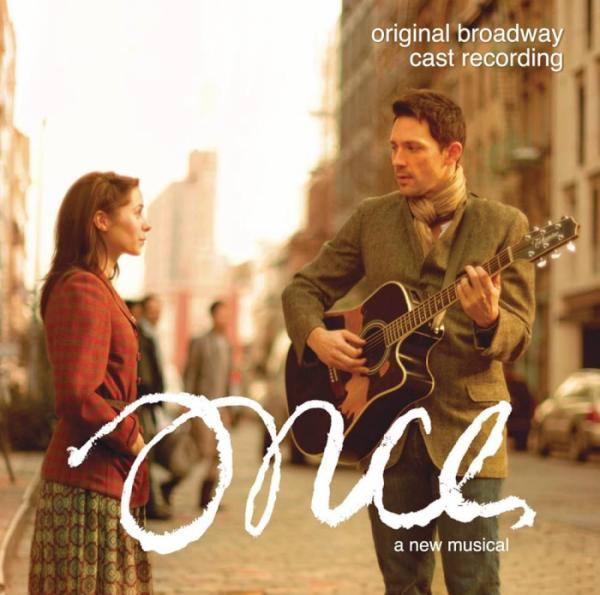
Once Lyrics: Song List
- Act I
- The North Strand
- Leave
- Falling Slowly
- The Moon
- Ej, Pada, Pada, Rosicka
- If You Want Me
- Broken Hearted Hoover Fixer Sucker Guy
- Say It to Me Now
- Abandoned in Bandon
- Gold
- Act II
- Sleeping
- When Your Mind's Made Up
- The Hill
- It Cannot Be About That
- Gold (A Cappella)
- Falling Slowly (Reprise)
- Original Broadway Cast Recording (Bonus Tracks)
- Chandler's Wife
- Raglan Road
- Este Si Ja Pohar Vina Zaplatim
About the "Once" Stage Show
Release date of the musical: 2011
"Once" – The Musical Guide & Song Meanings
Review: the small-talk musical that keeps its promises
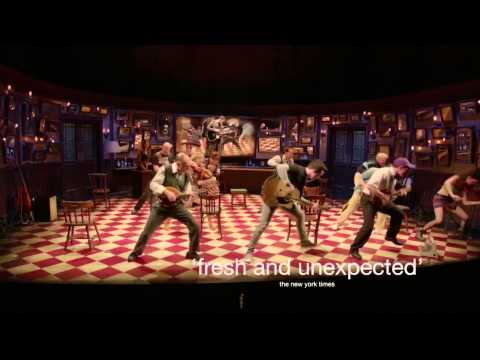
The trick of "Once" is that it sells you intimacy without begging for it. The staging starts with musicians already playing in a Dublin pub, a choice that tells you the score is not decoration. It is the room. The lyrics, mostly by Glen Hansard and Markéta Irglová, work in plain language and short bursts: confession, correction, a half-joke to save face. That economy matters, because Enda Walsh’s book refuses the usual musical-theatre pressure to explain every feeling in 32 bars. Instead, the songs arrive like you have caught someone mid-thought and you are not sure you should be listening.
Lyrically, this is a show about what people cannot say out loud while still being decent. Guy sings in second-person and conditional verbs, as if romance is a rehearsal he can stop at any time. Girl’s writing has a different temperature: more precise, more private, less interested in performing pain for applause. The result is a romance that lives in withheld information rather than fireworks. Musically, the palette is Irish folk-pop with an actor-musician ensemble that plays onstage, so the sound is acoustic, communal, and occasionally messy in a way that feels like the point. If you want a big belt and a big moral, you can buy a ticket to almost any other show on the block.
Viewing tip for first-timers: pay attention to when the cast stops acting and simply plays. In "Once," those transitions are the story beats. If you are listening to the album first, start with "Leave" and jump to "Gold" before you hear the big duet. It teaches your ear the show’s real subject: community as a coping mechanism.
How it was made
The stage musical grew out of the 2007 film’s songs and the broader Swell Season songbook, then got rebuilt around a pub as a playable environment. Director John Tiffany and movement director Steven Hoggett shaped a company of actor-musicians who stay visible, keep instruments in hand, and treat scene changes like passing a pint. That is not just a vibe choice. It turns accompaniment into peer pressure: when the room plays, you either join in or sit with your silence.
The songwriting origin story begins before Broadway enters the chat. Several key songs were written in the orbit of John Carney’s film project, with "Falling Slowly" becoming the signature piece that later had to carry a stage narrative as well as a movie one. Enda Walsh has described adapting the material as risky, because the film’s power comes from understatement, and theatre loves to inflate understatement into "meaning." The best decision the stage version makes is to treat understatement as a hard technical requirement, not a brand.
Album note: the Original Broadway Cast Recording (Masterworks Broadway) is not a museum copy of the film soundtrack. It leans into ensemble texture and the live-in-the-room feel that the staging sells, and that makes it unusually friendly to listeners who do not collect cast albums for sport.
Key tracks & scenes
"Leave" (Guy)
- The Scene:
- A street corner in Dublin, framed as the pub’s edge. Warm bulbs glow. The band is present like a witness. Guy plays as if he is trying to finish the song before his courage runs out.
- Lyrical Meaning:
- The lyric is an exit strategy disguised as a love song. Short lines. Few adjectives. It is heartbreak written by someone who hates melodrama and keeps failing at avoiding it.
"Falling Slowly" (Guy & Girl)
- The Scene:
- In the vacuum shop, she pulls the new song out of him. The piano arrives as a challenge, not comfort. Lighting tightens into a small square, as if the pub is briefly becoming a rehearsal room.
- Lyrical Meaning:
- A duet built from mutual permission. The lyric does not narrate a relationship; it tries to negotiate one. The repeated phrasing is not laziness, it is two people circling the same sentence until it feels safe.
"If You Want Me" (Girl)
- The Scene:
- She steps out of the group energy and sings into the quiet part of the pub. The musicians do not cover her. They let the room breathe.
- Lyrical Meaning:
- The lyric is a conditional contract. Even when she is emotionally open, she sets terms. It is romantic, yes, and also legally cautious in the way a single parent might be.
"Say It To Me Now" (Guy)
- The Scene:
- Guy performs like he is at the pub’s open-mic night, using the band as a shield. The number lands as a public confession that tries to pretend it is just a tune.
- Lyrical Meaning:
- Urgency becomes the rhyme scheme. The lyric keeps asking for clarity while refusing to offer any. It captures the show’s core tension: wanting connection while fearing what connection costs.
"Gold" (Company)
- The Scene:
- The ensemble gathers in close harmony, with little theatrical fuss. It plays like a ritual, the pub becoming a choir loft without moving a set piece.
- Lyrical Meaning:
- "Gold" is community propaganda in the sweetest possible way. The lyric sells hope as a group project. It is also a warning: this much warmth can feel manipulative if you resist being included.
"Sleeping" (Guy)
- The Scene:
- Late-night stillness, the pub emptied of celebration. The music thins. He sings into a quiet that does not answer back.
- Lyrical Meaning:
- The lyric is the show’s honest fatigue. It is less about romance than about the body’s inability to keep carrying unresolved feeling without shutting down.
"When Your Mind's Made Up" (Guy & Company)
- The Scene:
- A recording-session surge. The band locks in. The pub becomes a studio by consensus, not equipment.
- Lyrical Meaning:
- A deceptively upbeat lyric about stubbornness. It is the sound of someone admitting they cannot be convinced, then daring you to try anyway.
"The Hill" (Girl)
- The Scene:
- She plays as if she thinks she is alone, then realizes she is not. The lighting isolates her, making privacy feel temporary.
- Lyrical Meaning:
- This is the show’s cleanest window into Girl’s interior life. The lyric is structured like a memory you cannot fully trust, which is exactly how longing behaves.
"Falling Slowly (Reprise)" (Guy & Girl)
- The Scene:
- Two spaces at once: his departure path and her home. The pub frame remains, but the story feels like it has stepped outside the building.
- Lyrical Meaning:
- The reprise does not resolve the romance so much as preserve it. The lyric returns like a note left on the counter: simple, permanent, and easy to misread.
Live updates (2025-2026)
Information current as of January 2026. "Once" is in a phase where it lives less as a brand-name tour and more as a high-value title for regional companies and festivals, which suits a pub-sized story. Ticketmaster’s touring listing currently shows no upcoming dates, a useful reality check if you are hunting for a big commercial route. Meanwhile, new productions keep popping up where actor-musician work is a local specialty.
In the UK, Pitlochry Festival Theatre has announced a 2026 revival billed as the Scottish premiere, with John Tiffany returning to direct, alongside Bob Crowley (design), Steven Hoggett (movement), and Martin Lowe (music supervision and orchestrations). In the US, Chance Theater in Anaheim is opening its 2026 season with "Once," an early-year slot that often signals confidence in word-of-mouth. If you are choosing where to see it, prioritize venues that can put the band close and keep amplification polite. This show dies when it gets too shiny.
Notes & trivia
- The piece premiered at New York Theatre Workshop in December 2011 before transferring to Broadway.
- The original Broadway staging was built around a functioning pub environment, with the band already playing as the audience entered.
- Actor-musicians are not a garnish here; the concept is structural, with the company doubling as the orchestra.
- IBDB credits the score as featuring additional songs (and lyrics) beyond Hansard and Irglová, including material connected to Martin Lowe, Andy Taylor, and others.
- The Original Broadway Cast Recording won the Grammy for Best Musical Theater Album (2013).
- The number order commonly separates Act One’s street-to-pub arc from Act Two’s studio-and-consequences arc, with "Gold" and its reprise functioning like bookends.
- Design language often uses tight lighting zones to suggest rooms within a single pub set, keeping scene shifts fast and psychologically focused.
Reception then vs. now
Early Broadway coverage tended to split into two camps: critics who admired the craft of its intimacy, and critics who worried that expanding a small film into two acts risked padding. A decade later, the show’s reputation has stabilized as a model for actor-musician storytelling that does not treat "small" as an apology. In the post-2020 regional ecosystem, "Once" reads like a practical blueprint: one set, a band you can see, a love story that does not require spectacle to matter.
“The most original and emotionally exhilarating of the trio is the new stage version of ‘Once.’”
“Even bloated to Broadway proportions … Once returned me … to my youthful fields of blarney.”
“Ritual, ensemble and community are at the core of the two-act musical.”
Quick facts
- Title: Once
- Year: 2011 (NYTW premiere; Broadway opened 2012)
- Type: Actor-musician book musical adapted from the 2007 film
- Book: Enda Walsh
- Music & Lyrics: Glen Hansard, Markéta Irglová (with additional featured material credited in production records)
- Director / Movement: John Tiffany / Steven Hoggett
- Music supervision / orchestrations (notable): Martin Lowe
- Signature staging placement: Pub environment with onstage band; audience sometimes invited onstage to buy a drink during the experience
- Album: Once: A New Musical (Original Broadway Cast Recording)
- Label / release: Masterworks Broadway; released March 2012
- Awards note: Original Broadway Cast Recording won the 2013 Grammy for Best Musical Theater Album
- Availability: Major digital platforms (Spotify, Apple Music) and physical releases documented in discographies
Frequently asked questions
- Is "Once" a jukebox musical?
- Sort of, with a specific genealogy: it uses songs associated with the film and the writers’ catalog, then arranges them for an onstage actor-musician ensemble so they function as scenes, not playlist breaks.
- What is the most important song for understanding the story?
- "Falling Slowly" is the thesis statement. It is the moment collaboration becomes intimacy, and the lyric’s repetition tells you how cautious both characters are about naming what they feel.
- Why are the leads called Guy and Girl?
- The names keep the story slightly archetypal, which lets the lyrics carry specificity instead. When the text gets personal, it feels earned because the labels have stayed generic.
- Is there a current tour in 2025-2026?
- There is no major touring run publicly listed via Ticketmaster at the moment, but the title is active in regional theatre and festival programming, including announced 2026 productions.
- How is the stage version different from the movie?
- The biggest change is architectural: the show is built around a pub and an ensemble that plays live onstage, so community becomes a constant presence rather than background atmosphere.
Key contributors
| Name | Role | Contribution |
|---|---|---|
| Glen Hansard | Composer / Lyricist | Co-wrote the score’s core songs, including the show’s signature duet. |
| Markéta Irglová | Composer / Lyricist | Co-wrote songs that sharpen Girl’s inner life and the show’s emotional restraint. |
| Enda Walsh | Book | Adapted the film into a two-act structure built around understatement and community. |
| John Tiffany | Director | Shaped the pub frame and actor-musician storytelling language for the stage. |
| Steven Hoggett | Movement | Created the physical grammar of passing instruments, shifting focus, and ensemble flow. |
| Martin Lowe | Music supervision / Orchestrations | Built arrangements that keep the sound acoustic and scene-driven. |
| Bob Crowley | Scenic / Costume Design | Designed the pub environment that lets scenes happen without set changes. |
| Natasha Katz | Lighting Design | Uses focused lighting to carve multiple locations from one communal space. |
Sources: Playbill; IBDB; Masterworks Broadway; Music Theatre International; The Washington Post; Vulture; What’s On Stage; Discogs; AllMusic; selected production programs.