
Maybe Happy Ending Lyrics: Song List
- Why Love
- World Within My Room
-
The Way That It Has to Be

-
Charger Exchange Ballet (Instrumental)
-
Where You Belong
- Tell Me About Fireflies, Please (Instrumental)
-
Hitting the Road, Pt. 1
-
Goodbye, My Room
-
Hitting the Road, Pt. 2
- The Rainy Day We Met
-
Jenny
-
How to Be Not Alone
-
Hitting the Road, Pt. 3
-
What I Learned from People
-
Why Love: James’s Piano Solo (Instrumental)
-
Chasing Fireflies (Instrumental)
-
Never Fly Away
-
A Sentimental Person
-
When You’re in Love
-
Touch Sequence (Instrumental)
-
Then I Can Let You Go
-
Goodbye, My Room (Reprise)
- Maybe Happy Ending
-
Memory Sequence (Instrumental)
-
Why Love (Reprise)
-
Finale
About the "Maybe Happy Ending" Stage Show
Overview: Maybe Happy Ending (Original Broadway Cast Recording).
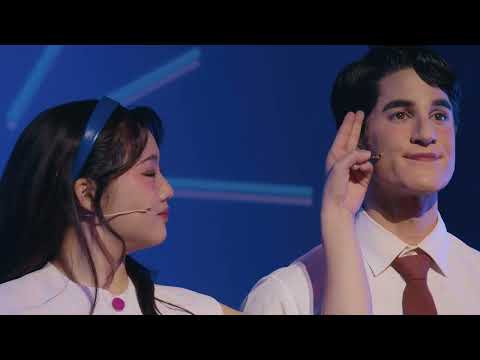
The Broadway cast recording of Maybe Happy Ending sings with both melancholy and warmth. Released digitally on March 14, 2025, this 27-track album echoes through a near-future Seoul where memory, music, and machine meet. Darren Criss voices Oliver, a quiet Helperbot with a love for jazz and solitude. Helen J. Shen joins him as Claire, a fellow robot whose malfunctioning charger sparks their fragile, flickering bond.
An Intimate Soundscape of Synthetic Souls.
This album captures not just the plot, but the heartbeat. It’s not just a show—it breathes.
- “Why Love” by Dez Duron opens the show with a question that lingers.
- “World Within My Room” paints Oliver’s solitude in soft, aching tones.
- “Then I Can Let You Go” serves as the emotional climax, sung in harmony by Criss, Shen, and Duron.
- Instrumentals like "Touch Sequence" and "Charger Exchange Ballet" elevate the sonic texture.
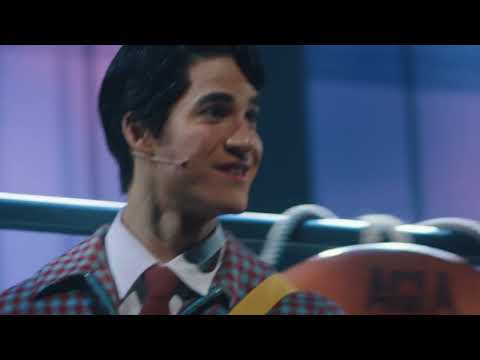
The music, composed by Will Aronson with lyrics by Hue Park, balances futuristic whimsy and heartache. The orchestrations are full-bodied, layered with digital motifs and acoustic flourishes. The recording acts not only as a companion to the live show, but as a standalone story—one you can hear even if you’ve never seen the lights of the Belasco Theatre.
Beyond Broadway.
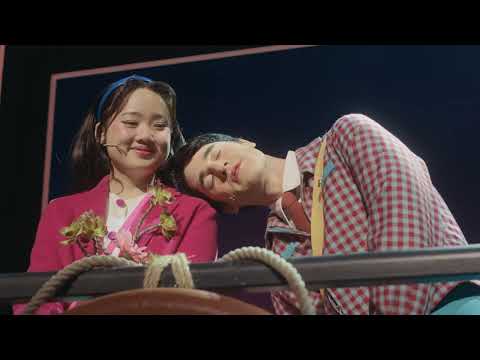
A physical CD arrives May 16, 2025. Vinyl fans can expect a limited-edition pressing by June 13, 2025. These formats echo the nostalgia that pulses beneath the musical’s chrome surface.
This isn’t just about two robots falling in love. It’s about what remains when the warranty expires, and the world moves on.
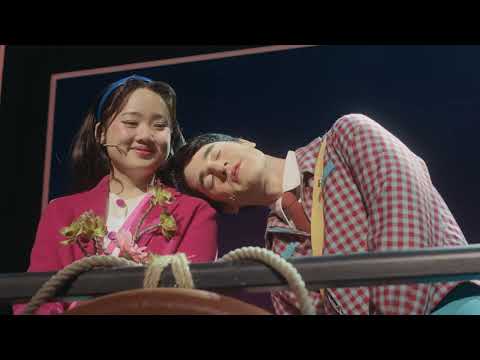
Release date of the musical: 2025
"Maybe Happy Ending" – The Musical Guide & Song Meanings
Review: what the lyrics are really doing
Maybe Happy Ending sells itself as a robot rom-com, then quietly builds a lyric argument about memory. Not memory as nostalgia. Memory as risk. Hue Park and Will Aronson write words that feel plain on first listen because the characters are built to speak plainly. That is the trap. The best lines land after the laugh, when you realize the “simple” phrasing is a mask for dread: obsolescence, abandonment, and the creeping sense that love might just be a temporary software patch.
The score’s personality is jazz-adjacent and warmly retro, but the lyric content is often procedural. Oliver and Claire talk like machines who keep catching themselves feeling. That tension powers the whole evening. Numbers don’t pause the plot; they measure it, like someone taking your pulse and pretending it’s casual. A recurring motif in the writing is objects doing emotional labor: a record, a charger, a plant, a firefly. The lyrics keep pointing at things because the characters cannot fully say what they mean yet. When they finally do, the show stops being cute and starts being sharp.
Listener tip for first-timers: start with “World Within My Room” and “How to Be Not Alone” before you play the album straight through. The first shows you Oliver’s loop. The second shows you the cost of leaving it. In the theatre, sit where you can read faces, not just the big tech tricks. This is a detail show wearing a shiny coat.
How it was made
The origin story is unusually specific: Park has described hearing Damon Albarn’s “Everyday Robots” in a Brooklyn coffee shop and getting snagged on the phrase about “everyday robots” trying to get home. From that, the show builds a near-future Seoul full of human-like helper-bots who have outlived their usefulness. That “getting home” idea becomes the lyric spine. Not home as a place. Home as the fantasy that someone is still coming back for you.
The Broadway production’s polish is not accidental. Its visual system is central to how the lyrics read, which is why the project’s early Broadway timeline got tangled in logistics tied to the scenic and projection demands. Michael Arden’s staging leans into precision: small gestures, crisp transitions, and a world that can snap from cozy to clinical in a beat. When the show works best, the lyric understatement and the design control are cooperating, not competing.
The cast album release in 2025 mattered because this is one of those scores that rewards relistening. The writing is full of tiny callbacks and phrasing echoes that are hard to catch on a first night, especially when you are busy watching an apartment set behave like a magic trick.
Key tracks & scenes
"Why Love" (Gil Brentley)
- The Scene:
- Oliver’s apartment. A jazz record spins while he runs his daily routine with the cheer of a machine doing exactly what it was built to do. The lighting feels like morning inside a display case: warm, contained, slightly lonely.
- Lyrical Meaning:
- The song is a thesis disguised as background music. It asks the question the characters cannot ask yet. The irony is brutal: a human singer voices doubt while the robots treat it like ambience.
"World Within My Room" (Oliver)
- The Scene:
- Still in Oliver’s apartment, with his plant as his main witness. He narrates the safety of repetition while time and abandonment press against the walls.
- Lyrical Meaning:
- This number makes “routine” sound like a moral choice. The lyric is comfort food, and that is the point. Oliver is not just waiting for James. He is protecting himself from the possibility that the waiting is pointless.
"The Way That It Has to Be" (Claire)
- The Scene:
- Claire’s place next door. Her charger is broken, her friends are unavailable, and her independence starts to look like a trap. The light tightens, as if the room is rationing oxygen.
- Lyrical Meaning:
- The lyric is resignation with teeth. It frames scarcity as destiny, which is exactly how systems keep people (and bots) from asking for more. Claire’s bluntness is her defense mechanism.
"Charger Exchange Ballet" (Instrumental)
- The Scene:
- A choreographed ritual across the hallway as the charger changes hands on a strict schedule. The staging treats logistics like romance training wheels: precise, repeated, and strangely intimate.
- Lyrical Meaning:
- There are no words, which is the joke and the reveal. The relationship begins as a transaction, and the show lets the body language say what the characters cannot.
"Where You Belong" (Oliver)
- The Scene:
- Oliver shares the plan he’s been building: Jeju Island, a reunion, a story where loyalty still pays off. The plant becomes a stand-in for hope: fragile, kept alive on purpose.
- Lyrical Meaning:
- The lyric is devotion that borders on self-deception. It is also the first time Oliver’s inner life expands beyond the apartment. Even if his plan is naïve, it is movement.
"The Rainy Day We Met" (Oliver and Claire)
- The Scene:
- Mid-journey, the tone turns cinematic: travel, weather, and a memory forming while it’s still happening. The light softens and the world feels wider.
- Lyrical Meaning:
- The lyric locks a moment into a keepsake. That sounds romantic until you remember what the show is about. A memory is not just a souvenir here. It is evidence that can hurt later.
"How to Be Not Alone" (Oliver and Claire)
- The Scene:
- Two bots trying to write instructions for an emotion neither fully trusts. The staging often quiets down here, letting the words land without distraction.
- Lyrical Meaning:
- This is the score’s sly emotional pivot. The lyric isn’t “love is easy.” It’s “love is a practice.” The phrasing is tender, but it stays suspicious of its own tenderness.
"Maybe Happy Ending" (Oliver and Claire)
- The Scene:
- A decision point with the air sucked out of the room. They face the idea of erasing what they lived through, and the staging leans into stillness like a dare.
- Lyrical Meaning:
- The title becomes a philosophy. The lyric tries to redefine “ending” so it hurts less. It does not fully succeed, which is why the song stays with you.
"Never Fly Away" (Oliver and Claire)
- The Scene:
- The firefly motif reaches its peak. The design often makes the space feel suspended, as if time has stopped to watch what the characters will do next.
- Lyrical Meaning:
- The lyric treats fragility as precious rather than pathetic. The show’s great trick is making a small, luminous thing carry the emotional weight of mortality.
Live updates (2025-2026)
Information current as of January 29, 2026. The Broadway production continues at the Belasco Theatre, and the official ticketing page emphasizes that performances can sell out well in advance, recommending buying at least 30 days ahead. Ticket policies also spell out a digital lottery (“Club 2064”) offering $20.64 seats, plus in-person rush and standing room tickets priced at $49 (day-of, in person).
Cast notes are unusually transparent right now. Broadway sales pages list scheduled absences and final dates: Darren Criss is slated to play his final performance on May 17, 2026, and Helen J Shen is slated to play her final performance on February 15, 2026. The official show site also publishes specific performances when the role of Oliver will be played by other company members, a practical detail for fans planning around star dates.
Touring is no longer theoretical. A North American tour is announced to launch in fall 2026 from Baltimore’s Hippodrome Theatre, with a multi-year plan and 30+ cities named, though detailed routing and casting remain pending.
Meanwhile, the show’s Korean life is very active again. A 10th anniversary Seoul engagement is scheduled from October 30, 2025 to January 25, 2026 at Doosan Art Center’s Yonkang Hall, and theatre news reports described the run as fully sold out with 112 consecutive sold-out performances and an announced Korea tour to follow.
Notes & trivia
- The official Broadway ticket page promotes a “Club 2064” digital lottery with $20.64 seats, and lists rush and standing room tickets at $49.
- The Broadway cast recording was released digitally March 14, 2025 via Ghostlight Records, with physical formats following later in spring 2025.
- Park has described the seed of the show arriving after hearing Damon Albarn’s “Everyday Robots,” which nudged the idea of lonely, discarded “everyday robots” trying to get home.
- The Broadway album’s production credits include music supervision and producing roles credited to Deborah Abramson, alongside Park and Aronson, per cast album announcements.
- A national tour is announced to begin in fall 2026, launching in Baltimore before heading to major markets across the U.S.
- Korea Times reporting frames the 2025-2026 Seoul return as a 10th anniversary production, running October 30, 2025 through January 25, 2026.
- The show’s design team is a major part of its storytelling language: scenic and video elements are frequently cited in coverage as central to the experience, not decorative.
Reception
Critics largely agree on two things: the show’s emotional punch is real, and its technical polish has purpose. Reviews keep circling the same surprise: a story about robots is somehow one of the season’s more human pieces. That surprise is not accidental. The lyric strategy is to underplay the feeling so the audience does the last step, and the design strategy is to keep the world precise so tiny shifts read as seismic.
“A shut-in at his residence for retired androids in a near-future Korea, he functions in a chipper loop of programmatic behavior.”
“Cleverly uses its sci-fi depiction of the interior life of robots to explore a whole host of deeply human themes.”
“A tenderhearted meet-cute rom-com tinged with poignance.”
Quick facts
- Title: Maybe Happy Ending
- Year focus: 2025 (cast album release and Tony-winning season)
- Type: Musical (original; performed internationally)
- Book: Hue Park and Will Aronson
- Music: Will Aronson
- Lyrics: Hue Park
- Director (Broadway): Michael Arden
- Broadway venue: Belasco Theatre
- Cast album: Maybe Happy Ending (Original Broadway Cast Recording) (Ghostlight Records; digital release March 14, 2025)
- Selected notable placements: “Why Love” (Oliver’s routine), “Charger Exchange Ballet” (hallway ritual), “How to Be Not Alone” (emotional pivot), “Maybe Happy Ending” (decision point)
- 2025-2026 live context: Broadway continuing; North American tour announced to launch fall 2026; Seoul 10th anniversary run scheduled Oct 30, 2025 to Jan 25, 2026
Frequently asked questions
- Who wrote the lyrics?
- Hue Park wrote the lyrics, with Will Aronson composing the music; they co-wrote the book.
- Is there an official cast recording?
- Yes. The Original Broadway Cast Recording was released in 2025 via Ghostlight Records, with track lists published by major ticketing and theatre outlets.
- Where do the most important songs land in the story?
- “Why Love” and “World Within My Room” establish Oliver’s routine, “The Way That It Has to Be” defines Claire’s predicament, “Charger Exchange Ballet” marks their ritual, and “Maybe Happy Ending” and “Never Fly Away” sit near the emotional peak.
- Is the show touring?
- A North American tour is announced to begin in fall 2026, launching from Baltimore’s Hippodrome Theatre, with additional cities named but full routing and casting still pending.
- How do rush and lottery tickets work on Broadway?
- The official Broadway ticket page promotes a $20.64 digital lottery (“Club 2064”) and in-person rush and standing room tickets priced at $49, subject to availability.
- Is the musical connected to Korea beyond the setting?
- Yes. The show originated in South Korea and continues to have major Korean productions, including a 10th anniversary Seoul run scheduled from late 2025 into early 2026.
Key contributors
| Name | Role | Contribution |
|---|---|---|
| Hue Park | Lyricist / Co-book writer | Writes lyrics that sound plain until they sting; co-builds the show’s memory logic. |
| Will Aronson | Composer / Co-book writer | Creates a warm, jazzy score that keeps a tight emotional rhythm under the jokes. |
| Michael Arden | Director | Stages the story with precision so small lyric shifts read as major plot turns. |
| Darren Criss | Original Broadway cast (Oliver) | Centers Oliver’s stiffness and yearning; helped define the Broadway version’s emotional temperature. |
| Helen J Shen | Original Broadway cast (Claire) | Gives Claire edge and vulnerability, keeping the romance from turning syrupy. |
| Dane Laffrey | Scenic / additional video design | Builds the world’s “jewel box” architecture, where space and tech carry story information. |
| George Reeve | Video design | Helps the show’s visual language behave like a storyteller, not a background screen. |
| Ben Stanton | Lighting design | Shapes the emotional shifts with controlled illumination that can flip the mood fast. |
| Deborah Abramson | Music supervision / Album producer | Oversees the musical execution onstage and helps translate it to the album. |
| John Yun | Music direction | Maintains the score’s balance of intimacy and momentum. |
Sources: MaybeHappyEnding.com (official site), Playbill, Time Out New York, Variety, Deadline, New York Theatre Guide, Korea Times, Broadway.com, Ticketmaster blog, IBDB.