Kiss Of The Spider Woman Lyrics – All Songs from the Musical
Kiss Of The Spider Woman Lyrics: Song List
- Act 1
- Prologue
- The Prison Cell
- Her Name Is Aurora
- The Prison Cell II
- Over The Wall I
- And The Moon Grows Dimmer
- Bluebloods
- Dressing Them Up
- I Draw The Line
- The Prison Cell III
- Dear One
- Over The Wall II
- Where You Are
- Marta
- I Do Miracles
- Gabriel's Letter/ My First Woman
- Morphine Tango
- You Could Never Shame Me
- A Visit
- She's A Woman
- Gimme Love
- Act 2
- Russian Movie/Good Times
- The Day After That
- Mama, It's Me
- Anything For Him
- Kiss Of The Spider Woman
- The Warden's Office
- Lucky Molina, Over The Wall
- Only In The Movies
About the "Kiss Of The Spider Woman" Stage Show
The musical is based on the novel. The libretto was written by M. Puig specially for creating the show on scene. The idea of creating the musical came to directors in 1900. Their task was to create the performance, which displays would last more than 4 years. H. Prince was the director. Responsible for choreography were the following people: S. Stroman, J. Rubinstein, K. Gray, L. Mitchell and H. Gozsteel. At first, the musical didn't make success. Critics wanted to forbid it. Attempts of creators to persuade them were unsuccessful. Almost all reviews were negative. The musical hasn't been shown on the big stage.Two years later G. Drabinsky became the new producer. His version of the show was made in Toronto. Actors were the following: B. Carver, A. Crivello and C. Rivera. The following version was created in the West End. In total, this performance had 390 exhibitions. H. Prince was the director. B. Carver, A. Crivello and C. Rivera were the main actors again on the West End’s scenes. The musical received Evening Award as the best show.
Broadway version opened in 1993. The director was the same. It lasted 2 years. It has won Tony for leading roles of two actors. B. Mitchell, H. McGillin, J. Hyslop, M. C. Alonso, V. L. Williams & C. Lawrence participated in this performance. This version of the musical had bigger success than original one.
In Houston, the next version was created in 1999. J. Williams was the director. Actors were the following: G. Nepoli-Holmes, L. Meyer, P. Bracho, M. Rial, J. Williams, T. Wroble, and T. Porter. The musical was also shown in Argentina in 1995 and in Australia in 2010.
Release date: 1992
"Kiss of the Spider Woman" – The Musical Guide & Song Meanings
Review
How do you write a Broadway score about state violence and still let an audience clap on the beat? "Kiss of the Spider Woman" (premiered 1992, Broadway 1993) answers with a crafty lyric strategy: it makes performance itself the plot. Fred Ebb’s words are rarely just “feelings” on top of melody. They are a survival technique, a bargaining chip, and sometimes a lie you tell beautifully enough that it becomes temporarily true.
The show’s central engine is the contrast between a Latin American prison cell and Molina’s movie-fed inner cinema. The lyric writing treats that border like a revolving door. Prison material tends to be blunt, rhythmic, and argumentative: phrases that sound like rules, slogans, or dares. The fantasy material leans into classic Kander and Ebb glamour vocabulary, where a rhyme can flirt, pivot, and betray in the same couplet. The brilliance is how often those modes contaminate each other. A “movie” number will suddenly carry the ache of confinement, and a prison exchange will start to move with the timing of a nightclub routine.
Musically, the score is built for quick costume changes in tone. It borrows the snap of showbiz pastiche, then turns the harmony colder when reality bites back. That volatility is not decoration. It’s dramaturgy. When the show works best, it makes you feel the seduction of escapism and the cost of needing it. Information here is current as of January 2026.
How it was made
There’s a reason this piece still lands like a dare. Even in early coverage, critics underlined how unlikely the raw ingredients were for a musical. The creators had to solve a structural problem: how to stage a story that is, at heart, two people talking in a cell, without turning the evening into a tasteful oratorio. The solution was Harold Prince’s high-contrast staging concept, using fantasy sequences as pressure valves, and Ebb’s lyric stance of “perform to live.”
The developmental history is unusually visible in the work. Reports around the property describe a notorious early workshop period around 1990 that nearly sank the project, before the show found its footing in subsequent productions and transfers. Later, that earlier era re-emerged in a surprising way: the 2025 film version revived songs written for a pre-Broadway iteration at SUNY Purchase (1990), material that did not appear in the Broadway song list. In other words, this score has an official “shadow” version, and the adaptation pipeline pulled from it decades later.
Key tracks & scenes
"Dressing Them Up / I Draw the Line" (Molina, Valentín)
- The Scene:
- In the cell, the air is stale and unforgiving. A bare overhead light makes every gesture look like evidence. Molina’s stories about costumes and screen glamour start as comic relief, then harden into a boundary negotiation between the two men.
- Lyrical Meaning:
- Ebb uses fashion talk as coded theology: who gets to name what “real” masculinity is, and who gets punished for refusing the uniform. The lyric’s bite is that it treats identity as something you assemble daily, not something you “confess” once.
"Where You Are" (Aurora and company)
- The Scene:
- The cell dissolves into a movie set. Light warms, bodies multiply, and space suddenly has depth. The fantasy feels like oxygen, which is precisely why it’s dangerous.
- Lyrical Meaning:
- The lyric sells devotion with a smile, but the subtext is control. “Where you are” becomes a trapdoor phrase: it can mean intimacy, surveillance, or surrender, depending on who’s singing and who is stuck listening.
"Morphine Tango" (Orderlies)
- The Scene:
- A stylized interlude with clinical menace. The stage picture can read like a cabaret number performed by bureaucracy. Bright, cruel light. Movement that suggests procedure, not passion.
- Lyrical Meaning:
- This is Ebb at his most surgical: rhymes that land like rubber stamps. The song turns “care” into threat, and makes the audience complicit by giving the cruelty a catchy frame.
"She's a Woman" (Molina)
- The Scene:
- After enough nights of storytelling, fantasy stops being a separate room. Molina’s identification with his imagined star becomes bolder, more exposed. The lighting often narrows, as if the cell itself is leaning in to listen.
- Lyrical Meaning:
- The lyric is both declaration and disguise. It lets Molina speak desire and self-recognition while keeping a layer of “it’s about her” protection. That double register is the point: safety requires indirection.
"The Day After That" (Valentín)
- The Scene:
- Reality asserts itself. The stage fills with absence: families, names, and the sense of a country that has learned to whisper. The light feels flatter, less theatrical, like daylight you can’t sweeten.
- Lyrical Meaning:
- Ebb’s lyric turns political grief into a calendar you can’t escape. The power is its refusal to romanticize: it counts consequences. It also reframes Molina’s movies as more than fluff. If tomorrow is brutal, of course you build a dream tonight.
"Anything for Him" (Spider Woman)
- The Scene:
- A seduction that plays like a contract signing. The Spider Woman arrives with the confidence of a headliner, but the temperature is ominous. Spotlights sharpen. Edges show.
- Lyrical Meaning:
- The lyric is devotion with teeth. It makes love sound limitless, then reveals how that limitlessness can be exploited. In the show’s moral geometry, “anything” is never just romantic. It’s transactional.
"Kiss of the Spider Woman" (Spider Woman)
- The Scene:
- The title number is the fantasy apex: the glamorous promise and the lethal consequence in the same breath. The staging often leans into silhouette, as if desire is being projected onto a screen.
- Lyrical Meaning:
- The lyric is a thesis statement: escape can save you, and escape can kill you. The kiss reads as fame, sex, mercy, and death, depending on which storyline you think you’re watching at that instant.
"Only in the Movies / His Name Was Molina" (Company)
- The Scene:
- The show steps back from the cell and the fantasy and lets memory take over. The lighting shifts toward elegy: softer, wider, less interested in spectacle than in accounting.
- Lyrical Meaning:
- Ebb’s lyric punctures the idea that movies are “just” escape. The refrain becomes accusation and lament: the world that refuses a person dignity will still consume their story as entertainment.
Live updates
Stage: a major UK revival is scheduled for 2026 as a co-production across Curve (Leicester), Bristol Old Vic, and Mayflower Southampton. Casting announced to date includes Anna-Jane Casey as Aurora, with Layton Williams as Molina and George Blagden as Valentín, and direction by Paul Foster. For UK audiences, this is being framed as the first major revival there since the early 1990s, and the listed dates create a neat spring-to-early-summer run across the three venues.
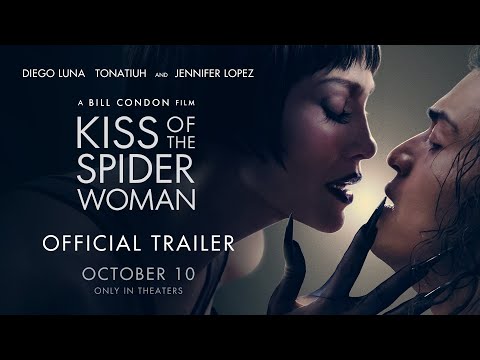
Screen: the film adaptation (written and directed by Bill Condon) has pushed the property back into the mainstream conversation, including renewed scrutiny of what the lyrics imply about identity and narration. The film’s song approach has also sparked debate: a Playbill breakdown notes that the screen version cuts many non-diegetic stage numbers while retaining key moments, and it reintroduces three songs from a pre-Broadway 1990 iteration at SUNY Purchase. A newly surfaced song (“Never You”) has been promoted as a first-time high-profile release tied to the movie’s soundtrack rollout.
Notes & trivia
- The stage musical’s core creative trio is unusually heavyweight: John Kander (music), Fred Ebb (lyrics), and Terrence McNally (book), with Harold Prince directing the original Broadway production.
- The Broadway run began May 3, 1993 at the Broadhurst Theatre and closed July 1, 1995, totaling 904 performances.
- The 1993 Broadway production won seven Tony Awards, including Best Musical, Best Book, and Best Original Score.
- Licensing and production materials are actively handled through Concord Theatricals, which also publishes a detailed “Music” section that reflects the show’s internal numbering and underscore fragments.
- Cast recording timing matters: the original cast recording is commonly dated to April 6, 1993, making it a near-real-time document of the Broadway score’s final shape.
- Myth check: many people call it a “1993 musical” because that’s the Broadway opening. The work’s premiere life is 1992 (Toronto and West End), and that earlier development track keeps resurfacing in later adaptations.
- The 2025 film’s song list draws from a pre-Broadway 1990 version at SUNY Purchase, effectively creating an “alternate trunk” of Kander material that casual fans may never have heard in stage form.
Reception
The response history is tangled in the best way: critics have long admired the ambition while disagreeing about the balance of politics and showbiz. Early London coverage underlined the sheer improbability of musicalizing the material, even while acknowledging the production’s impact. Broadway reviews, meanwhile, often split their verdicts, praising the theatrical nerve and performers while questioning what gets simplified when nightmare is filtered through musical form.
This musical must be among the first to feature torture, mutilation and threats of anal rape, and is surely the first to portray one character washing another after a bout of diarrhea.
Harold Prince’s first production since “The Phantom of the Opera” is flashy trash and shamelessly lobotomizes the politics of the prison drama. But it’s the only new show with a wild heart and a fresh eye.
Yet the production does succeed not only in giving Ms. Rivera a glittering spotlight but also in using the elaborate machinery of a big Broadway musical to tell the story of an uncloseted, unhomogenized, unexceptional gay man.
Quick facts
- Title: Kiss of the Spider Woman
- Premiere year: 1992 (Toronto; West End), Broadway opening 1993
- Type: Musical drama with fantasy-showbiz framing
- Music: John Kander
- Lyrics: Fred Ebb
- Book: Terrence McNally
- Original Broadway director: Harold Prince
- Notable Broadway production credits: Choreography by Vincent Paterson with additional choreography by Rob Marshall; orchestrations by Michael Gibson
- Selected notable number placements: “Dressing Them Up / I Draw the Line” (cell negotiation); “Morphine Tango” (institutional cruelty as stylized interlude); “The Day After That” (political grief breaks the fantasy spell)
- Cast album: Original Cast Recording commonly dated April 6, 1993; widely available on major streaming services
- 2025 screen adaptation: Film musical released theatrically October 10, 2025, reigniting interest in both the stage score and earlier developmental songs
Frequently asked questions
- Who wrote the lyrics for "Kiss of the Spider Woman"?
- Fred Ebb wrote the lyrics, partnering again with composer John Kander, with a book by Terrence McNally.
- Is there an official cast recording, and what should I start with?
- Yes: the original cast recording is the cleanest entry point because it preserves the score’s Broadway-era shape. Start with “Dressing Them Up / I Draw the Line,” then jump to “The Day After That,” then the title song to hear how fantasy and threat share the same musical language.
- Is the show touring or being revived in 2025 or 2026?
- A major UK revival is scheduled for 2026 across Curve (Leicester), Bristol Old Vic, and Mayflower Southampton, with principal casting announced. The property is also in active circulation due to the 2025 film adaptation.
- Why do the movie songs differ from the stage version?
- The screen adaptation reshapes the score around what the film can justify as “heard” or staged as fantasy, and it also restores songs from a pre-Broadway 1990 version associated with SUNY Purchase.
- What does “Over the Wall” represent in the score?
- It’s the show’s recurring reminder that the cell is not a sealed universe. The wall is physical confinement, but also the political machine outside, and the social boundary that decides who counts as “decent.” The lyric’s repetition makes the wall feel permanent, which is exactly what the characters must resist.
- Is it accurate to call it a 1993 musical?
- Broadway opened in 1993, so the shorthand is common, but the musical’s premiere life begins in 1992, and that earlier development continues to matter because later adaptations have drawn from pre-Broadway material.
Key contributors
| Name | Role | Contribution |
|---|---|---|
| John Kander | Composer | Score that pivots between showbiz pastiche and prison realism |
| Fred Ebb | Lyricist | Lyrics that frame fantasy as survival, bargaining, and self-definition |
| Terrence McNally | Book writer | Stage structure that keeps the cell drama active while fantasy interrupts |
| Harold Prince | Director (original Broadway) | Production concept that weaponizes glamour against political brutality |
| Vincent Paterson | Choreographer (original Broadway) | Movement language bridging nightclub style and institutional menace |
| Rob Marshall | Additional choreography (original Broadway) | Support in shaping large-scale musical staging vocabulary |
| Michael Gibson | Orchestrator | Orchestral palette that can turn from glitter to threat quickly |
| Martin Levan | Sound design (original Broadway) | Audio world-building for a show that lives in both realism and fantasy |
Sources: IBDB; Concord Theatricals; Playbill; Bristol Old Vic; West End Theatre; TIME; Los Angeles Times; Apple Music; People; Official film site and trailer; Wikipedia.