Fosse Lyrics – All Songs from the Musical
Fosse Lyrics: Song List
- Act 1
- Life Is Just A Bowl Of Cherries
- Fosse's World
- Bye Bye Blackbird
- From the Edge
- Percussion 4
- Big Spender
- Crunchy Granola
- From This Moment On
- Dancin' Man
- Act 2
- Shoeless Joe Ballet
-
Dancing in the Dark
- Steam Heat
- I Gotcha
- Rich Man's Frug
- Silky Thoughts/Cool Hand Luke
- Dancin' Dan (Me and My Shadow)
- Nowadays/The Hot Honey Rag
- Act 3
- Glory
- Manson Trio
- Take Off With Us
- Razzle Dazzle
- Who's Sorry Now?
- There'll Be Some Changes Made
- Mr. Bojangles
- Life Is Just A Bowl Of Cherries - Reprise
- Sing, Sing, Sing
- Beat Me Daddy, Eight to the Bar
About the "Fosse" Stage Show
Chet Walker first came up with the idea of creating a musical based on the life and work of Bob Fosse (23.06.1927 – 23.09.1987, died from a heart attack at 60). Ann Reinking was his partner for the last 6 years of his life and fiery supported the creation of this revue, which was released in 1999. Study was launched in New York in the form of workshops, during which a large number of best-class dancers were hired. The Canadian company Livent performed preliminary rolling, as well as rehearsals. Running of the musical was started from the Canadian capital, publicly in 1998. The rehearsals were for 3 months totally and the first opening as the off-Broadway was carried out firstly in Boston, then in Los Angeles. Originally, the show was elaborated with duration of 3 hours and 10 minutes, but then it was decided to reduce and take off 40 minutes because it was excessively long.On Broadway, production came in full force after 21 preliminary shows, where in the very beginning of 1999, at Broadhurst Theatre, the show was hosted. It came with a resounding success for almost 1,100 scheduled impressions (if to include 21 preliminary ones, it will be 1114). The director was Richard Maltby, Jr., but in many ways already mentioned Reinking and Walker helped him, as well as their assistants: G. Verdon (former wife of Bob Fosse, leading dancer), L. Sakakura (co-leading dancer) & B. Musgrove.
A year after closing in 2001, the show was recorded for television, and even before that, during the whole year, 2000–2001, the show was on the West End.
Following dancers took part in the opening: M. Calamia, A. Sanchez, V. Pettiford, L. Sakakura, J. Lanier, R. Rak, E. Fleming, M. Paternostro, D. Richardson, B. Musgrove, S. Trujillo, M. MacLeod, S. Wise, S. Lewis, K. M. Greene, D. LaBarre, M. A. Lamb, C. R. Kirby, D. Moore, S. Jovovich, E. Parkinson, L. Gajda, J. Agustin, H. Cruikshank, B. Anderson & A. Blankenbuehler.
Release date: 1999
"Fosse" – The Musical Guide & Song Meanings
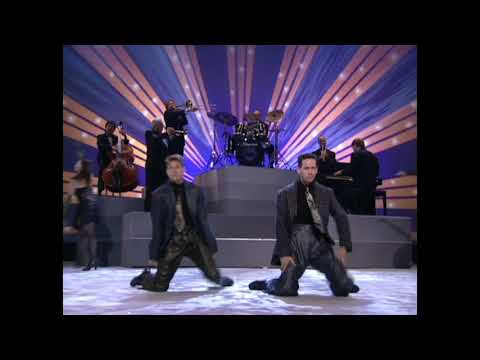
Review: what the lyrics are really doing here
How do you write about “lyrics” in a dance revue that is famously allergic to plot? That is the point of Fosse. It borrows words you already “know” and dares you to hear them again, with new moral shading. The text is vintage Broadway wisecrack, showbiz pep talk, smoky seduction, and late-night regret, but the choreography keeps changing the speaker. A line that once read as bravado becomes defensive. A wink turns into a warning. The show builds meaning the way a film editor builds meaning: by placement, contrast, and timing.
Formally, Fosse is a three-act suite built from numbers choreographed by Bob Fosse for stage, film, and television. The score and lyrics are “various,” which is not a loophole so much as an artistic statement: the authorship is shared between the writers of the original songs and the choreographer whose movement rewires them. The musical style jumps from brassy jazz to sleek nightclub pop to musical-comedy polish, sometimes inside a single act. That volatility is character. “Fosse” is the character, and the chorus line is his nervous system.
Viewer tip (Experience): If you watch the filmed version, rewatch one number with the sound low and then again at full volume. You will notice how often the choreography answers a lyric before the singer finishes the sentence. That call-and-response is the show’s real book.
How it was made
The origin story is unusually concrete for a revue. Chet Walker, a longtime Fosse dancer and dance captain, sparked the first idea and began workshop-building the material with dancers in New York. Livent produced the early development and the pre-Broadway run, with a pre-Broadway path through Toronto, Boston, and Los Angeles before Broadway. Along the way, the show was aggressively reshaped and tightened, including pressure to cut runtime down from a longer early version. The final Broadway production opened at the Broadhurst Theatre on January 14, 1999, co-directed by Richard Maltby Jr. and Ann Reinking, with Walker credited for choreography recreations and Gwen Verdon serving as artistic advisor. That credit stack is not vanity. It describes a real negotiation about how to preserve work that was designed for specific bodies, eras, and cameras.
One of the most revealing behind-the-scenes accounts comes from lighting designer Andrew Bridge, who described the production as a moving target. By his count, the team effectively lit over four hours of material across the out-of-town route because numbers were constantly added, cut, and rearranged. Even his technical solutions, like deck-mounted “mini-footlights” and vertical light curtains, become part of the storytelling. The show’s monochrome look is not minimalism. It is a decision to let the body be the loudest color.
Key tracks & scenes
"Fosse's World" (Company)
- The Scene:
- A danced overture in near-darkness. Groups slide in and out of visibility as beams skim torsos and hats catch the light for a split second. It feels like you are watching memory assemble itself under a spotlight.
- Lyrical Meaning:
- There is almost no “message” in the words because the concept is the message: this is a world built from signatures. The restraint sets up a rule for the night: the movement will supply the subtext the lyrics no longer need to explain.
"From This Moment On" (Pas de deux)
- The Scene:
- Halfway through Act I, a scream snaps the space awake. The orchestra lands Cole Porter’s opening, and the duet becomes a quick, athletic mating dance, bright as a flashbulb in midwinter.
- Lyrical Meaning:
- Porter’s vow sounds romantic on paper. Here it is hormone-fueled, funny, and a little frantic. The lyric’s certainty is undercut by the choreography’s impatience. Commitment becomes a dare.
"Bye Bye Blackbird" (Soloist with ensemble)
- The Scene:
- The stage turns into a TV studio memory. Sidelight carves limbs into clean silhouettes, and the number leans into the feeling of being watched, not just performing.
- Lyrical Meaning:
- On the page, it is goodbye. In this staging, it is also reinvention. The lyric becomes an exit line, and the choreography makes that exit feel both triumphant and lonely.
"Big Spender" (Women of the company)
- The Scene:
- A lineup with the energy of bored professionals on display. The lighting is harsh and sculpting, with footlights that sharpen faces into masks. The number is deadpan, not pleading.
- Lyrical Meaning:
- The lyric is a sales pitch, but the staging treats it like labor. Desire is transactional and exhausting. The words are flirtation; the bodies look like they have repeated it a thousand times.
"Steam Heat" (Trio)
- The Scene:
- Geometric precision. A trio clicks into place with crisp angles and a cool, machine-like rhythm that still reads as funny because the control is so extreme.
- Lyrical Meaning:
- The lyric is playful nonsense. The choreography turns it into architecture. It becomes a joke about mechanism: how to look human while moving like a system.
"I Gotcha" (Featured dancer)
- The Scene:
- A 1970s artifact with a smirk. The performer weaponizes stillness, then breaks it with isolations that feel like a taunt aimed at the audience.
- Lyrical Meaning:
- The words are possession. The staging makes that possession fun, then uncomfortable. It is the show admitting that “seduction” can be a power move, not a romance.
"Mein Herr" (Featured performer)
- The Scene:
- Cabaret attitude without apology. A tight pool of light, a hat, a spine that knows how to mock you while inviting you closer.
- Lyrical Meaning:
- The lyric is dismissal dressed as charm. In a Fosse frame, it becomes self-protection. The number doesn’t ask for love. It negotiates terms.
"Sing, Sing, Sing" (Company)
- The Scene:
- The finale is a build that feels like a staircase made from rhythm. Tap becomes propulsion, and the ensemble reads like an engine that has finally found its top gear.
- Lyrical Meaning:
- Even when there are few lyrics, the title itself becomes a command. The ending argues that performance is not decoration. It is survival.
Live updates (2025–2026)
Information current as of January 24, 2026. There is no active Broadway or major commercial revival of Fosse announced in the 2025–2026 window in the standard Broadway pipeline. Historically, the original national tour opened September 14, 1999 and closed February 17, 2002, so “tour status” for the original production is long concluded. The most visible contemporary activity is not a revival of the revue itself but the broader Fosse ecosystem: filmed versions, streaming albums, and Fosse-adjacent revivals and tributes.
If you want the closest thing to a “current cast,” your most accessible option remains the filmed broadcast version. Playbill documents the PBS taping details and the way the televised edition trims and reshapes the lineup of numbers compared with the Broadway version. The filmed edition also changed the feel by centering Ben Vereen more heavily, a shift the Los Angeles Times explicitly called out in its review of the broadcast. For listening, the original Broadway cast recording remains widely available on major platforms, and it is a curated listening experience rather than a complete document of every staged number.
One more 2025–2026 datapoint worth watching: rights-holders and legacy organizations continue commissioning new presentations of Fosse and Verdon material in other venues. That does not equal a Broadway revival of Fosse, but it signals ongoing commercial appetite for the brand of movement the revue codified.
Notes & trivia
- Revue mechanics: Each act is constructed as a suite, and the show stitches famous numbers to transitional material, including lesser-known film and television choreography.
- Lighting as dramaturgy: Designer Andrew Bridge described using deck “mini-footlights” and limited crosslight solutions to serve the show’s black-on-black visual language.
- A famous mid-act jolt: The Act I “From This Moment On” vignette is framed by a scream and is treated in criticism as a calling-card moment for Fosse’s screen-born voice.
- Filmed version differences: For the PBS “From Broadway: Fosse” broadcast, Playbill notes that some highlights were not listed and that at least one cut number was reinserted for the taping.
- Tony night reality: Fosse won the Tony Award for Best Musical (1999), and it also won for Lighting Design and Orchestrations, an unusually technical sweep for a revue.
- Myth-check: Some secondary write-ups casually misstate the year of Bob Fosse’s death. Major reference sources and encyclopedic biographies consistently give September 23, 1987.
- Cast-album scope: The cast recording’s tracklist is selective and does not function as a full “song order” map for the stage show.
Reception
Critically, Fosse has always lived in a productive argument: is it electrifying history or a museum with great legs? The sharpest reviews tend to praise the craft and question the emotional temperature. The more sympathetic readings point out that the coolness is the story. Fosse’s style often courts distance. It flirts with the audience while refusing to confess.
“Fosse” celebrates at length and in high style the long moment of a director-choreographer of unique and indelible gifts.
“Oddly affectless evening of dance!”
The TV version, however, is dominated by veteran song-and-dance man Ben Vereen.
Quick facts
- Title: Fosse
- Year: 1999 (Broadway opening January 14, 1999)
- Type: Three-act musical revue built from Bob Fosse-choreographed numbers
- Conceived by: Richard Maltby Jr., Chet Walker, Ann Reinking
- Directed by: Richard Maltby Jr., Ann Reinking
- Choreography: Bob Fosse (original), with choreography recreations credited to Chet Walker
- Artistic advisor: Gwen Verdon
- Broadway venue: Broadhurst Theatre
- Broadway run: Closed August 25, 2001 (1,093 performances after 21 previews)
- National tour: Opened September 14, 1999; closed February 17, 2002
- Filmed broadcast: “From Broadway: Fosse” aired January 23, 2002 on PBS “Great Performances”
- Cast album: Fosse (Original Broadway Cast Recording), release date April 13, 1999; label Masterworks Broadway; 21 tracks; approx. 78 minutes
- Selected notable placements (in-show): “Fosse’s World” (opening), “From This Moment On” (mid Act I), “Big Spender,” “Steam Heat,” “Mein Herr,” “Sing, Sing, Sing” (finale)
Frequently asked questions
- Is there a movie or filmed version of Fosse?
- There is a filmed capture associated with PBS “Great Performances” under the title “From Broadway: Fosse,” broadcast January 23, 2002. It is a trimmed version, with documented changes in the number lineup.
- Who wrote the lyrics in Fosse?
- The lyrics come from the original songs used in the revue, written by their respective songwriters across multiple shows, films, and TV specials. That is why the credits list “lyrics: various.” The revue’s authorship is in the curation and staging.
- Why does “From This Moment On” hit so hard in this show?
- Because it functions as a thesis in miniature. It is framed as a sudden burst of energy, and criticism often highlights its brevity and impact as a calling-card for Fosse’s screen-era invention.
- Is the cast recording a complete document of the stage show?
- No. The cast album is a curated listening program with 21 tracks. It overlaps heavily with signature moments, but it is not a full “song order” transcript of the complete three-act stage evening.
- Did Ben Vereen change the show?
- Yes, in emphasis. Contemporary coverage notes that Vereen took over material that originally belonged to a featured leading actress track, and reviews of the televised version describe the broadcast as more centered on his presence.
- Is Fosse touring in 2025–2026?
- No major commercial tour is currently running in that window. The original national tour closed February 17, 2002. Current access is primarily via recordings and the filmed broadcast edition.
Key contributors
| Name | Role | Contribution |
|---|---|---|
| Bob Fosse | Choreographer (source work) | Signature choreography drawn from Broadway, film, and television numbers that form the revue’s spine. |
| Ann Reinking | Co-conceiver, co-director, co-choreographer | Stewarded and shaped the staging language that translates Fosse vocabulary into a full-length theatrical suite. |
| Richard Maltby Jr. | Co-conceiver, co-director | Helped structure the evening into coherent acts and transitions that carry the audience through eras and mediums. |
| Chet Walker | Co-conceiver; choreography recreations | Central to workshops and the practical reconstruction of choreography for new performers. |
| Gwen Verdon | Artistic advisor | Legacy authority and interpretive anchor for style, intent, and performance truth. |
| Andrew Bridge | Lighting designer | Defined the black-and-white visual grammar and engineered lighting solutions that function like storytelling. |
| Ralph Burns & Douglas Besterman | Orchestrations | Adapted disparate source materials into a cohesive sonic palette, recognized with a Tony Award. |
| Masterworks Broadway | Label | Released the original Broadway cast recording as a curated audio version of the revue. |
Sources: IBDB (Internet Broadway Database), Playbill, TonyAwards.com (American Theatre Wing), Live Design Online, Los Angeles Times, Variety, Masterworks Broadway, Apple Music, Wikipedia, Backstage, The New Yorker.