Dear World Lyrics – All Songs from the Musical
Dear World Lyrics: Song List
About the "Dear World" Stage Show
The production of this show experienced troubles right from the beginning. The first of the directors, Lucia Victor, left due to creative differences between her and the main actress, Angela Lansbury. Second, Joe Layton, who was able to bring the show to the premiere, also replaced the choreographer Donald Saddler, who couldn’t cope with his work, demonstrating low level of professionalism. Musical had negative responses after preview, which did not allow its creators to get success on Broadway. So, opened in Mark Hellinger Theatre in 1969, the musical has stood only for 132 regular performances and 45 preliminary. Besides of director Joe Layton, on the creation of the show worked: O. Smith (scenic design), F. Wittop (costume designer), J. Rosenthal (scenic arrangement).After a Broadway, show has been forgotten for some time, mostly because its creators were working on rewriting the musical and its format, as it was impossible on Broadway to show the intimacy of the environment that was proper for the original chamber format. As it turned out, the new format had it and had manifested itself in small stages with success. The new production company was Goodspeed Musicals, which put it in 2000, in the middle of the winter theater season. Two years later in the Sundance Theatre, which is in Utah State, the musical played for all summer.
Production also came to Canada, where in Toronto in May of 2012 it opened with such actors: D. Cornthwaite, B. Boddy, E. R. Morriss & D. Haines.
In London, the musical did not get to West End and stayed at The Charing Cross Theatre, in 2013 for 2 months. It starred B. Buckley & P. Nicholas.
Release date: 1969
"Dear World" – The Musical Guide & Song Meanings
Review
Why did a Jerry Herman musical built for a beloved star become a Broadway cautionary tale? Because "Dear World" is trying to sing two different shows at once. One is a lyrical fable about outsiders defending a neighborhood. The other is a broad, corporate satire that wants to stomp and sneer. When the writing stays with the “madwomen” and the bistro’s warm-hearted misfits, the lyrics feel like a hand on the shoulder. When it turns to the oil men, the language can get blunt, busy, and strangely literal.
Herman’s best lyric trick here is the way he frames imagination as a civic duty. Countess Aurelia does not simply resist the businessmen. She refuses their vocabulary. In her songs, memory is a weapon and tenderness is strategy. "Each Tomorrow Morning" makes optimism sound like discipline, not mood. "I Don’t Want to Know" turns denial into a moral stance, which is daring and a little terrifying. The result is a leading role written as a private cosmos: the Countess sings as if she is rewriting the laws of the room while everyone else is still arguing about oil.
Musically, the score sits in Herman’s late-60s palette: tuneful, bright, sometimes brassy, but also capable of sudden inwardness. That inwardness is the reason the show keeps resurfacing. It is a star vehicle with a conscience, and the conscience is the part that sticks.
How It Was Made
"Dear World" is based on Jean Giraudoux’s play "The Madwoman of Chaillot," via Maurice Valency’s adaptation, with a book by Jerome Lawrence and Robert E. Lee. On paper, it looks like a repeat of "Mame": the same book team, a bigger-than-life heroine, and a composer-lyricist who knew how to write a woman a kingdom. Masterworks Broadway’s production history captures the setup and the stumble: it was positioned as “a big deal,” then it was not "Mame." The Broadway run opened February 6, 1969 at the Mark Hellinger Theatre and closed after 132 performances. A cast album followed quickly in 1969. :contentReference[oaicite:0]{index=0}
The deeper origin story is turbulence. The out-of-town tryout and preview period became a scramble of rewrites and leadership changes. Contemporary reporting described the production being rewritten “practically from scratch,” with Peter Glenville replaced by Joe Layton during the road to Broadway, and additional writing help brought in. That is the sound you can hear in the finished piece: songs of intimacy pressed up against a production that kept being forced to grow louder. :contentReference[oaicite:1]{index=1}
After Broadway, the show’s advocates took a scalpel to it. The licensed "Dear World (Revised)" is credited as a new version by David Thompson, and it aims for a cleaner line: wartime Paris, a tighter running time, and a stronger through-plot for Julian and Nina alongside Aurelia’s crusade. :contentReference[oaicite:2]{index=2}
Key Tracks & Scenes
"Through the Bottom of the Glass" (Countess Aurelia)
- The Scene:
- Early in Act I. A Paris bistro above, a cellar world below. The Countess enters like a ghost who still owns the lease. Lighting often isolates her in a pool, as if the room is listening to her private weather.
- Lyrical Meaning:
- This is Aurelia’s worldview in miniature. The lyric treats perception as choice. She will not see the world the way the “sensible” people demand, and the show dares you to consider that she may be the sane one.
"A Sensible Woman" (Countess Aurelia)
- The Scene:
- Act I, after we meet the neighborhood. Aurelia is surrounded by ordinary rules and social policing. The staging usually lets the Countess push against the edge of the group, making “sense” look cramped.
- Lyrical Meaning:
- It is a declaration of values disguised as whimsy. The lyric laughs at respectability, then quietly indicts it as a tool that keeps people obedient.
"Just a Little Bit More" (The Presidents / Prospector / Lawyer)
- The Scene:
- Act I, in the corporate world. The light goes harder, the pace more mechanical. The men speak like a committee that thinks greed is a science.
- Lyrical Meaning:
- The lyric is transactional language put on a tune. It reveals the villains as people who cannot imagine limits, not moral limits, not physical ones.
"Each Tomorrow Morning" (Countess and Company)
- The Scene:
- Act I, the bistro and the street. The ensemble starts to feel like a small republic. Light warms. The show briefly becomes a communal promise.
- Lyrical Meaning:
- Herman writes hope as repetition and practice. The lyric is not naïve. It is insistence, a way to keep going when the world keeps selling endings.
"I Don’t Want to Know" (Countess Aurelia)
- The Scene:
- Act I, after the stakes sharpen. Aurelia stands alone, not frail but braced. The room goes quiet around her, as if the other characters are suddenly visitors in her mind.
- Lyrical Meaning:
- This is the score’s most dangerous song because it makes denial sound like ethics. The lyric draws a line: if the world has lost its beauty, she refuses the knowledge. It is heartbreak and defiance in the same breath.
"Pretty Garbage" (Sewerman, Countess, Constance, Gabrielle)
- The Scene:
- Late Act I. The Sewerman becomes guide and accomplice. The underworld is suggested through movement and sound: odd shadows, glints of metal, a sense of hidden routes under the city.
- Lyrical Meaning:
- The lyric turns refuse into metaphor. The show argues that what society discards is often what saves it: misfits, memory, play, and the people who refuse to be “useful” in a corporate sense.
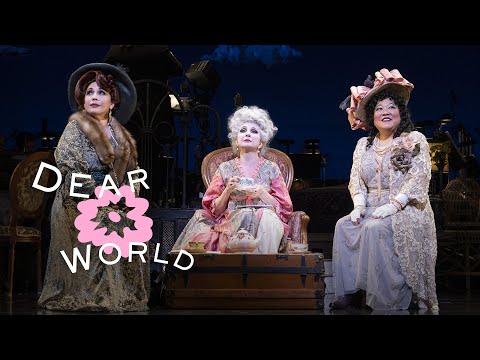
"Tea Party Trio" (Countess, Constance, Gabrielle)
- The Scene:
- Act II, the famous tea party. It plays like a salon gone feral: cups, gossip, sudden flashes of fury. The lighting can feel antique and theatrical, as if the room is performing itself.
- Lyrical Meaning:
- The trio is comedy with teeth. It is the Countess’ coalition in song form. Their lyric logic is a counter-economy: friendship over profit, poetry over extraction.
"And I Was Beautiful" (Countess Aurelia)
- The Scene:
- Act II, after the tea-party energy cracks open something older. Aurelia remembers her lost lover. The stage narrows. The score stops winking.
- Lyrical Meaning:
- The lyric is not nostalgia. It is a wound speaking. The show suddenly explains why Aurelia lives underground: memory is both sanctuary and sentence.
"Kiss Her Now" (Countess Aurelia)
- The Scene:
- Late Act II, as the plot tilts toward victory. Aurelia pushes the lovers forward. The scene often brightens like a window opening, a rare moment of simple instruction.
- Lyrical Meaning:
- Herman makes romance sound urgent and practical. The lyric is about choosing tenderness before the world monetizes the moment.
Live Updates
As of January 23, 2026, there is no announced Broadway revival schedule for "Dear World." The title’s current life is largely licensing-driven, with "Dear World (Revised)" represented by Concord Theatricals, including a clearly credited revised version (David Thompson) and published perusal materials. :contentReference[oaicite:3]{index=3}
The biggest recent visibility spike remains New York City Center Encores!, which mounted "Dear World" March 15 to 19, 2023, led by Donna Murphy. That run generated fresh video materials and press attention that reframed the piece as a rediscoverable leading-lady vehicle rather than a museum flop. :contentReference[oaicite:4]{index=4}
For schools and youth programs, the revised title has also appeared in approved-material listings tied to Concord Theatricals, a small but concrete sign that the show is circulating in educational theatre ecosystems right now. :contentReference[oaicite:5]{index=5}
Notes & Trivia
- The original Broadway production opened February 6, 1969 and closed May 31, 1969 after 132 performances and 45 previews. :contentReference[oaicite:6]{index=6}
- Angela Lansbury won the 1969 Tony Award for Best Actress in a Musical for playing Countess Aurelia. :contentReference[oaicite:7]{index=7}
- The production’s pre-Broadway period was unusually unstable, involving major rewrites and director turnover before Joe Layton took over. :contentReference[oaicite:8]{index=8}
- Concord licenses a revised version credited as a “New Version” by David Thompson. :contentReference[oaicite:9]{index=9}
- Concord’s published music list for the revised version places "I Don’t Want to Know" in Act I and the "Tea Party Trio" and "And I Was Beautiful" in Act II, which explains why the show often feels like it turns from satire into memory midstream. :contentReference[oaicite:10]{index=10}
- The cast album was released in 1969, with streaming availability shown on major platforms. :contentReference[oaicite:11]{index=11}
- Encores! brought the score back into the mainstream theatre conversation in 2023, with official highlight reels published online. :contentReference[oaicite:12]{index=12}
Reception
Then: critics tended to praise Lansbury while doubting the overall shape. Now: the argument has shifted. The score is treated with more curiosity, and the show is discussed as a piece that was swallowed by its own production scale, then rescued later by tighter revisions and concert presentations. :contentReference[oaicite:13]{index=13}
“It is a memory worth treasuring in an evening that seems destined to be forgotten.”
“The show’s producer and authors started to rewrite the show, practically from scratch.”
“A song surprised itself, provocatively, by its own unexpected passion.”
The most telling modern reception is not the star rating. It is the way people describe specific songs as if they are separate relics: a balm ("Each Tomorrow Morning"), a refusal ("I Don’t Want to Know"), a memory flare ("And I Was Beautiful"). That fragmentation is the show’s problem and its charm. "Dear World" is not one clean machine. It is a handful of luminous parts, still fighting to share the same stage.
Quick Facts
- Title: Dear World
- Year: 1969 (Broadway)
- Type: Musical adaptation of a play
- Music & lyrics: Jerry Herman
- Book: Jerome Lawrence and Robert E. Lee
- Based on: The Madwoman of Chaillot by Jean Giraudoux (as adapted by Maurice Valency)
- Broadway venue: Mark Hellinger Theatre
- Broadway dates: Opened February 6, 1969; closed May 31, 1969
- Previews / performances: 45 previews; 132 performances
- Original star: Angela Lansbury (Countess Aurelia)
- Revised licensed edition: Dear World (Revised), “New Version” by David Thompson (Concord Theatricals)
- Running time (revised listing): 120 minutes
- Cast recording: Original Broadway Cast Recording (1969; Columbia Masterworks legacy catalog; available on major streaming services)
- Selected notable placements: Act I worldview ("Through the Bottom of the Glass"); Act I credo ("Each Tomorrow Morning"); Act I rupture ("I Don’t Want to Know"); Act II comic council ("Tea Party Trio"); Act II memory aria ("And I Was Beautiful"); late Act II push toward love ("Kiss Her Now")
Frequently Asked Questions
- Is "Dear World" the same story as "The Madwoman of Chaillot"?
- It is an adaptation. The musical keeps the core idea, an eccentric Countess fighting corrupt developers, while reshaping characters and plot mechanics for a musical theatre structure. :contentReference[oaicite:14]{index=14}
- Which version do theatres usually license?
- Most licensing traffic runs through "Dear World (Revised)" at Concord Theatricals, credited as a new version by David Thompson. :contentReference[oaicite:15]{index=15}
- Where does "I Don’t Want to Know" sit in the show?
- In the revised music list, it appears in Act I, after "Each Tomorrow Morning," functioning as the Countess’ first major emotional rupture. :contentReference[oaicite:16]{index=16}
- What is the tea party number everyone mentions?
- The "Tea Party Trio" is an Act II sequence for Aurelia, Constance, and Gabrielle, often staged as a comic summit that reveals the madwomen’s unity and power. :contentReference[oaicite:17]{index=17}
- Is there a cast recording?
- Yes. The original Broadway cast recording was released in 1969 and remains available through major streaming catalogs. :contentReference[oaicite:18]{index=18}
- Was there a recent notable revival?
- New York City Center Encores! mounted a limited engagement March 15 to 19, 2023, starring Donna Murphy, which renewed interest in the score. :contentReference[oaicite:19]{index=19}
Key Contributors
| Name | Role | Contribution |
|---|---|---|
| Jerry Herman | Composer and lyricist | Wrote a score that alternates between brassy satire and intimate memory songs for a star-leading role. |
| Jerome Lawrence | Book writer | Co-shaped the adaptation’s structure and the balance between fable and romance. |
| Robert E. Lee | Book writer | Co-built the satire mechanics and the community ensemble world. |
| Jean Giraudoux | Source playwright | Created "The Madwoman of Chaillot," the poetic engine behind the Countess’ war on greed. |
| Maurice Valency | Adapter | Provided the stage adaptation foundation used for later musical versions. |
| David Thompson | New version (Revised) | Credited with the revised edition commonly licensed today. |
| Joe Layton | Director and choreographer (1969 Broadway) | Took over during the troubled development period and guided the final Broadway staging. :contentReference[oaicite:20]{index=20} |
| Angela Lansbury | Original leading performer (Countess Aurelia) | Defined the role’s vocal and comedic spine; won the Tony for the performance. :contentReference[oaicite:21]{index=21} |
Sources: Concord Theatricals, IBDB, Masterworks Broadway, Apple Music, New York City Center, Playbill, The Harvard Crimson, NYS Historic Newspapers archive, Wikipedia.