Anna Karenina Lyrics – All Songs from the Musical
Anna Karenina Lyrics: Song List
- Act 1
- Journey to Moscow
- There's More to Life Than Love
- How Awful
- Would You?
- In a Room
- Mazurka
-
Nothing Has Changed
- Rumors
- How Many Men?
- We Were Dancing (Waltz)
-
I'm Lost
- Karenin's List
- Waiting for You
- Act 1
- This Can't Go On
- Rumors
- That Will Serve Her Right
- Everything's Fine
- Would You? (Reprise)
- Everything's Fine (Reprise)
- Only at Night
-
Finale
About the "Anna Karenina" Stage Show
Theodore Mann is Broadway’s director, Patricia Birch is choreographer. Its opening took place in the year of 1992, after 18 pre-views, in the very small theatre carrying the name Circle In The Square. All the performances were held on the small scaffoldings, where even the orchestra was consisting of only seven people. Despite the huge number of primary & secondary actors in voluminous clothes (especially women in wide dresses), this performance has not moved to another theater.Critics embraced musical cool enough, calling it a parody, some awkward comic on the creation of Leo Tolstoy, the fragmentary & incorrect interpretation of the works of this writer. And so this piece of play lived-through only forty six performances, which is a very small number for Broadway (in fact, this figure is considered a complete failure), especially if it is work named Anna Karenina – those classics that hard to mess up. Despite this, the play was awarded with 4 Tony’s nominations (not so much because of production’s quality, but because it was outstanding amongst the most famous classical works). Also, this piece of play was granted with one nomination for Drama Desk Award.
Only 15 years later, in 2007, recording was released, with such actors: K. Butler (depicted Kitty), Levin was played by G. Edelman, J. McCarthy (played Karenin), M. Kudisch (were there Oblonsky), B. d'Arcy James (showed Vronsky) & M. Errico (depicted Anna). After the release of the musical in Japanese in 2006, its songs became available on CD & DVD disks (directors were Dan Levine and Peter Kellogg).
Release date: 1992
"Anna Karenina" – The Musical Guide & Song Meanings
Review
How do you turn one of literature’s most crowded moral universes into a chamber musical without shrinking the people inside it? The 1992 Broadway “Anna Karenina” tries anyway: a compact, in-the-round adaptation with book and lyrics by Peter Kellogg and music by Daniel Levine, staging Tolstoy as pressure, not page count. The lyrics keep returning to a single brutal hinge, choice. Romantic love versus maternal love. Desire versus duty. Reputation versus oxygen. That narrowing is the show’s biggest storytelling move, and also its risk: you gain velocity, but you can lose the novel’s social weather.
Levine writes in a traditional musical-theatre idiom with classical shadows, ballroom rhythms, and intimate confessionals rather than big belting set pieces. The score’s “Russian-ness” is conveyed less through pastiche and more through structure: ensembles that behave like society, waltzes that become verdicts, and recurring train imagery that feels like fate with a timetable. Kellogg’s best lyric work happens in the private corners, where characters stop speaking in plot and start speaking in need. When the writing strains, it’s usually in the connective tissue, the moments where the show has to explain Tolstoy rather than embody him.
How It Was Made
“Kellogg and Levine,” at the time early in their musical-theatre careers, built “Anna Karenina” through readings before Circle in the Square brought it to Broadway in 1992. Kellogg later described a development path that included multiple readings, harsh New York notices, and substantial rewrites afterward, including work done for Chicago and then Japan, where the piece found a warmer reception. In other words, the musical most listeners know now is not only the one that opened in August 1992; it’s the one that kept getting re-thought after it closed.
The original Broadway staging was intentionally small: a sparse environment in a theatre-in-the-round, with a reduced orchestra, built to suggest a whole empire with very few moving parts. That constraint shaped the lyric approach, too. Instead of describing Russia, the songs argue about it. Society becomes a chorus, and “place” becomes pressure applied to Anna’s voice.
The afterlife matters here. A studio cast recording arrived years later, framed as a chance to hear what the score could sound like beyond the seven-player pit. Playbill’s 2007 announcement made the strategy plain: a single-CD presentation on LML Music, with a track list that also reflects revisions and additions beyond the Broadway running order.
Key Tracks & Scenes
"On a Train" (Anna, Vronsky, Levin, Company)
- The Scene:
- St. Petersburg train station, then motion. A public place with the pulse of machinery. People pass like rumors. A meeting that feels accidental until it doesn’t.
- Lyrical Meaning:
- The show plants its thesis early: lives change in transit. The train is not just transport, it’s tempo, dragging characters forward faster than their ethics can keep up.
"There's More to Life Than Love" (Stiva, Anna)
- The Scene:
- Moscow, the morning after arrival. Stiva talks too easily, as if charm can disinfect betrayal. Anna listens like a person who has learned to be reasonable.
- Lyrical Meaning:
- A deceptively simple argument: love is not the only value. In context, it becomes ominous, because Anna will soon discover how thin that belief feels when love becomes physical.
"How Awful" (Kitty)
- The Scene:
- Kitty at home, later the same day. Youth in a well-lit room, rehearsing a future that seems guaranteed. The comedy has nerves under it.
- Lyrical Meaning:
- Kitty’s lyric posture is social training. She frames emotion as embarrassment, because that’s what her world permits. The song quietly sets up how violently she’ll be punished at the ball.
"Waltza and Mazurka" (Anna, Kitty, Vronsky, Stiva, Company)
- The Scene:
- A ball, a few days later. Dancing as selection. Partners chosen in plain sight. The room smiles while someone’s life breaks.
- Lyrical Meaning:
- The lyric function is social narration: the crowd becomes a judging instrument. This is where romance flips into public knowledge, and Kitty’s story becomes collateral damage.
"Nothing Has Changed" (Anna)
- The Scene:
- Anna’s house in St. Petersburg. Domestic space, suddenly unfamiliar. Stillness that feels staged, like a portrait that won’t admit it’s cracked.
- Lyrical Meaning:
- The title phrase is self-protection. The lyric is trying to freeze time. But the music keeps moving, implying the truth Anna can’t say yet: everything has already shifted.
"I'm Lost" (Anna)
- The Scene:
- On the way home after the social whirl. A corridor of night. A mind that can’t stop replaying one look, one touch, one choice.
- Lyrical Meaning:
- This is the musical’s emotional thesis statement: desire as disorientation. The lyric doesn’t moralize. It reports symptoms, which is why it lands.
"Waiting for You" (Anna, Vronsky)
- The Scene:
- Vronsky’s apartment. A private room that feels like a country. The duet is breathy and inevitable, the kind of quiet that scares people who live by rules.
- Lyrical Meaning:
- The lyric makes waiting sound like devotion, but it’s also addiction. The language is romantic, yet you can hear how dependence is being born line by line.
"Only at Night" (Karenin)
- The Scene:
- Karenin’s house. The public man alone, finally, where his restraint curdles into ache. The night is when he can admit he is human.
- Lyrical Meaning:
- A rare interior portrait for the “cold husband.” The lyric suggests his damage is not the absence of feeling, but the habit of postponing it until it becomes punitive.
Live Updates
As of January 14, 2026, “Anna Karenina” is not running on Broadway and does not appear on Broadway production databases as an active revival or tour. Its footprint remains defined by the 1992 Circle in the Square run and by recordings and overseas stagings rather than a steady U.S. licensing life.
The most practical “current” way to experience the score is the studio recording released on LML Music, promoted in late 2007 with a track list that includes material beyond the Broadway order. The album is also available on major streaming platforms, and composer Dan Levine has continued to sell the recording directly through his official store, keeping the title in circulation even without a recurring production pipeline.
Separately, “Anna Karenina” as a title continues to thrive in other stage forms (straight plays, ballets, and international adaptations). That cultural motion can help the Kellogg-Levine musical indirectly: each new wave of Tolstoy on stage sends curious listeners back to the cast album to hear what a 1992 Broadway team thought the story sounded like.
Notes & Trivia
- The Broadway production opened August 26, 1992, at Circle in the Square and closed October 4, 1992, after 18 previews and 46 performances.
- The show earned 1993 Tony nominations including Best Original Score (Levine and Kellogg) and Best Book (Kellogg).
- Broadway was staged with a deliberately reduced feel: a nearly bare stage in-the-round and a seven-member orchestra (with orchestrations credited to Peter Matz).
- Act I’s scene map is unusually explicit in published summaries, moving from train station to ball to croquet lawn, as if geography is destiny.
- A studio cast recording released via LML Music features Melissa Errico, Brian d’Arcy James, Gregg Edelman, Jeff McCarthy, Kerry Butler, and Marc Kudisch.
- The 2007 track list includes numbers not shown in the Broadway track list commonly cited for the 1992 run, indicating post-Broadway revisions and additions.
- Kellogg has spoken about rewriting the piece after New York, including a Chicago rewrite and further changes for Japan, where the musical found stronger support.
Reception
In 1992, critics largely argued that the creators were trying to miniaturize a giant. Some saw the virtues of the approach. Others felt the adaptation sanded Tolstoy down into something blander and more generic. That tension still defines the musical’s reputation: a score with genuine feeling, wrapped around an adaptation that not everyone believed.
“A modestly produced chamber piece, with a minimal set and an orchestra of seven.”
“Even with its share of howlers, ‘Anna Karenina’ the musical is bad, but it isn’t ‘Nick & Nora’ bad.”
Technical Info
- Title: Anna Karenina
- Year: 1992 (Broadway premiere)
- Type: Broadway musical adaptation of Leo Tolstoy’s 1877 novel
- Book & Lyrics: Peter Kellogg
- Music: Daniel (Dan) Levine
- Broadway Venue: Circle in the Square Theatre (in-the-round)
- Director: Theodore Mann
- Choreography: Patricia Birch
- Orchestrations (Broadway): Peter Matz
- Notable placements (scene anchors): “On a Train” (train station/prologue); “Waltza and Mazurka” (the ball); “Only at Night” (Karenin’s interior)
- Album status: Studio cast recording released on LML Music; distributed digitally and via streaming
- Availability: Streaming album pages (e.g., Spotify) and direct composer-store sales
FAQ
- Is there an official Broadway cast recording from 1992?
- A widely circulated release is the later studio cast recording (LML Music), which presents the score with a starry lineup and a revised track list, rather than a 1992 opening-night capture.
- Who wrote the lyrics?
- Peter Kellogg wrote the book and lyrics, with music by Daniel Levine.
- Why do trains keep appearing in the musical?
- The train functions as plot, symbol, and sound: it marks beginnings, pushes chance meetings into inevitability, and frames Anna’s fate as something mechanical and unstoppable.
- What songs best explain Anna’s inner conflict?
- “Nothing Has Changed” and “I’m Lost” are key snapshots of denial turning into disorientation. “Waiting for You” then translates that disorientation into dependency.
- Is the musical touring or revived right now?
- As of January 14, 2026, there is no broadly listed Broadway revival or standard tour run in major Broadway databases; the title remains most visible through the studio recording and past overseas productions.
Key Contributors
| Name | Role | Contribution |
|---|---|---|
| Peter Kellogg | Book & Lyrics | Adapted Tolstoy’s plot into a two-track musical structure (Anna/Vronsky and Kitty/Levin) and wrote the lyric voice. |
| Daniel (Dan) Levine | Composer | Wrote the score; later associated with producing/continuing distribution of the recording. |
| Theodore Mann | Director | Staged the Broadway production at Circle in the Square with a small-scale approach. |
| Patricia Birch | Choreographer | Built social movement language (ballroom and ensemble staging) that doubles as storytelling. |
| Peter Matz | Orchestrator | Orchestrations credited for the Broadway production’s reduced pit. |
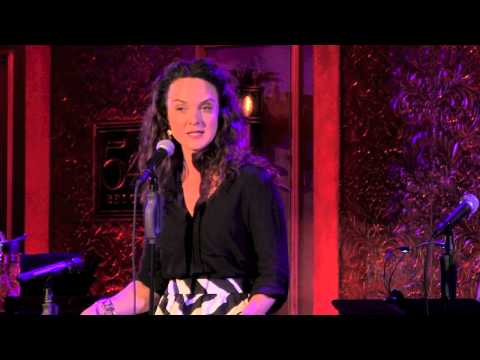
| Melissa Errico | Performer | Featured as Anna on the studio cast recording; widely shared clips have helped keep the score discoverable. |
Sources: IBDB, Playbill, TIME, Variety, Wikipedia, Ovrtur, Dan Levine official store, Spotify, Un-Block The Music (Peter Kellogg interview).