
Song Overview
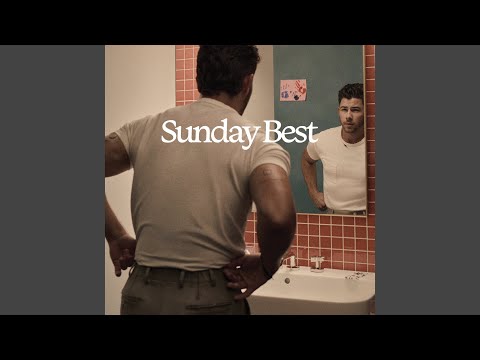
Review and Highlights
Quick summary
- Role in the era: Lead single from Sunday Best, released January 1, 2026.
- Core idea: Self-critique turns inward, then gets challenged by a gentler, inner-child pep talk.
- Writers: Nick Jonas with Ryan Daly plus Bianca "Blush" Atterberry, Arnthor Birgisson, Josette Maskin, and Ina Wroldsen.
- Live calling card: A high-visibility TV performance helped frame it as a grown-up reset, not a party single.
Lyrics
[Verse 1]
I think my hair stopped growing, is that even a thing?
Haven't lost any of it, but something ain't the same
Maybe it's a metaphor, is it even that deep?
I think my hair stopped growing, or is it me?
I called Phil a couple times, he's probably sick of me
He said, "Go easy on yourself," but what does that even mean?
Sounds like good advice, but I just can't hear it right now
[Chorus]
Hit me like a gut punch, I hurt my own feelings
How did I get so good at being mean to myself?
I should turn the heat down, tell myself to chill out
Damn, I really hate the way I talk to myself
[Post-Chorus]
Hit me like a
Hit me like a
[Verse 2]
When the hell did I start trying to be perfect?
And people-pleasing, is it ever really worth it?
Fake-smiling just to pass the time
It's the only way I've been getting by
Looked at myself and I can't even recognize
Who I am behind those eyes, one big disguise
[Chorus]
Hit me like a gut punch, I hurt my own feelings
How did I get so good at being mean to myself?
I should turn the heat down, tell myself to chill out
Damn, I really hate the way I talk to myself
[Post-Chorus]
Hit me like a
[Bridge]
Now, what would it be like if I just tried being nice
To the person that I'm seeing in the mirror? Yeah
If you find that inner child
Haven't seen him for a while
Let him know he's doing fine
[Chorus]
Hit me like a gut punch, I hurt my own feelings
How did I get so good at being mean to myself?
I should turn the heat down, tell myself to chill out
Damn, I really hate the way I talk to myself
[Outro]
Hit me like a
Yeah-yeah, oh-oh, yeah
Hit me like a gut punch
Oh-oh-oh, yeah
Whats inside?
There is a sly trick in the first verse: the hair-growth line reads like a throwaway, then you realize it is the point. Something is stuck. The chorus lands like a self-administered jab, a pop hook that keeps circling the bruise: "I hurt my own feelings." The phrasing is blunt in a way modern pop sometimes avoids, and that is why it works. No grand metaphor hunt required. You can hear the narrator flinch as the sentence finishes.
Musically, it sits in pop-singer-songwriter territory but leans on contrast: tight, fast pulse against a lyric that keeps asking for mercy. That mismatch sells the theme. A body moving forward while the mind stays busy. The bridge is the release valve. "What would it be like if I just tried being nice" is not a twist ending, it is a small behavioral experiment, the kind you actually try on a bad week.
Key takeaways
- Best line concept: Self-talk treated as a habit you can change, not a personality trait.
- Emotional arc: Spiraling self-scrutiny - naming the pattern - offering a softer replacement.
- Why it sticks: The hook is conversational, a little ugly on purpose, and easy to remember at the exact moment you need it.
Creation History
The track was reported as the first single from Sunday Best, arriving on January 1, 2026. Press around the rollout also tied the song to the album's personal angle, with Jonas talking openly about being hard on himself and trying to reconnect with a lighter version of who he used to be. According to People magazine, he framed the song around questions like whether he is being present for the people in his life, which lines up with the lyric's mirror-facing tension.
Song Meaning and Annotations
Plot
A narrator notices small signs of stagnation, calls a friend for reassurance, and still cannot absorb it. The chorus admits the real habit: internal cruelty dressed up as "standards." Verse two widens the lens into perfectionism and people-pleasing, with a dissociation snapshot: "one big disguise." The bridge flips the camera toward the mirror and the inner child, ending on a simple instruction: tell that kid he is doing fine.
Song Meaning
This is a song about self-talk as daily weather. The "gut punch" is not an outside villain. It is the moment you realize you have been narrating your own life like a critic who never clocks out. The track argues, gently but firmly, that kindness is not a reward for achievement. It is basic maintenance. I hear it as a modern adult version of the pep talk you wish you got earlier: stop negotiating with perfection, start practicing decency toward yourself.
Annotations
Gut Punch was the last song written for Sunday Best. This song encourages people to be easy on themselves and to be proud of who they have become.
That "last song" detail matters because it can explain the sense of closure in the bridge. It reads like a late-stage edit to the whole album story: after all the scenes, here is the rule you want listeners to leave with.
Tell your inner child that they are doing fine.
In pop writing, "inner child" can turn into a poster slogan. Here it is placed as a concrete action in the bridge, the moment where the singer stops diagnosing the problem and tries a different sentence in real time.
Driving rhythm and genre blend
Even when it is played with a piano-forward feel in performance, the recorded version reads as pop first: quick tempo, tight phrasing, chorus built for repetition. That speed gives the lyric a nervous edge, like the mind racing ahead of the heart. If you have ever tried to calm yourself down and failed because your brain kept sprinting, you already know the sound.
Emotional tone
The chorus is the confrontation. The bridge is the repair. The clever move is that the repair is not triumphant. It is practical. Try being nice. Try turning the heat down. Those are thermostat verbs, not victory verbs, and that is the point.
Images and symbols
Hair growth becomes a low-stakes body detail that stands in for stalled change. The mirror is the obvious symbol, but it is used well: the narrator is not admiring or hating, he is trying to recognize. The "inner child" is not nostalgia. It is a witness you have neglected.
Technical Information (Quick Facts)
- Song: Gut Punch
- Artist: Nick Jonas, Ryan Daly
- Featured: None credited
- Composer: Nick Jonas; Bianca "Blush" Atterberry; Arnthor Birgisson; Ryan Daly; Josette Maskin; Ina Wroldsen
- Producer: Ryan Daly
- Release Date: January 1, 2026
- Genre: Pop; Singer-Songwriter
- Instruments: Voice; piano and pop rhythm section (arrangement varies by performance)
- Label: Republic
- Mood: Self-reflective; restless; reassuring by the end
- Length: 3:08
- Track #: 5 (Sunday Best - Deluxe)
- Language: English
- Album: Sunday Best (Deluxe) (2026)
- Music style: Pop confessional with a fast pulse and a hook-first chorus
- Poetic meter: Mixed conversational meter (speech-rhythm phrasing with hook repetition)
Frequently Asked Questions
- Who produced Gut Punch?
- Ryan Daly is credited as producer in widely cited release documentation.
- When was the song released?
- It was released on January 1, 2026 as the opening single of the album cycle.
- Who wrote the track?
- Nick Jonas and Ryan Daly are credited alongside Bianca "Blush" Atterberry, Arnthor Birgisson, Josette Maskin, and Ina Wroldsen.
- What is the main meaning in plain terms?
- It is about catching yourself being cruel in your own head, then trying a softer sentence on purpose.
- Why does the hair-growth line matter?
- It frames the anxiety as physical and everyday. The narrator is looking for proof he is changing, then panics when the proof feels missing.
- Is it a breakup song?
- No, the conflict is internal. The sharpest relationship in the lyric is with the person in the mirror.
- Does it connect to Sunday Best as a project?
- Yes. Press around the rollout framed the album as reflective and adult, and this track functions like a mission statement for that tone.
- What is the bridge doing structurally?
- It interrupts the loop. Instead of repeating the insult, it introduces a replacement: be nice to yourself, talk to the inner child.
- What key and tempo is it commonly listed in?
- Metadata sources commonly list it in C-sharp major at 176 BPM, with a half-time feel at 88 BPM.
- Did the song have a notable TV performance?
- Yes. It was performed on late-night TV with a staged, stripped-down presentation that leaned into the lyric's vulnerability, as stated in Rolling Stone's write-up.
Awards and Chart Positions
Early chart footprints for the single show up most clearly in airplay and digital sales snapshots rather than a long list of major-market peaks. That shape fits the rollout: a reflective single, introduced with performance-first moments, then carried by fans who want lyrics they can quote back at themselves.
| Chart | Territory | Peak | Year |
|---|---|---|---|
| Anglo Airplay | Guatemala | 9 | 2026 |
| Hot Singles | New Zealand | 19 | 2026 |
| Anglo Airplay | Peru | 11 | 2026 |
| BGM | South Korea | 198 | 2026 |
| Digital Song Sales | United States | 22 | 2026 |
No major certifications were broadly reported at the time of writing.
Additional Info
One of the most telling rollout details was how the song was staged live. The late-night performance leaned into a theatrical, stripped-back setup, which is a smart choice for a lyric this self-critical: it makes the listener focus on the words, not the gloss. According to Rolling Stone magazine, the performance began at the piano before building in intensity, which mirrors the track's internal pressure cooker.
There is also a small ecosystem of unofficial remixes and fan covers already floating around, including club edits shared on platforms like SoundCloud and Bandcamp. Those versions tend to push the tempo narrative in the opposite direction, turning the self-talk spiral into dance-floor motion. It is a funny outcome: the more the lyric says "chill out," the more some remixers choose chaos.
Key Contributors
| Entity | Type | Relation | Statement |
|---|---|---|---|
| Nick Jonas | Person | Lead artist | Nick Jonas performs the recording and co-wrote the song. |
| Ryan Daly | Person | Producer, co-writer | Ryan Daly produced the track and shares writing credit. |
| Bianca Blush Atterberry | Person | Songwriter | Bianca Blush Atterberry is credited as a songwriter. |
| Arnthor Birgisson | Person | Songwriter | Arnthor Birgisson is credited as a songwriter. |
| Josette Maskin | Person | Songwriter | Josette Maskin is credited as a songwriter. |
| Ina Wroldsen | Person | Songwriter | Ina Wroldsen is credited as a songwriter. |
| Republic Records | Organization | Label | Republic released the single and the album edition. |
| Sunday Best (Deluxe) | Work | Album | The song appears as track 5 on the deluxe album edition. |
| The Tonight Show Starring Jimmy Fallon | Work | Performance platform | Nick Jonas performed the song on late-night TV during the rollout. |
How to Sing Gut Punch
A practical way to approach this vocal is to respect the speed while keeping the lyric readable. Most metadata listings place it at 176 BPM (with an easy half-time pocket at 88) and in C-sharp major. That means your job is not to over-sing the verses. It is to keep the consonants crisp so the self-talk lands like actual self-talk.
- Tempo first: Practice at 88 BPM, treating the chorus as half-time. Lock the groove, then switch to the full 176 feel once your phrasing stops rushing.
- Diction: The hook has hard stops: "gut punch," "hurt," "mean." Over-articulate them in rehearsal, then relax slightly in performance.
- Breath plan: Mark breaths before "I hurt my own feelings" and before the second line of the chorus. If you wait until you are desperate, the line sounds apologetic instead of honest.
- Flow and rhythm: Verses are conversational. Keep them light and forward, almost like you are speaking on pitch. Save weight for the chorus.
- Accents: Put the accent on "gut" more than "punch." It makes the phrase feel like impact, not theatrics.
- Dynamics: Let the bridge soften. The lyric is a hand on the shoulder. If you belt it like a victory lap, the emotional logic breaks.
- Mic and proximity: If you are on a microphone, get closer in the verse and back off in the chorus. This creates intensity without forcing.
- Common pitfalls: Rushing the chorus, swallowing the consonants, and turning the bridge into a sermon. Keep it human. A little fragile is allowed.
Sources
Data verified via label press materials and major music press coverage. Chart history sourced from public chart listings. Tempo and key sourced from widely used music metadata listings.
Sources: People, Rolling Stone, Billboard, Universal Music Canada press release, Wikipedia, Tunebat, Official Charts Company, Spotify, Apple Music, Juno Download