
Smokey Joe's Cafe Lyrics: Song List
- Act 1
- Neighborhood
- Young Blood
- Falling
- Ruby Baby
- Dance With Me
- Neighborhood (Reprise)
-
Keep on Rollin'

- Searchin'
- Kansas City
- Trouble
- Love Me/Don't
- Fools Fall in Love
- Poison Ivy
- Don Juan
- Shoppin' for Clothes
- I Keep Forgettin'
- On Broadway
- D.W. Washburn
-
Saved
- Act 2
- Baby, That Is Rock & Roll
- Yakety Yak
- Charlie Brown
- Stay a While
- Pearl's a Singer
- Teach Me How to Shimmy
- You're the Boss
- Loving You
- Treat Me Nice
- Hound Dog
- Little Egypt
- I'm a Woman
- There Goes My Baby
- Love Potion #9
- Some Cats Know
- Jailhouse Rock
- Fools Fall In Love (Reprise)
- Spanish Harlem
- I (Who Have Nothing)
- Neighborhood (Reprise)
- Stand by Me
About the "Smokey Joe's Cafe" Stage Show
Songs have been written by M. Stoller & J. Leiber. The premiere of the revue was in November 1994 in Los Angeles’ UCLA James Doolittle Theatre. The histrionics has been staged up to mid-January 1995. The production implemented director J. Zaks & choreographer J. McKneely. In the play was this cast: K. Ard, A. Bailey, B. Braxton, V. T. Cook, B. J. Crosby, P. D. Jones, D. Lively, F. B. Owens & R. Torti. Try-outs began in Virginia Theatre in February 1995. Revue was holding on Broadway from March 1995 to January 2000 with 25 preliminaries and very impressive 2036 regular performances. Director was J. Zaks and choreographer was J. McKneely. The cast consisted of: B. Braxton, A. Bailey, P. D. Jones, B. Daye, K. Morrow, A. Nixon, M. Pege, B. E. King, T. Orlando, P. Tillis & G. Knight.
The London premiere took place in mid-October 1996 in the Prince of Wales Theatre. Revue showed up to start of October 1998, under the direction of J. Zaks & J. McKneely. The show included this cast: A. Bailey, V. T. Cook, D. Lyons, B. J. Crosby, D. Lively & S. Pope. In 1996 and in 1998 were held US national tours. In July 2008, in Pittsburgh’s Bendeum Center were showed 8 performances. In the revue were involved: P. Boykin, T. Burrell, R. Feder, B. Gaynor, D. Lyons, D. Walton & H. White. From September to October 2012, production was held in the Franklin Theatre. Production was under the direction of M. Logan & choreographer E. Tello. The revue had such cast: M. Doolittle, A. Ramirez, L. Hodges, R. Greenawalt, L. Matula, H. Hubert & J.-M. McGaha. In July 2014, the show was hosted by Gateway Performing Arts Center. Staging prepared director and choreographer C. Walker. Review was staged in 10 countries. The show has been nominated for several awards.
Release date of the musical: 1995
"Smokey Joe's Cafe" – The Musical Guide & Song Meanings
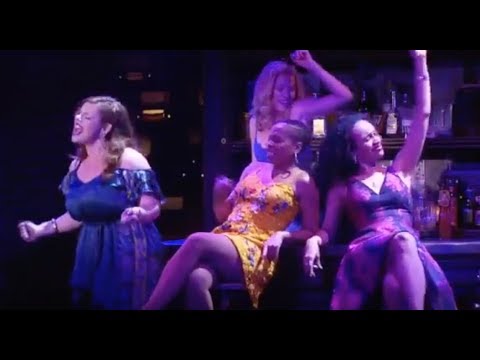
Review: When the “book” is the beat
Can a musical revue make you care without characters, stakes, or a plot you can summarize in one sentence? “Smokey Joe’s Cafe” keeps answering yes, then immediately asking you to prove it. The trick is that the lyric writing already contains mini-dramas: threats, dares, confessions, alibis, flirtation, regret. Jerry Leiber and Mike Stoller wrote songs that behave like tight comedy scenes and tight heartbreak scenes, often in the same 16 bars. The production’s job is to frame those scenes fast enough that you do not notice you are building the story yourself.
Lyrically, the evening runs on street vocabulary and social maneuvering: teenagers talking big, lovers talking sideways, and grown-ups talking like they have seen the ending and still want a second chance. The show’s most effective numbers use point of view like a weapon. “Searchin’” is obsession disguised as a grin. “Poison Ivy” is moral panic in a sugar shell. “On Broadway” is ambition sung as self-defense. Even the so-called novelty songs are structured like courtroom testimony, with a hook that doubles as an argument.
Musically, it is a tour through early rock and roll and R&B forms that Leiber and Stoller helped define: call-and-response, doo-wop harmony stacks, blues turns, Latin-inflected grooves, and the kind of rhythmic phrasing that lets a singer land a joke a fraction behind the beat. In a good staging, each style shift becomes character. In a lazy staging, it becomes karaoke with better lighting.
Viewer tips from the cheap seats: this show rewards proximity. Sit close enough to read the small acting choices inside big choreography, especially in the comedy songs where a raised eyebrow does more work than a high note. If you are new to the score, pre-listen to “Neighborhood,” “On Broadway,” and “Stand by Me.” Those three teach you the evening’s emotional grammar: community, hunger, and the final handshake.
How it was made: A revue engineered like a machine
“Smokey Joe’s Cafe” was conceived by Stephen Helper, Jack Viertel, and Otis Sallid, and it began life in Los Angeles before it opened on Broadway. Director Jerry Zaks and choreographer Joey McKneely approached the material with a producer’s practicality: the songs are famous, so the staging has to justify why these particular voices are singing them in this particular order. The answer was a simple, evocative 1950s club-world where numbers can snap on and off like neon.
The “origin story” detail that matters is not a romantic myth about a song written on a napkin. It is the industrial reality of making rock-and-roll feel theatrical night after night. Vocal arrangements became a defining asset, because harmony, not plot, provides the evening’s throughline. In the late 1990s the Broadway production also became a case study in the economics of the pit: the show’s sound and instrumentation intersected with larger fights about synthesizers, staffing, and what “live” should mean in a commercial theatre orchestra.
And then there is the most Broadway origin story of all: critics shrugged, the show looked doomed, and talk-radio buzz helped keep it alive long enough for audiences to decide they wanted it. That is not mystical. It is marketing, timing, and a catalog of songs that can make a tired Wednesday crowd feel like it has a Saturday night personality.
Key tracks & scenes: 8 lyrical moments that do the heavy lifting
"Neighborhood" (Company)
- The Scene:
- Lights up on a street-corner dream of the 1950s. A tight band sound, bodies already moving, a community introduced like a handshake that might also be a dare.
- Lyrical Meaning:
- This is the show’s mission statement: belonging as performance. The lyric sells togetherness, but it also exposes who gets to be “in” and who is standing just outside the circle.
"Young Blood" (The Quartet)
- The Scene:
- Four voices line up like they have done this a thousand times. The choreography is crisp, flirtatious, and a little competitive, with smiles that land like punchlines.
- Lyrical Meaning:
- Teen desire is treated as comedy, but the lyric is a social report: youth is currency, and everyone knows the exchange rate.
"Searchin’" (The Quartet)
- The Scene:
- The tempo tightens. The group prowls the stage, working the audience like a rumor. The joke is that the singer is “searching.” The fear is that he will not stop.
- Lyrical Meaning:
- Obsession made charming through structure. The lyric piles up locations and tactics until longing starts to sound like a strategy memo.
"Kansas City" (Company)
- The Scene:
- A travelogue number with nightclub swagger. The staging often shifts into a more overt “performance” mode: spotlights, show-off vocals, bodies in formation.
- Lyrical Meaning:
- The lyric is a postcard and a provocation. It sells a city as freedom, and it sells freedom as something you can buy with one good night.
"Poison Ivy" (Company)
- The Scene:
- The smile goes a little fixed. The beat stays bright while the story turns cautionary. Think of it as a comic-strip morality tale with a dangerous grin.
- Lyrical Meaning:
- Classic Leiber and Stoller sleight of hand: the lyric warns you, but it also seduces you. The “lesson” is catchy enough to become the thing you cannot stop repeating.
"On Broadway" (Ensemble)
- The Scene:
- Act I’s big hinge. The stage becomes aspiration: forward motion, sharper angles, a sense of the cast leaning into an unseen skyline.
- Lyrical Meaning:
- Ambition sung without sentimentality. The lyric does not ask for permission. It reports hunger as fact, and it lets the singer’s grit do the romance.
"Saved" (B.J.)
- The Scene:
- A roof-raising showstopper late in Act I, often staged like a revival meeting that breaks open the club-world. The room turns into a choir stand.
- Lyrical Meaning:
- Salvation is framed as testimony. The lyric uses repetition and escalation to turn personal release into a public event, which is exactly what musical theatre wants.
"Stand by Me" (Company)
- The Scene:
- Late in Act II, the energy finally settles. The cast closes ranks. The lighting usually softens, as if the show is letting you exhale for the first time.
- Lyrical Meaning:
- The simplest promise becomes the most expensive. After an evening of jokes, boasts, and flirtations, the lyric lands as a plainspoken contract.
Live updates (2025/2026): where the show lives now
As of early 2026, “Smokey Joe’s Cafe” is best understood as a durable licensing title rather than a fixed-star Broadway commodity. Concord Theatricals continues to handle the title for productions, and the official character framework is intentionally flexible (the roles are identified by the original actors’ names, but are meant to be re-cast freely). That flexibility is why the show keeps reappearing in regional houses, summer stock, and concert-style productions: it fits a wide range of budgets, band sizes, and audience appetites.
Ticketing, when produced regionally, tends to price like a premium concert night rather than a blockbuster. One documented example from a regional run lists adult tickets in the mid-double-digits, with senior and student tiers, a structure that signals “date night” accessibility instead of once-a-year theatre pilgrimage.
What has changed in the 2020s is less about the song list and more about framing. Post-2018 revivals leaned into slicker choreography and sharper visual storytelling to answer the oldest critique of all: why are these people singing these songs here, right now? The most successful recent productions treat the evening like a curated mixtape with emotional sequencing, not a random greatest-hits dump.
Information current as of February 2026.
Notes & trivia: the kind you can use at intermission
- The original Broadway production opened March 2, 1995 and ran 2,036 performances, a record-making run for a musical revue.
- There is one 20-minute intermission in at least one documented regional staging, and the show is commonly structured in two acts with “On Broadway” as a major Act I landmark.
- The show’s “characters” are archetypes anchored to performance styles (a Drifters-modeled quartet, an Elvis-evoking lead, a Big Mama Thornton-inspired powerhouse), more than narrative roles.
- The score is not exclusively two-name authorship on every number: several songs are co-written with other writers, and “Spanish Harlem” is credited to Phil Spector and Jerry Leiber in at least one published program list.
- The original cast recording is a 40-track album associated with Atlantic/Rhino cataloging and remains widely available on streaming services.
- By 1999, the Broadway run had already passed the previous longest-running musical revue record, a fact Playbill covered in real time.
- Broadway’s relationship to synthesizers and reduced pit sizes became a documented flashpoint in scholarship that cites “Smokey Joe’s Cafe” as an early case in union resistance to digitally rendered music.
Reception: the praise, the pushback, and what aged well
Critically, “Smokey Joe’s Cafe” has always split the room along a simple fault line: if you want plot, you will feel stranded; if you want songs staged with muscle, you will feel fed. Contemporary reviews often admired the songwriting legacy while disputing the theatrical argument for bundling it into a single night. Later commentary has been kinder about the show’s business intelligence: it helped normalize the idea that catalog music could be staged successfully, even when the “book” is mostly choreography and vibe.
“Smokey Joe’s Cafe” opened… to tepid reviews… until… Don Imus began to sing the show’s praises.
Upbeat… slangy and sly, the songs… defined the popular voice of Fifties America.
The show played its 1,775th performance to become Broadway’s longest-running musical revue.
Quick facts
- Title: Smokey Joe’s Cafe: The Songs of Leiber and Stoller
- Year: 1995 (Broadway opening)
- Type: Musical revue / catalog score
- Songwriters (primary): Jerry Leiber and Mike Stoller (with select co-writers on certain songs)
- Conceived by: Stephen Helper, Jack Viertel, Otis Sallid
- Original Broadway director: Jerry Zaks
- Original Broadway choreography: Joey McKneely
- Documented structure: Two acts; one 20-minute intermission (regional program example)
- Selected notable placements in the running order: “Neighborhood” (Act I opener), “On Broadway” (Act I landmark), “Stand by Me” (late Act II)
- Original Broadway venue and run: Virginia Theatre; opened Mar 2, 1995; closed Jan 16, 2000; 2,036 performances
- Licensing: Available through Concord Theatricals
- Album: “Smokey Joe’s Cafe: The Songs of Leiber and Stoller” (40 tracks; widely available on streaming)
Frequently asked questions
- Is “Smokey Joe’s Cafe” a jukebox musical?
- Yes, in the broad sense: it is built from pre-existing hit songs. But it is not an artist biography. It is a revue curated from the catalog of songwriters Jerry Leiber and Mike Stoller.
- Does it have a plot?
- Not a conventional one. Most productions use a 1950s club or street-corner frame so that each song reads as a short scene. The emotional sequencing functions like the story.
- Who wrote the lyrics?
- Leiber and Stoller wrote or co-wrote the core catalog, with certain songs credited with additional writers. “Spanish Harlem,” for example, is credited to Phil Spector and Jerry Leiber in published program listings.
- What are the big must-know songs?
- Commonly featured highlights include “Neighborhood,” “Young Blood,” “Searchin’,” “Kansas City,” “Poison Ivy,” “On Broadway,” “Jailhouse Rock,” and “Stand by Me,” among many others.
- Is there a cast recording?
- Yes. The original cast recording album “Smokey Joe’s Cafe: The Songs of Leiber and Stoller” is widely available on major streaming services.
- Is it appropriate for families?
- Many licensors position it as broadly appropriate, but some lyrics trade in innuendo and adult humor typical of early rock-and-roll storytelling. Check your local production’s advisories.
Key contributors
| Name | Role | Contribution |
|---|---|---|
| Jerry Leiber | Songwriter | Lyrics and music (primary catalog; select co-writes) |
| Mike Stoller | Songwriter | Music and lyrics (primary catalog; select co-writes) |
| Stephen Helper | Conceiver | Helped shape the revue concept and sequence |
| Jack Viertel | Conceiver / Producer framework | Helped build the evening’s structure and theatrical logic |
| Otis Sallid | Conceiver | Concept development and staging framework |
| Jerry Zaks | Director | Original Broadway staging and pacing |
| Joey McKneely | Choreographer | Signature choreography language that carries the “book” |
| Chapman Roberts | Vocal arrangements | Harmony and vocal architecture that shapes the storytelling |
Sources: IBDB (Internet Broadway Database), Concord Theatricals, Playbill, The Washington Post, The Independent, North Shore Music Theatre program page, Ivoryton Playhouse, Apple Music, Wikipedia, Journal of the Society for American Music (Cambridge).