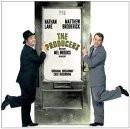
Producers Lyrics: Song List
- ACT I
- Overture and Opening Night
- The King of Broadway
- We Can Do It
- Unhappy
- I Wanna Be a Producer
- In Old Bavaria
- Der Guten Tag Hop-Clop
- Keep It Gay
- When You Got It, Flaunt It
- Along Came Bialy
- ACT II
- That Face
- Haben Sie Gehört Das Deutsche Band ?
- Opening Night (reprise)
- It's Bad Luck to Say Good Luck on Opening Night
- Springtime For Hitler
- Where Did We Go Right?
- Betrayed
- 'Til Him
- Prisoners Of Love
- Prisoners of Love (reprise)
- Leo and Max
- Goodbye!
- Additional songs
- That Face (reprise)
- That Face (Rio Reprise)
About the "Producers" Stage Show
Release date of the musical: 2001
"The Producers" (2001) – The Musical Guide & Song Meanings
Review: what the songs are really selling
The pitch of The Producers is simple and slightly suspicious: what if a musical about producing a flop became the biggest hit in the room? Mel Brooks’ score doesn’t hide the con. It announces it, jazz-hands it, then cashes the check. The show’s best lyric trick is that it uses old Broadway forms as evidence in its own case. Every number is doing two jobs at once: advancing a plot about fraud, and parodying the cheerful machinery that makes theatrical fraud feel wholesome.
Lyrically, Brooks writes in big comic fonts. The rhymes are meant to be heard from the back row, and the jokes are engineered for immediate comprehension. That accessibility is why it worked at the St. James in 2001 and why it still sells tickets now. The tradeoff is that subtlety is not the house specialty. When the show is “smart,” it’s smart like vaudeville: quick pivots, clear targets, deliberate crudeness. When it misses, it tends to miss loudly.
Musically, the score is a guided tour of Broadway’s own archive. You can hear the 1950s and 1960s book-musical sound world, then watch Brooks poke it with a stick. Marches become punchlines. Love songs become stress tests. The central motif is theatrical confidence: that feeling that the band is already right, even if the plan is morally wrong. That is the joke, and also the thesis. The show argues that Broadway can make anything palatable if it’s well orchestrated, well staged, and shameless enough to commit.
Listener tip: if you want the story without the dialogue, follow four emotional corner posts on the cast album: Leo’s ambition (“I Wanna Be a Producer”), Roger’s aesthetic doctrine (“Keep It Gay”), the big catastrophe that becomes a triumph (“Springtime for Hitler”), and the friendship reckoning (“Betrayed” into “’Til Him”). That sequence explains why the comedy lands as more than noise.
How it was made: the reluctant musical that broke the rules
There’s a useful irony behind the show’s origin: Brooks initially did not see a reason to turn The Producers into a stage musical, even though the 1967 film already contained signature songs. Producer pressure, especially from David Geffen, kept the idea alive until Brooks caved and wrote what he later framed as a full “galaxy” of songs rather than one-off movie numbers. The result was a score that started from film material (“Springtime for Hitler,” “Prisoners of Love”) and then expanded into a full Broadway engine designed to run on comic propulsion.
The 2001 production’s power came from a creative alignment that treated choreography and orchestration as punchlines, not decoration. Susan Stroman’s staging and dance vocabulary turned the show into a physical comedy machine, while the orchestrations and arrangements gave Brooks’ jokes extra torque. Even Stroman has credited the music department’s wit as essential to making the score “dance,” which is an unusually precise compliment from a director-choreographer who has seen plenty of scores that merely survive.
In practical terms, the book (Brooks with Thomas Meehan) is built like a trap. It begins with a flop, introduces a moral loophole, then dares the audience to enjoy the unethical plan. The songs are placed to keep the audience complicit: every time the plot should curdle, a number arrives to re-sell joy. That’s not an accident. It’s the method.
Key tracks & scenes: 8 lyrical turning points
These are the moments where the lyric content has clear narrative consequences. Stagings vary, but the spine below reflects the standard structure licensed and recorded.
"Opening Night" (Company)
- The Scene:
- 1959, a Broadway house on the brink. Bright footlights, brittle smiles, and the public optimism of ushers and patrons seconds before the reviews land like bricks.
- Lyrical Meaning:
- The lyric treats theatre as ritual. That cheerfulness sets up the joke: a show can die instantly, but the ceremony around it keeps insisting it’s alive.
"I Wanna Be a Producer" (Leo)
- The Scene:
- Leo’s fantasy breaks through his accountant panic. The lighting warms and expands, the world turns into a dream-Broadway where his timid body suddenly has choreography.
- Lyrical Meaning:
- This is ambition as confession. Leo isn’t just craving success, he’s craving permission to want it. The lyric makes fraud possible by making desire sympathetic.
"When You’ve Got It, Flaunt It" (Ulla, Max, Leo)
- The Scene:
- Ulla arrives like a spotlight with vowels. The office becomes a runway. The scene plays under a comedic sheen that barely hides how transactional the men’s gaze is.
- Lyrical Meaning:
- The lyric is a credo that’s funny until you notice its edge. “Flaunt” is presented as empowerment, but it’s also the show admitting how it markets bodies.
"Keep It Gay" (Roger, Carmen, Company)
- The Scene:
- Roger de Bris’ world is pure theatrical self-justification. Plush interiors, fussy gestures, and choreography that turns mannerism into doctrine.
- Lyrical Meaning:
- Roger isn’t asking for representation, he’s setting a style policy. The lyric is a manifesto about taste, denial, and performance as survival technique.
"Springtime for Hitler" (Company within the show)
- The Scene:
- A full production number staged as deliberate bad taste that somehow catches fire. Hard-edged lighting, militaristic shapes turned into showbiz geometry, and a crowd that doesn’t know whether to boo or clap.
- Lyrical Meaning:
- The lyric is the trap inside the trap. It’s written to repel, yet performed so musically “right” that it flips offense into spectacle. The show’s satire lives here, and so does its risk.
"You Never Say Good Luck on Opening Night" (Company)
- The Scene:
- Backstage superstition becomes mob logic. Tight, jittery cues. Everyone is half panicking, half thrilled to have a new rule to enforce.
- Lyrical Meaning:
- The lyric is Broadway’s nervous system singing aloud. It’s comedy, yes, but it also underlines the show’s worldview: theatre people will believe anything if it helps them feel in control.
"Betrayed" (Max)
- The Scene:
- A prison cell memory spiral. The lighting isolates Max as the comedy drains out, then returns in flashes as he narrates the whole fiasco like a wounded showman.
- Lyrical Meaning:
- Brooks uses a recap song to humanize a character who’s been running on scams. The lyric finally admits loneliness, and the audience realizes it has been laughing with a sad man.
"’Til Him" (Leo)
- The Scene:
- A courtroom that suddenly behaves like a musical’s moral center. Cleaner light. Less motion. A rare moment where sincerity is allowed to stand without a rimshot.
- Lyrical Meaning:
- The lyric reframes the story as friendship rather than caper. It’s the show’s emotional alibi, and it works because it arrives late, after the audience has already enjoyed the crime.
Live updates (2024–2026): revivals, casting, ticket realities
Information current as of January 31, 2026.
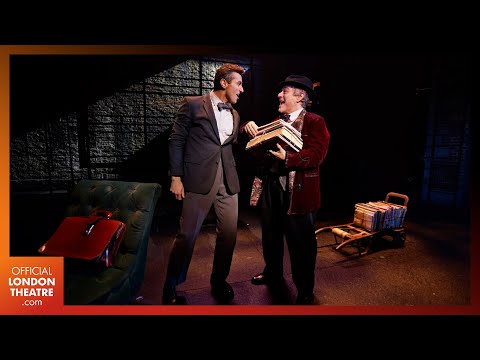
The most meaningful “right now” development is London. Patrick Marber’s revival began at the Menier Chocolate Factory in late 2024, then transferred to the Garrick Theatre for a major West End run. The Garrick booking period has since been extended, with official venue listings advertising performances through September 19, 2026, and ticket messaging pushing entry pricing in the mid-£20s range. The principal cast named in official and industry reporting includes Andy Nyman (Max), Marc Antolin (Leo), Trevor Ashley (Roger), Raj Ghatak (Carmen), Harry Morrison (Franz), and Joanna Woodward (Ulla).
Critically, the revival narrative is consistent across major outlets: the show still delivers laughs at industrial volume, the satire still plays as both a weapon and a liability, and the score’s pastiche craft remains the strongest argument for why the piece survives changing tastes. Reviews of the Menier staging praised its energy and comic clarity while noting that certain jokes, particularly around gender presentation, can read dated depending on the audience and the specific production choices.
If you’re tracking ticket behavior rather than nostalgia: an extension to late 2026 is usually the only statistic that matters. A show doesn’t get that kind of calendar unless it’s moving seats.
Notes & trivia
- The original Broadway production opened April 19, 2001 at the St. James Theatre and ran 2,502 performances, closing April 22, 2007.
- The Producers won 12 Tony Awards in 2001, a record for wins in a single year that still stands.
- The Original Broadway Cast Recording was released in April 2001 on Sony Classical and was recorded at Edison Studios in New York City.
- The cast album won the 2002 Grammy Award for Best Musical Show Album, with Hugh Fordin credited as producer.
- Orchestrations were by Doug Besterman, with music arranged by Glen Kelly, a pairing frequently credited for adding extra wit and danceability to the score.
- The current West End revival began at the Menier Chocolate Factory (2024–2025) and transferred to the Garrick Theatre in 2025, later extending its booking window into September 2026.
Reception: then vs. now
In 2001, the critical conversation split along a clean fault line. One camp treated the show as a rare modern example of the “big Broadway” comedy musical, engineered with unapologetic skill and shameless joy. The other camp pointed out that Brooks’ lyric approach can be blunt, and that some targets are hit with a sledgehammer when a scalpel would do. Both readings have aged in predictable ways. The craftsmanship has held. The taste questions have gotten sharper.
What has changed is the frame around the satire. Early praise often leaned on the sheer quantity of laughs and the show’s confidence in its own theatricality. Recent reviews tend to keep the laughter but add a second sentence: yes, it’s funny; yes, parts of it are of its moment. That’s not a scandal. It’s a living museum piece that still knows how to throw a party.
“With more belly laughs per minute than any new musical in years.”
“The real thing: a big Broadway book musical … ecstatically drunk on its powers to entertain.”
“The approach is ‘hit ’em hard and make ’em laugh.’”
Quick facts: album, credits, and where the songs live
- Title: The Producers
- Year: 2001 (Broadway opening)
- Type: Musical comedy (book musical; Broadway pastiche-as-parody)
- Book: Mel Brooks, Thomas Meehan
- Music & lyrics: Mel Brooks
- Original Broadway director/choreographer: Susan Stroman
- Key music credits (OBP): Orchestrations Doug Besterman; music arrangements Glen Kelly; musical director Patrick S. Brady
- Standard licensed song list reference: Music Theatre International’s published song list
- Original Broadway Cast Recording: Released April 17, 2001; 20 tracks; roughly 71–72 minutes depending on platform; label Sony Classical; produced by Hugh Fordin
- Album availability: Major streaming platforms carry the Original Broadway Cast Recording
- Current major staging (2025–2026): West End at the Garrick Theatre, London, booking listed through September 19, 2026
Frequently asked questions
- Who wrote the lyrics for The Producers?
- Mel Brooks wrote the music and lyrics, building a full Broadway score out of the comic songwriting style he’d used in his films, then expanding it dramatically for the stage.
- What’s the biggest “villain number”?
- It’s not a villain number in the usual sense, but “Springtime for Hitler” is the show’s central danger zone: the moment where satire either lands or detonates.
- What recording should I start with?
- The Original Broadway Cast Recording (2001) is the cleanest entry point because it captures the show’s original pacing and performance style, and it preserves the song-to-story logic.
- Is The Producers running anywhere in 2026?
- Yes. London’s West End revival at the Garrick Theatre has official booking listed through September 19, 2026.
- Is the show appropriate for teens?
- Most professional listings place it around teen-plus due to sexual humor and Nazi references. Individual venues may set specific age guidance.
- Why do people still argue about “Keep It Gay”?
- Because it’s both a period parody of Broadway style and a number built on stereotypes. Productions can adjust emphasis, but the underlying joke architecture is the same.
Key contributors
| Name | Role | Contribution |
|---|---|---|
| Mel Brooks | Composer, lyricist, co-bookwriter | Created the score and co-wrote the book, expanding a film premise into a full stage musical. |
| Thomas Meehan | Co-bookwriter | Co-shaped the stage book’s farce mechanics and character arcs. |
| Susan Stroman | Director, choreographer | Staged the original Broadway production, turning choreography into a primary comedy engine. |
| Doug Besterman | Orchestrator | Orchestrated the score, helping give Brooks’ pastiche its Broadway-scale punch. |
| Glen Kelly | Music arranger, musical supervision | Arranged and shaped the musical texture, often credited for adding wit and danceability. |
| Patrick S. Brady | Musical director, vocal arrangements | Led the original music department and vocal structure for the Broadway production. |
| Hugh Fordin | Cast album producer | Produced the Original Broadway Cast Recording, later winning the Grammy for Best Musical Show Album. |
| Andy Nyman | Actor (current major revival) | Leads the 2024–2026 London revival as Max Bialystock. |
| Marc Antolin | Actor (current major revival) | Plays Leo Bloom in the 2024–2026 London revival. |
| Patrick Marber | Director (London revival) | Directed the Menier revival that transferred to the West End. |
| Lorin Latarro | Choreographer (London revival) | Choreographed the Menier and West End revival staging. |
Sources: MTI (Music Theatre International), Playbill, IBDB, The Guardian, Financial Times, Variety, TheaterMania, The Arts Desk, LondonTheatre.co.uk, Garrick Theatre (official site), The Producers Musical (official site), PBS American Masters, Apple Music (Sony Classical listing), Spotify.