
How the Grinch Stole Christmas Lyrics: Song List
- Overture
- Fah Who Foraze
- Who Likes Christmas?
- This Time of Year
- I Hate Christmas Eve
- Whatchamawho
- Welcome, Christmas
- I Hate Christmas Eve (Reprise)
- It's the Thought That Counts
-
One of a Kind

- Down The Mountain
- Now's the Time
- You're A Mean One, Mr. Grinch
- Santa for a Day
- You're a Mean One, Mr Grinch (Reprise)
- Who Likes Christmas? (Reprise)
- One of a Kind (Reprise)
- This Time of Year (Reprise)
- Welcome, Christmas (Reprise)
- Santa For a Day (Reprise)
- Stealing Christmas
- Finale
- Bows
- Other Songs
- How the Grinch Stole Christmas
- Trim Up the Tree
- Once in a Year
- Where are You, Christmas?
About the "How the Grinch Stole Christmas" Stage Show
Release date of the musical: 2007
“Dr. Seuss’ How the Grinch Stole Christmas! The Musical” (2007) – The Musical Guide & Song Meanings
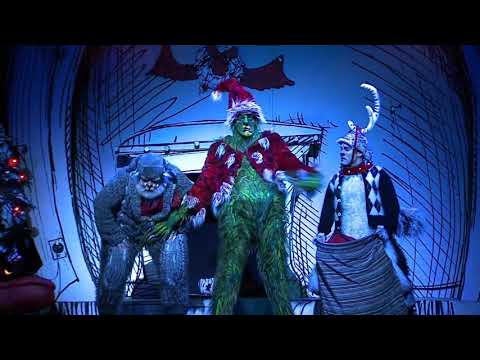
Review: why these lyrics work even when you already know the ending
Every holiday season brings a familiar question: is this a musical, or a very expensive greeting card? “Grinch” skirts that trap by treating rhyme as character, not decoration. The best lines have that Seuss snap, the internal logic of a tongue twister that also feels like a moral argument. Timothy Mason’s book and lyrics keep the story moving with speed and simple targets: social conformity in Whoville, isolation on Mount Crumpit, and a redemption that arrives through sound, not sentimentality.
The lyrics’ real trick is how they divide the world into two kinds of language. Whoville sings in communal slogans: chorus-first, meaning-second. The Grinch sings in objections: short phrases, hard consonants, and the vocabulary of irritation. When those two modes collide, the score turns into a debate about what “Christmas” even means. Add in the two famous songs from the 1966 TV special by Dr. Seuss and Albert Hague, and you get a show that can pivot from vintage singalong to contemporary musical-theatre punch without feeling like a playlist.
Note on lyrics requests: I can’t provide full copyrighted lyrics from this musical. I can, however, break down what each song is doing in the scene, explain recurring images and wordplay, and point you toward authorized recordings and licensed materials.
Listener tip: if you are hearing the album first, track the narrator, Old Max. The show is framed through memory, which is why even the Grinch’s nastiest jokes often land with a wink rather than a threat.
How it was made
This musical’s “origin story” is unusually traceable: it began as a first draft developed at Children’s Theatre Company in Minneapolis in 1994, then was revised and redesigned at San Diego’s Old Globe, where the production became a seasonal institution. The Broadway version came later, built on that regional foundation, with Jack O’Brien credited as the original production’s conceiver and director in the Old Globe lineage.
By the time the show returned to Broadway in 2007, it had already tested its mechanics in front of family audiences who do not politely wait for Act Two. That pressure shaped the lyric writing. Lines have to scan cleanly, jokes must read instantly, and transitions cannot sprawl. Even the added numbers feel engineered to plug narrative gaps: giving Whoville an opening engine, giving the Grinch a clearer “plan” song, and giving Old Max musical reasons to keep the story moving.
The 2007 Broadway engagement also came with real-world drama: the production at the St. James was the first show disrupted by the 2007 Broadway stagehand strike, then later became one of the early shows able to return.
Key tracks & scenes
“Fah Who Foraze” (Old Max, Whos)
- The Scene:
- Opening in Whoville. Stage pictures usually pop in storybook colors, with warm front light and constant bustle. Old Max sets the rules of the world while the town sings itself into existence.
- Lyrical Meaning:
- It is Seussian community-speak: nonsense syllables that still function as a social handshake. The lyric establishes that belonging is performed publicly, which makes the Grinch’s solitude feel like a refusal to participate.
“Who Likes Christmas?” (Whos)
- The Scene:
- Whoville doubles down on holiday cheer. Most productions stage it like a town meeting that turns into a parade, with choreographic symmetry that reads as “everyone agrees.”
- Lyrical Meaning:
- The song sells enthusiasm as identity. The repetition is the point: Christmas is not just celebrated, it is enforced. That pressure gives the Grinch a target that is emotional, not merely material.
“This Time of Year” (Old Max)
- The Scene:
- Old Max narrates with a soft spotlight and a storyteller’s pace, often stepping slightly outside the action while Whoville freezes behind him.
- Lyrical Meaning:
- Memory as music. The lyric reframes the story as a lesson learned, which keeps the show from feeling like pure prank comedy. It is also the gateway to sympathy: Max is telling you this mattered.
“I Hate Christmas Eve” (The Grinch)
- The Scene:
- Mount Crumpit. The lighting typically flips colder and steeper, with sharp angles that carve the Grinch out of the dark. He argues with the season like it’s a personal enemy.
- Lyrical Meaning:
- This is the Grinch’s manifesto: irritation as a worldview. The lyric isn’t subtle, and that is why it works for families. It gives the character a clear engine, and lets the actor play specificity instead of vague grumpiness.
“One of a Kind” (The Grinch)
- The Scene:
- The Grinch turns self-mythology into performance. Staging often treats his cave like a workshop of bad ideas, with physical comedy that keeps the edge playful.
- Lyrical Meaning:
- Bragging as armor. The lyric is a denial of loneliness: if he’s “unique,” then isolation is a choice. It is also an actor’s number, built for timing and vocal swagger.
“You’re a Mean One, Mr. Grinch” (The Grinch, Old Max)
- The Scene:
- The iconic roast arrives as a set-piece. Many productions spotlight the Grinch while the narrator frames him, treating insults like ornaments hung one by one.
- Lyrical Meaning:
- It is comedy with teeth. The song’s genius is its inventory of metaphors, each one escalating the character’s legend. In the musical, it also functions as branding: audiences relax because the famous number has arrived, and the show can pivot into plot.
“Santa for a Day” (The Grinch, Cindy-Lou Who)
- The Scene:
- Cindy-Lou collides with the Grinch’s scheme. The stage often warms up here, a visual cue that innocence is changing the temperature of his world.
- Lyrical Meaning:
- Role-play becomes moral test. The lyric makes “Santa” a costume with obligations, which is why this interaction matters more than the stolen props later on.
“Stealing Christmas” (Old Max, The Grinch)
- The Scene:
- The heist montage. Expect fast cues, physical business, and visual gags. It is the show’s action sequence, staged for clarity over realism.
- Lyrical Meaning:
- Practicality replaces philosophy: the Grinch turns feelings into a checklist. The lyric’s rhythm is the joke, a work-song for sabotage.
“Welcome, Christmas” (Whos)
- The Scene:
- After the theft, Whoville gathers anyway. Many productions stage it in a simple tableau, often with softened lighting and less movement, as if the town has finally learned stillness.
- Lyrical Meaning:
- This is the argument that defeats the Grinch: celebration without stuff. The lyric is plain on purpose. It has to sound like a truth a child can say out loud.
Notes & trivia
- Children’s Theatre Company in Minneapolis commissioned the show and developed an early draft in 1994.
- The Old Globe in San Diego has treated “Grinch” as an annual holiday event for decades, with credits consistently tying the production lineage back to Jack O’Brien’s original conception.
- On Broadway, the show played holiday engagements in 2006 and again in 2007, with Patrick Page associated with the title role in those early New York runs.
- The 2007 Broadway season was disrupted by the Broadway stagehand strike; “Grinch” was the first show hit when the walkout began on November 10, 2007, then later reopened during the dispute.
- The “World Premiere Recording” released by Masterworks Broadway (2013) includes two bonus tracks: “Once in a Year” (a cut song) and “Where Are You, Christmas?” from the 2000 film.
- The album’s track list is useful as a story map, moving from Whoville’s opening choruses to the Grinch’s “plan” numbers and then back to communal carols as the moral lands.
Reception: critics then vs now
Critically, “Grinch” tends to get reviewed on two tracks: as a holiday event and as a piece of musical-theatre craft. That split is fair. The show is built for families and short attention spans, yet its lyric writing is more disciplined than many seasonal imports. Even press materials have leaned on the same idea for years: that the Broadway version was surprisingly good at bedtime-story scale.
“100 times better than any bedside story.”
“The few standout numbers, especially ‘One of a Kind’ and the iconic ‘You’re a Mean One, Mr. Grinch,’ help elevate the show.”
“Original Composer of ‘You’re a Mean One, Mr. Grinch’ and ‘Welcome, Christmas.’”
My take: the score’s best moments treat rhyme as a behavioral tic. Whos sing like a crowd trying to convince itself. The Grinch sings like someone who has practiced being difficult. That is why the redemption does not need extra explanation: the sound of his lines changes once he stops fighting the room.
Live updates (2025/2026)
Information current as of 27 January 2026. “Grinch” is still operating as a holiday circuit staple, with multiple high-visibility productions in late 2025 and early 2026. San Diego’s Old Globe ran the show November 5 to December 31, 2025, crediting Andrew Polec as the Grinch and continuing its long annual tradition. Children’s Theatre Company in Minneapolis listed a run from November 4, 2025 to January 4, 2026 and publicly announced casting including Reed Sigmund as the Grinch. The national tour continued through major presenting houses in December 2025, with venues advertising ticket starting points (for example, Des Moines listed tickets from $40 for its December 16 to 21, 2025 engagement).
Recent tour coverage has also identified James Schultz as the Grinch in the touring company around the end of 2025, paired with a Cindy-Lou Who and a narrator structure that keeps the show moving at family pace. If you are shopping for tickets, runtime is typically around 80 to 85 minutes, and many productions run without intermission, which is useful intelligence for parents and for anyone timing post-show travel.
For the latest official city-by-city routing, the production maintains a dedicated tour page that updates as holiday bookings lock.
Quick facts
- Title: Dr. Seuss’ How the Grinch Stole Christmas! The Musical
- Year referenced here: 2007 (Broadway return engagement at the St. James Theatre)
- Based on: “How the Grinch Stole Christmas!” (1957) by Dr. Seuss
- Book & lyrics: Timothy Mason
- Music: Mel Marvin
- Additional legacy songs: Dr. Seuss and Albert Hague (“You’re a Mean One, Mr. Grinch,” “Welcome, Christmas”)
- Selected notable placements (story beats): Whoville opening choruses (“Fah Who Foraze,” “Who Likes Christmas?”); Mount Crumpit grievance song (“I Hate Christmas Eve”); identity anthem (“One of a Kind”); heist montage (“Stealing Christmas”); moral resolution (“Welcome, Christmas”)
- Recording: “World Premiere Recording” (Masterworks Broadway, released 29 Oct 2013)
- Availability: Major streaming platforms and CD retail listings via Masterworks/Sony distribution
Frequently asked questions
- Can you paste the full “Grinch” musical lyrics?
- No. Full lyrics are copyrighted. I can explain each song’s meaning, identify what’s happening onstage when it’s sung, and point you to authorized recordings and licensing resources.
- Who wrote the songs for the musical?
- The stage musical credits music by Mel Marvin and book and lyrics by Timothy Mason, with additional legacy songs by Dr. Seuss and composer Albert Hague.
- What’s special about the 2007 version?
- 2007 marks the Broadway return engagement following the 2006 holiday run. That season was also shaped by the 2007 Broadway stagehand strike, which affected the production’s schedule.
- Is there an official cast album?
- Yes. Masterworks Broadway released a “World Premiere Recording” in 2013 featuring original Broadway cast members, plus bonus tracks.
- Is it appropriate for young kids?
- Many major productions advertise it for very young audiences, and several runs emphasize a short runtime (often around 80 to 85 minutes) to fit family attention spans. Age policies vary by venue.
- Where can I find current tour dates?
- The official production site maintains a tour page with routing updates, and regional theatres and presenting houses post their own engagement calendars.
Key contributors
| Name | Role | Contribution |
|---|---|---|
| Timothy Mason | Book & lyricist | Adapts Seuss’s narrative voice for the stage and writes new numbers that clarify motive and pacing. |
| Mel Marvin | Composer | Builds a family-friendly score with tight setups and fast payoffs, engineered for holiday audiences. |
| Theodor S. Geisel (Dr. Seuss) | Additional lyrics | Supplies the signature Seussian language in key legacy songs and the underlying story world. |
| Albert Hague | Original composer (legacy songs) | Composed the two best-known songs from the 1966 TV special used in the stage musical. |
| Jack O’Brien | Original production conceived and directed | Established the production blueprint in the Old Globe lineage that Broadway later borrowed. |
| Joshua Rosenblum | Music direction (recording credits) | Associated with musical direction credits across production and recording materials. |
Sources: IBDB, Playbill, Masterworks Broadway, PR Newswire, The Old Globe, GrinchMusical.com, Times Union, Des Moines Performing Arts, Children’s Theatre Company / BroadwayWorld.