
George M! Lyrics: Song List
- Act 1
- Musical Moon
- Oh, You Wonderful Boy
- All Aboard For Broadway
- Musical Comedy Man
- I Was Born in Virginia
- Twentieth Century Love
- My Town
- Billie
- Push Me Along In My Push Cart
- Ring To The Name Of Rose
- Popularity
- Give My Regards To Broadway
- Act 2
- Forty-Five Minutes From Broadway
- So Long, Mary
- Down By The Erie
- Mary
-
All Our Friends

- Yankee Doodle Dandy
- Nellie Kelly I Love You
- Harrigan
- Over There
- You're A Grand Old Flag
- The City
- I'd Rather Be Right
- Dancing Our Worries Away
- The Great Easter Sunday Parade
- Hannah's a Hummer
- Barnum and Bailey Rag
- The Belle of the Barber's Ball
-
The American Ragtime
- All in the Wearing
- I Want to Hear a Yankee Doodle Tune
About the "George M!" Stage Show
Release date of the musical: 1968
"George M!" – The Musical Guide & Song Meanings
Review and lyrical themes
How do you write a “new” Broadway musical about a man who already wrote half the American songbook? George M! answers with a gamble: let George M. Cohan’s own lyrics do the heavy lifting, then race through the biography like a tap break that refuses to breathe. It is a portrait built out of slogans, patter, and self-mythology. The text keeps landing on the same idea: Cohan talks like a headline because he wants to live like one.
That makes the score’s language feel both sharp and slippery. Cohan’s most famous lines are designed to travel, not to confess. They sell a city (“Give My Regards to Broadway”), a tempo (“Harrigan”), a flag (“You’re a Grand Old Flag”), a war (“Over There”). When the show needs emotional interiority, it often borrows it from the situation, not the lyric. The result can be thrilling when the staging gives those famous phrases a personal cost, and thin when the book tries to make biography out of publicity.
Musically, the show leans into turn-of-the-century vaudeville and early musical comedy rhythms: quick choruses, tight hooks, and percussive language made to ride dance. That style is not decorative here. It is character. Cohan’s worldview is motion. Even the love songs tend to behave like business cards. The most telling moments are when the score’s bravado starts to sound like armor, especially as Broadway changes around him and his “boss” identity stops matching the era.
E-E-A-T note: This guide prioritizes verifiable production documentation (credits, dates, licensing records, and album track listings) plus scene synopses from established musical-theatre catalog sources. Interpretive commentary is clearly separated from documented placement and credit data.
How it was made
George M! is a bio-musical with an unusual authorship footprint. The book was written by Michael Stewart with John and Francine Pascal, but the “writerly” voice audiences remember is Cohan’s, because the show’s music and lyrics come from his catalogue. The bridge between eras is Mary Cohan, credited with lyrical and musical revisions for the stage version, a practical acknowledgement that early 1900s material often needs adjustment to play cleanly inside a 1968 book musical. Licensing documentation preserves that credit line in black and white, which matters for anyone quoting authorship accurately.
Behind the scenes, the production was also fighting an awards calendar. A detailed industry account argues that network scheduling changes squeezed the Tony eligibility window in 1968, leaving the show in a strange position during its Detroit tryout period and forcing producer pushback. That kind of logistical drama is easy to dismiss, until you remember how much a big “new musical” in the late 1960s needed awards oxygen to justify its scale.
And scale is the point. The Broadway staging was directed and choreographed by Joe Layton, with dance doing what the book sometimes cannot: turning historical episode into kinetic identity. When the show works, the “origin story” is not a childhood anecdote. It is a body learning a rhythm, and never quite stopping.
Key tracks and scenes
"All Aboard for Broadway" (George and the Cohan family)
- The Scene:
- Vaudeville life tilts toward Manhattan. The family act is still a unit, but the stage picture starts to widen, like a platform filling with trunks. Light hits the performers hard from the front, as if fame is already a glare they have to stare into.
- Lyrical Meaning:
- The lyric is ambition with a grin. Broadway is not a place to grow into, it is a place to arrive at. The wording treats the city like a destination poster, which is precisely the point: Cohan’s dream is publicity made physical.
"My Town" (George M. Cohan)
- The Scene:
- Cohan stands alone in a quieter pocket of the show’s sprint, a brief stop where the ensemble’s noise falls back. The lighting narrows. He sells belonging the way he sells a chorus, but there is real longing under the cadence.
- Lyrical Meaning:
- This is Cohan’s brand of intimacy: civic pride as self-portrait. The lyric frames identity as geography. It also foreshadows a later problem, because if “town” is the self, change becomes a threat.
"Give My Regards to Broadway" (George and company)
- The Scene:
- In the Act I push toward Little Johnny Jones, confidence wobbles. Then the stage turns into a launch pad. The company gathers, the tempo snaps into place, and the number plays like a public vow made at full volume.
- Lyrical Meaning:
- The lyric’s genius is its conversational certainty. “Remember me” sounds casual, but it is a demand: keep my name in the streetlights. In the musical, this is the moment biography becomes legend, because the song itself is the proof that he belongs.
"Forty-five Minutes from Broadway" (George, then Rose)
- The Scene:
- Act II opens with success already in the air. The world around Cohan is more crowded, more professional. The number often plays with brisk, almost comic staging, business conducted on the move, as if the show refuses to let triumph sit still.
- Lyrical Meaning:
- Distance is the joke, and the threat. Broadway is close enough to haunt you. The lyric treats proximity as pressure, a reminder that the centre of the world is also an engine that demands constant feeding.
"So Long, Mary" (George, Sam Harris, Rose, Freddie, Ma Templeton)
- The Scene:
- Backstage politicking dressed as charm. Contracts, public announcements, and social maneuvering stack up. The light feels warmer, even flattering, because the scene is about persuasion. The edges are softer than the intent.
- Lyrical Meaning:
- Goodbyes here are not purely emotional. They are transactional. The lyric’s breeziness doubles as a tactic, showing how Cohan’s sound can turn sentiment into leverage without changing its smile.
"Mary" (Fay Templeton)
- The Scene:
- A star is courted and cornered. The staging often frames Templeton as both target and trophy, with the room arranged around her status. Light isolates her, then invites the ensemble back in like applause made visible.
- Lyrical Meaning:
- This is Cohan’s lyrical gift for naming: a simple name becomes a hook, then a halo. In context, it exposes a larger theme of the show, that fame is frequently built out of repetition until affection feels inevitable.
"Over There" (George and full company)
- The Scene:
- The stage becomes a recruiting poster. Blocking tightens into marching geometry. The lighting turns declarative, bright and unshadowed, as if nuance is not allowed in wartime.
- Lyrical Meaning:
- The lyric is command language. It does not argue, it mobilizes. In a bio-musical, that bluntness becomes part of the character study: Cohan’s writing can move a crowd, and that power sits uneasily beside his private life.
"I'd Rather Be Right" (George and company)
- The Scene:
- Late-career repositioning. The theatre world has shifted, and Cohan is no longer the default definition of modern. The staging usually lets him fight the scene a little, performing authority while the era quietly moves the goalposts.
- Lyrical Meaning:
- This is the thesis of stubbornness. The lyric turns certainty into a punchline, which is why it lands as both funny and sad. It frames the cost of being “the boss” when the room stops agreeing.
Live updates 2025-2026
Licensing and availability: George M! remains available for licensed productions through Concord Theatricals, which maintains the current licensor listing and official authorship credits. That matters in 2025-2026 because the show’s most common “revival” form is regional theatre, community theatre, and repertory scheduling rather than a commercial Broadway return.
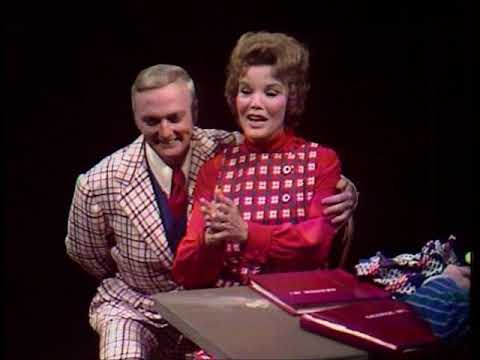
On-screen access: The 1970 NBC television adaptation is documented as a Bell System Family Theatre broadcast, and it continues to circulate through online uploads. It is also logged by archives as a distinct TV presentation, with a recorded running time. If you want to study the lyric-to-scene relationship, this version is the most practical reference point, even if it is not a perfect mirror of the Broadway staging.
Album listening: The original Broadway cast recording remains widely available on mainstream streaming platforms. That ease of access has quietly changed how the show is encountered: many listeners now meet Cohan’s “Broadway songs” as an album suite before they ever see a staged production.
Notes and trivia
- Official licensing credits list “Lyrics and Musical Revisions” by Mary Cohan, formalizing the show’s bridge between early 1900s songwriting and a 1968 book-musical frame.
- The Broadway production was directed and choreographed by Joe Layton, and the show won the Tony Award for Best Choreography.
- The show opened at the Palace Theatre in 1968 and ran for more than 400 performances, a long run for a title often remembered mainly through its songs.
- A contemporaneous music-industry item notes Columbia recording activity connected to the show, including studio supervision details reported in Billboard.
- A 2018 industry-history piece argues that NBC scheduling decisions shifted Tony eligibility dates in 1968, creating a behind-the-scenes fight that directly affected George M!.
- The 1970 TV adaptation is archived as a Bell System Family Theatre entry with a logged broadcast date and runtime.
- Streaming listings typically group the cast album into 13 tracks, reflecting how the recording compresses and suites multiple stage moments into album form.
Reception
Critical response to George M! has always split along a fault line: the material versus the biography. Many writers admit the score can win a room even when the book strains for depth. Others argue the show’s success proves a harsher point, that Cohan’s hit factory can outvote narrative weakness. That argument has followed the title for decades, and it is part of the show’s meaning now.
“George M! may not be one of Broadway’s all-time great musicals, but you wouldn’t know it from this inspired revival.”
“That reaction, an outburst of spontaneous applause, occurs when the curtain rises to reveal the entire company clad in vibrant red, white and blue.”
“Everybody knew how bad George M! was, in spite of Joe Layton’s directing work.”
Quick facts
- Title: George M!
- Broadway year: 1968
- Type: Biographical musical using the catalogue of George M. Cohan
- Book: Michael Stewart; John Pascal; Francine Pascal
- Music and lyrics: George M. Cohan
- Lyrics and musical revisions: Mary Cohan
- Original Broadway venue: Palace Theatre (Broadway)
- Directed and choreographed (Broadway): Joe Layton
- Selected notable placements inside the story: the Act I breakthrough built around “Give My Regards to Broadway”; Act II career-and-era collisions moving toward “I’d Rather Be Right”
- Screen version: 1970 NBC TV adaptation (Bell System Family Theatre)
- Cast album: Original Broadway Cast Recording (Columbia Masterworks legacy), available on major streaming services
Frequently asked questions
- Who wrote the lyrics in George M!?
- The lyrics are primarily by George M. Cohan, drawn from his existing songs, with credited lyrical and musical revisions for the stage version by Mary Cohan.
- Is George M! a jukebox musical?
- In practice, yes. It is built from pre-existing Cohan material, shaped into a biographical narrative by the book writers. The difference is that the “jukebox” catalogue belongs to the subject himself.
- Is there a movie or filmed version?
- There is a 1970 NBC television adaptation, archived as a Bell System Family Theatre broadcast, and it remains the best-known filmed reference for the show’s narrative order and score.
- Why does “Give My Regards to Broadway” matter so much in the plot?
- The song functions as a career ignition in Act I and a memory trigger later on. It is both a hit and a self-portrait, which is why the show returns to it when the biography needs a summation.
- Where can I listen to the cast recording?
- The original Broadway cast recording is available on major streaming platforms, typically presented as a 13-track album suite.
- Is George M! being staged in 2025-2026?
- The title remains in active licensing circulation via Concord Theatricals, so productions are most commonly found in regional and community seasons rather than as a single headline commercial run.
Key contributors
| Name | Role | Contribution |
|---|---|---|
| George M. Cohan | Composer, Lyricist | Primary song and lyric catalogue used throughout the musical |
| Mary Cohan | Revisions | Credited lyrical and musical revisions for the stage adaptation |
| Michael Stewart | Book | Co-wrote the libretto shaping the biographical narrative |
| John Pascal | Book | Co-wrote the libretto shaping the biographical narrative |
| Francine Pascal | Book | Co-wrote the libretto shaping the biographical narrative |
| Joe Layton | Director, Choreographer | Directed and choreographed the Broadway production; dance language central to the show’s storytelling |
| Joel Grey | Original star | Originated the title role on Broadway and reprised it for the 1970 TV adaptation |
Sources: IBDB; Concord Theatricals; Masterworks Broadway; Playbill; Paley Center for Media; Billboard (WorldRadioHistory archive); Variety; Irish Echo; Apple Music; Spotify; Ovrtur; YouTube.