
Catered Affair, A Lyrics: Song List
- Partners
- Ralph and Me
- Married
- Women Chatter
- No Fuss
- Your Children s Happiness
- Immediate Family
-
Our Only Daughter

- Women Chatter 2
-
One White Dress
- Vision
-
Don't Ever Stop Saying I Love You
-
I Stayed
- Married (reprise)
-
Coney Island
- Don't Ever Stop Saying I Love You (reprise)
- Coney Island (reprise)
About the "Catered Affair, A" Stage Show
The first production of this show began in 2007 in San Diego, in Old Globe Theatre, both reading and tryouts. The official opening was in the same year in September, and continued as a pre-Broadway show for a month. July 2008 marked the end of the show under the directing of John Doyle, after 116 performances and 27 previews. Casting was as follows: T. Wopat, F. Prince & B. Fierstein. The show, despite the very modest duration, received as many as 12 nominations for the Drama Desk, but did not win any of those. Such a number of nominations was the largest quantity among other musicals that took place on Broadway in the winter season of 2007 – 2008.
Critics were mostly cold to this musical, giving it not only mixed, but also many negative reviews. For example, New York Times wrote that the musical was based on narcissism, and it lacks the highlights, for example, of well-choreographed movements and living heroes. New York Post wrote that everything here was flat, including the plot and emotions that were almost completely absent. Around the same vein were the rest of the reviews, but some of them have recognized the liveliness of the musical characters.
Release date of the musical: 2008
“A Catered Affair” – The Musical Guide & Song Meanings
Review: why these lyrics refuse to “sell” the moment
Most wedding musicals chase the cake. “A Catered Affair” chases the bill. The story sits in the Bronx, 1953, and watches a family try to decide what love costs, then watch them hate themselves for putting a number on it. John Bucchino’s lyrics do not try to turn that into easy uplift. They lean into ordinary speech rhythms, half-sentences, and the kind of bluntness people use when they are too tired to perform their feelings.
The score’s style is classic Broadway on paper, but it behaves like a play that happens to sing. Numbers often feel like dialogue that has been pressured into melody. That is the point. These characters do not have the luxury of grand statements. Aggie wants the wedding because she needs proof that her daughter mattered, even when the family’s attention belonged to a son who is now gone. Tom wants the money for the cab medallion share because he hears, underneath the wedding fantasy, the sound of rent due forever.
What makes the writing sting is how it uses “wedding talk” as camouflage. A white dress, a guest list, a cake: each detail is a proxy for grief, guilt, and power. When the lyric language finally breaks open, it tends to happen in private corners, not at center stage. Bucchino’s best lines land like admissions nobody planned to say out loud.
How it was made: from Chayefsky to a 90-minute chamber musical
The musical’s DNA is older than Broadway. Harvey Fierstein built the book from Paddy Chayefsky’s 1955 teleplay and Gore Vidal’s 1956 film adaptation, keeping the working-class naturalism and letting the score operate inside that realism. In a Playbill interview, Fierstein talks about loving the movie but also believing its imperfections made it adaptable, which is a very Fierstein way to justify the risk.
Before Broadway, the show ran at San Diego’s Old Globe in fall 2007, then arrived at the Walter Kerr Theatre in spring 2008 under John Doyle’s direction. On Broadway, it played as a tight, intermissionless 90 minutes, with a small cast and a production team that included orchestrator Jonathan Tunick. Even the cast album story fits the show’s modest scale: the score was recorded during the run for PS Classics, with Tommy Krasker producing.
There is also a structural choice that explains the lyric feel: the show is built around restraint. It does not “open up” into spectacle because spectacle is the conflict. A lavish party is the threat. The writing keeps returning to kitchens, stairwells, windows, and a tenement facade, as if the music itself is trying to stay inside the family’s rent-controlled square footage.
Key tracks & scenes: the lyric moments that change the temperature
“Partners” (Tom, Sam, Ralph, Janey)
- The Scene:
- Morning-after bustle in the Bronx. Cab talk, plans, and a brief flash of optimism. The light feels like early day through a small apartment window: practical, unromantic, alive.
- Lyrical Meaning:
- The lyric is about how working people build a life: shares, deals, handshakes. It quietly positions Tom’s cab dream as real “marriage,” the commitment that has been earning interest for years.
“Women Chatter” (Myra, Pasha, Dolores)
- The Scene:
- Neighbors lean out of windows and trade news like currency. It plays as street-level chorus work: funny, sharp, a little cruel. One production description in The New Yorker frames it as women appearing at windows, barking gossip in heavy Bronx accents.
- Lyrical Meaning:
- The lyric turns community into pressure. Even before Aggie makes her big decision, the neighborhood is already writing the script of what a “proper” wedding should look like.
“Married” (Aggie)
- The Scene:
- Aggie in her own domestic loop, doing chores while her mind spins. A Time Out review notes her first song arrives in the middle of changing sheets, the most unglamorous possible launch.
- Lyrical Meaning:
- Aggie sings about marriage as endurance, not romance. The lyric is a ledger of compromises. You hear why she thinks a big wedding photo book could be a life raft later.
“Our Only Daughter” (Aggie)
- The Scene:
- A dinner with Ralph’s more comfortable family tilts the room. Aggie decides, suddenly and stubbornly, that the wedding must be large. The air changes from “simple” to “proving something.”
- Lyrical Meaning:
- This is not about Janey’s taste. It is about Aggie’s grief and shame. The lyric makes the wedding a substitute memorial and a second chance at motherhood.
“Immediate Family” (Winston)
- The Scene:
- Winston realizes he is not on the “immediate family” list for a City Hall plan. The scene is prickly, almost ugly, and it exposes the cost of being tolerated instead of welcomed.
- Lyrical Meaning:
- The lyric is a complaint, then a wound. Winston’s language circles around exclusion because he cannot name it cleanly in 1953. The title phrase becomes a knife.
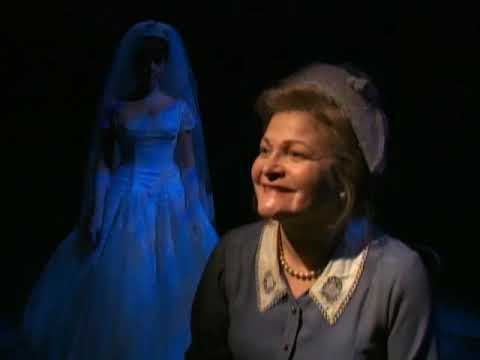
“One White Dress” (Janey, Aggie)
- The Scene:
- At the dress shop, mother and daughter share a moment that almost looks like harmony. Fabric, mirrors, bright retail light that turns the tenement world into a fantasy for a minute.
- Lyrical Meaning:
- The lyric captures how quickly a “no fuss” bride can get seduced by attention. It is a duet about slipping into a role, then noticing it fits better than expected.
“Don’t Ever Stop Saying ‘I Love You’” (Janey, Ralph)
- The Scene:
- Two young people trying to keep the marriage idea simple. A Washington, DC review describes the number as sung in moonlight on a fire escape, the closest the show gets to a classic romantic picture.
- Lyrical Meaning:
- The lyric is a promise built out of fear. They are asking language to do the job their families are failing to do: keep love audible when money and resentment get loud.
“Vision” (Aggie)
- The Scene:
- Aggie tells the truth about her own wedding and the circumstances that shaped it. The lighting usually tightens here, as if the stage is trying to hush itself out of respect.
- Lyrical Meaning:
- The lyric is confession without flourish. It reframes Aggie’s obsession as regret. She wants Janey’s wedding to repair her own origin story.
“I Stayed” (Tom)
- The Scene:
- Tom finally speaks from the place he lives: quiet, stubborn loyalty. The plot synopsis notes this is where he expresses love and caring for Aggie after the pressure breaks them open.
- Lyrical Meaning:
- This song is the show’s emotional proof. Tom is not poetic by nature, so the lyric lands harder. It argues that endurance can be love, even when it looks like silence.
“Coney Island” (Winston)
- The Scene:
- Near the end, Winston gets the last word. The feeling is dusk-after-party: relief mixed with a bruise. A final ride image hangs in the air.
- Lyrical Meaning:
- The lyric turns the wedding into a metaphor for all the bargains people make to belong. Winston frames life as a ride you paid for, then missed because you were busy surviving it.
Live updates (2025/2026): where the show lives now
As of January 21, 2026, “A Catered Affair” is not in an active commercial Broadway run. Its real footprint is licensing. Concord Theatricals lists the title for performance, with a concise 90-minute running time and a small cast that makes it attractive for regional companies, colleges, and community theatres that want a grown-up story without a giant ensemble. The Concord listing also publishes music samples and a detailed song list, which is effectively the public-facing “map” of the score.
The cast recording remains easy to access on streaming platforms, keeping Bucchino’s writing in circulation even when the show itself is not in the news cycle. That matters for a piece like this: it sells itself less through brand recognition and more through the private punch of individual songs like “I Stayed” and “Coney Island.”
If you are tracking revivals, your best signal is not Broadway gossip. It is licensing activity and conservatory programming, where the show’s actor-first demands can feel like a feature rather than a risk.
Notes & trivia
- The Broadway production opened April 17, 2008 at the Walter Kerr Theatre and closed July 27, 2008.
- IBDB lists the setting as the Bronx, New York, starting the morning after Memorial Day, 1953.
- The Broadway run totaled 116 performances; Playbill also reported 27 previews.
- The show runs about 90 minutes with no intermission, as reflected in Concord’s listing and contemporary reviews.
- It received three 2008 Tony nominations: Faith Prince (Actress), Tom Wopat (Actor), and Jonathan Tunick (Orchestrations).
- The cast recorded the score April 7, 2008 for PS Classics, with a May 27, 2008 release date expected and later confirmed in cast-album listings.
- Concord’s published instrumentation points to a chamber-sized orchestra, including reeds, trumpet, strings, piano, and percussion.
Reception: the critics split, the craft stays
The critical debate tends to circle the same question: should a musical this restrained be on a Broadway scale? Some writers admired the dignity and intimacy. Others felt the score rarely “lifts” into song in a satisfying way, reading the approach as timid rather than precise. You can hear that split even in reviews that agree on the fundamentals: strong actors, a small world, and a story that refuses to sweeten itself.
“John Bucchino’s vague lyrics and ultimately forgettable music are no more than an aural smudge.”
“Notwithstanding all the talent involved, has any Broadway musical ever seemed quite so joyless?”
“Perhaps the perfect show for a new period of economic anxiety and widening class divide...”
Quick facts: album and production metadata
- Title: A Catered Affair
- Broadway year: 2008 (opened April 17, 2008)
- Type: Book musical; chamber scale; period family drama
- Book: Harvey Fierstein
- Music & lyrics: John Bucchino
- Based on: Paddy Chayefsky’s 1955 teleplay and Gore Vidal’s film adaptation
- Original Broadway venue: Walter Kerr Theatre
- Running time: About 90 minutes; no intermission
- Orchestrations: Jonathan Tunick
- Cast album: “A Catered Affair (Original Broadway Cast Recording)”
- Cast album producer: Tommy Krasker (PS Classics)
- Cast album release: May 27, 2008 (widely listed; also reflected by streaming metadata)
- Track count: 18 tracks (including prologue and reprises)
- Selected notable placements (story): Tenement windows gossip (“Women Chatter”); dress-shop pivot (“One White Dress”); romantic fire-escape vow (“Don’t Ever Stop Saying ‘I Love You’”); the marriage reckoning (“I Stayed”)
Frequently asked questions
- Who wrote the lyrics for “A Catered Affair”?
- John Bucchino wrote both the music and the lyrics, with Harvey Fierstein writing the book.
- Is there an official cast recording?
- Yes. The Original Broadway Cast Recording was released by PS Classics, with Playbill reporting a May 27, 2008 store date and publishing the full track list.
- Where does “Women Chatter” happen in the story?
- It’s neighborhood window music: a burst of gossip and commentary around the engagement, reinforcing the social pressure that drives Aggie’s choices.
- What is “I Stayed” really about?
- It’s Tom’s emotional thesis: love as endurance. After a show of control and silence, he finally gives Aggie language she can’t interrupt.
- Is the show running or touring in 2025/2026?
- There is no current Broadway run. The most reliable “current status” is licensing: Concord Theatricals lists the title for production with published song samples and materials details.
- How long is the show, and does it have an intermission?
- It runs about 90 minutes and is typically performed without an intermission.
Key contributors
| Name | Role | Contribution |
|---|---|---|
| John Bucchino | Composer, lyricist | Wrote the score and lyrics; shaped the show’s conversational musical language. |
| Harvey Fierstein | Book writer | Adapted the story for the stage; also originated Winston on Broadway. |
| John Doyle | Director (original Broadway) | Built a restrained, actor-driven staging approach suited to intimate realism. |
| Jonathan Tunick | Orchestrations | Created chamber orchestrations recognized with a Tony nomination. |
| Faith Prince | Original Broadway cast | Originated Aggie; nominated for a Tony Award. |
| Tom Wopat | Original Broadway cast | Originated Tom; nominated for a Tony Award. |
| Leslie Kritzer | Original Broadway cast | Originated Janey, anchoring the story’s “wedding” surface. |
| Matt Cavenaugh | Original Broadway cast | Originated Ralph, the groom whose family money triggers the conflict. |
| Tommy Krasker | Producer (cast album) | Produced the Original Broadway Cast Recording for PS Classics. |
Sources: Concord Theatricals, Playbill, IBDB, The New Yorker, Time Out New York, TheaterMania, Apple Music.